Kreslová Marcela, Kirchnerová Olga, Rajdl Daniel, Sudová Vendula, Blažek Jiří, Sýkorová Aneta, Jehlička Petr, Trefil Ladislav, Schwarz Jan, Pomahačová Renata, Sýkora Josef
Department of Paediatrics, Faculty Hospital, Faculty of Medicine in Pilsen, Charles University in Prague, Alej Svobody 80, 30460 Pilsen, Czech Republic.
Department of Pneumology, Faculty Hospital, Faculty of Medicine in Pilsen, Charles University in Prague, E. Beneše 1128, 30100 Pilsen, Czech Republic.
Biomedicines. 2022 Oct 18;10(10):2614. doi: 10.3390/biomedicines10102614.
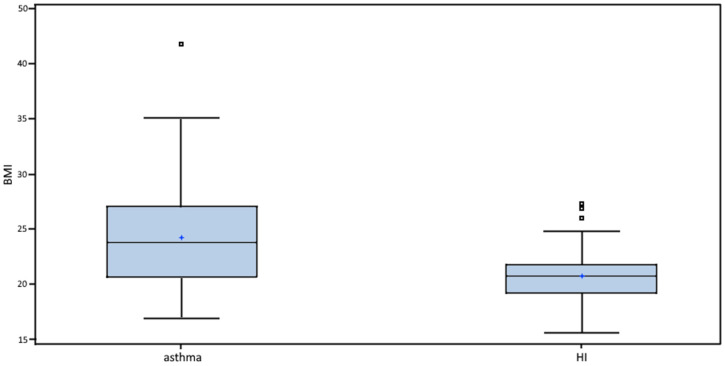
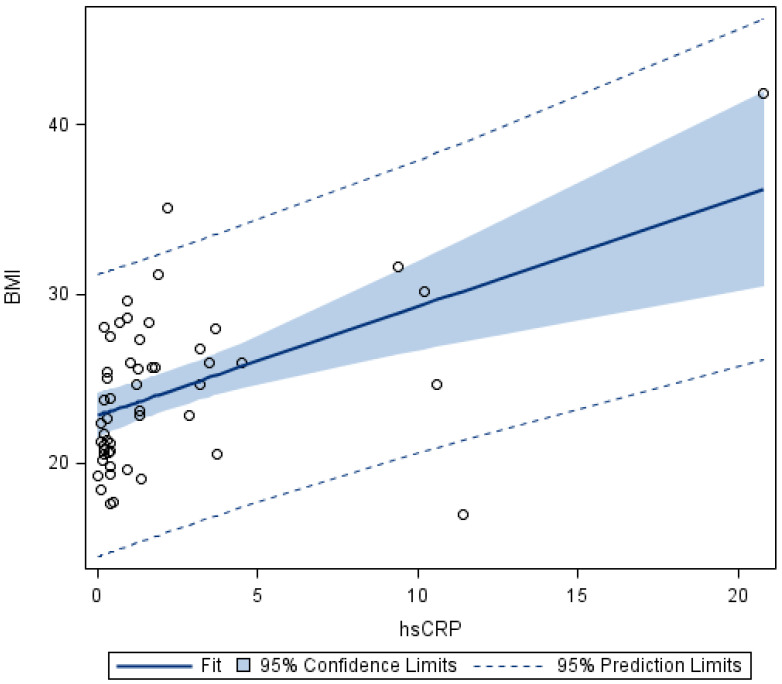
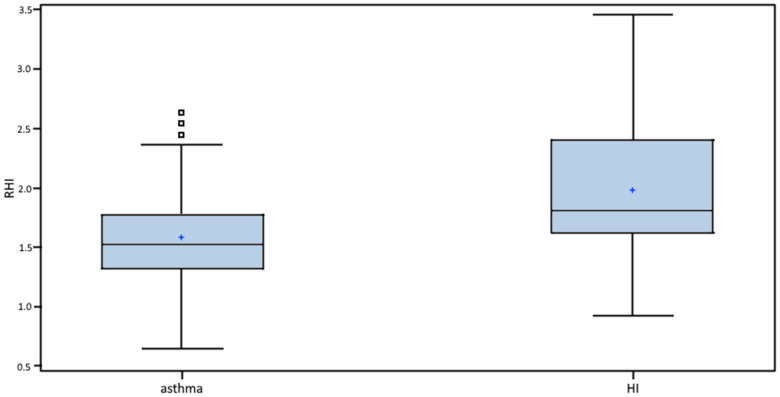
Introduction: Asthma as a chronic inflammatory disorder has been suggested as a risk factor for endothelial dysfunction (ED), but studies on the association between asthma and cardiovascular disease (CVD) risk are limited. Background: We assessed associations of ED with the severity of asthma, eosinophilic inflammation, lung function, and asthma control. Methods: 52 young asthmatics (median age of 25.22 years) and 45 healthy individuals were included. Demographic, clinical, and laboratory findings were recorded. We evaluated microvascular responsiveness by recording the reactive hyperemia index (RHI) indicating post-occlusive peripheral endothelium-dependent changes in vascular tone using the Itamar Medical EndoPAT2000. VCAM-1, ADMA, high-sensitive CRP (hsCRP), and E-selectin were measured. Results: Asthmatics had considerably lower RHI values (p < 0.001) with a dynamic decreasing trend by asthma severity and higher hsCRP levels (p < 0.001). A substantial increase in hsCRP and E-selectin with asthma severity (p < 0.05) was also observed. We confirmed a higher body mass index (BMI) in asthmatics (p < 0.001), especially in women and in severe asthma. Conclusions: We demonstrated the progression of CVD in asthmatics and the association of the ongoing deterioration of ED with the inflammatory severity, suggesting that the increased risk of CVD in young asthmatics is dependent on disease severity. The underlying mechanisms of risk factors for CVD and disease control require further study.
哮喘作为一种慢性炎症性疾病,已被认为是内皮功能障碍(ED)的一个危险因素,但关于哮喘与心血管疾病(CVD)风险之间关联的研究有限。背景:我们评估了内皮功能障碍与哮喘严重程度、嗜酸性粒细胞炎症、肺功能及哮喘控制之间的关联。方法:纳入52名年轻哮喘患者(中位年龄25.22岁)和45名健康个体。记录人口统计学、临床和实验室检查结果。我们使用Itamar Medical EndoPAT2000通过记录反应性充血指数(RHI)来评估微血管反应性,该指数表明闭塞后外周内皮依赖性血管张力变化。检测血管细胞黏附分子-1(VCAM-1)、不对称二甲基精氨酸(ADMA)、高敏C反应蛋白(hsCRP)和E-选择素。结果:哮喘患者的RHI值显著更低(p<0.001),且随哮喘严重程度呈动态下降趋势,hsCRP水平更高(p<0.001)。还观察到hsCRP和E-选择素随哮喘严重程度大幅增加(p<0.05)。我们证实哮喘患者的体重指数(BMI)更高(p<0.001),尤其是女性和重度哮喘患者。结论:我们证明了哮喘患者心血管疾病的进展以及内皮功能障碍持续恶化与炎症严重程度之间存在关联,这表明年轻哮喘患者心血管疾病风险增加取决于疾病严重程度。心血管疾病危险因素和疾病控制的潜在机制需要进一步研究。