Magee Wendy Louise, Lipe Anne Wheeler, Ikeda Takayoshi, Siegert Richard John
Boyer College of Music and Dance, Temple University, Philadelphia, PA 19132, USA.
Independent Researcher, Richfield, NC 28137, USA.
Brain Sci. 2022 Sep 28;12(10):1306. doi: 10.3390/brainsci12101306.
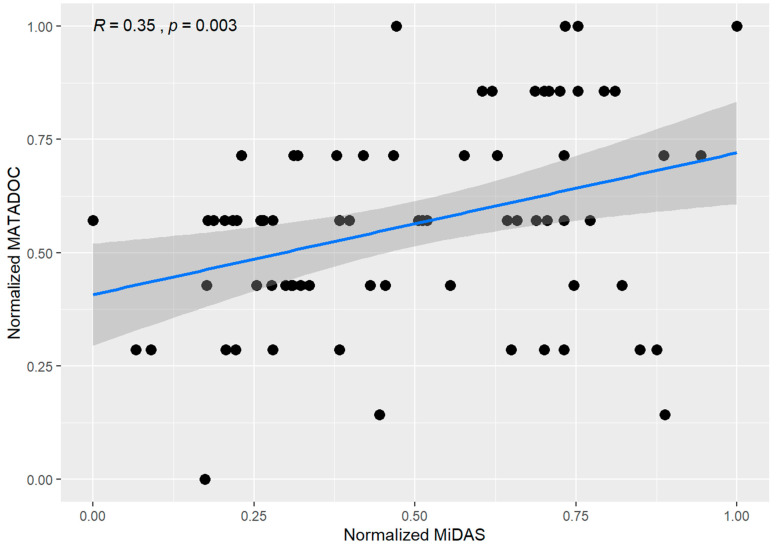
Dementia is a major health concern globally and cross-culturally with progressive decline in cognition, mobility and communication. There are few interventions for end-stage dementia (ESD) although music interventions have been observed to be accessible for people with mid to late-stage dementia. The lack of protocols and measures suited to ESD has limited research into the effects of music therapy. Measure sensitivity to minimal responsiveness is one limitation to the use of existing music intervention measures with ESD. This exploratory study examined the clinical utility of the Music Therapy Assessment Tool for Awareness in Disorders of Consciousness (MATADOC) for use with people with end-stage dementia, including preliminary reliability and validity. The MATADOC is a standardized assessment for minimally responsive patients with disorders of consciousness and may be useful for ESD. Using repeated measures with blinded MATADOC-trained raters, MATADOC data were collected with a small convenience sample of people with ESD in a residential care setting. Clinical utility data were collected from the raters and evaluated using a multidimensional model. To explore its functionality, MATADOC outcomes were compared to another measure for music interventions in dementia. The MATADOC may be useful for assessing functioning and responsiveness to music interventions for people with ESD without the risk of floor effects. Modifying the MATADOC protocol and assessment documentation prior to testing with a larger sample will enhance its sensitivity specific to ESD and age-related needs, providing a new music-based ESD assessment.
痴呆症是全球范围内以及跨文化背景下的一个主要健康问题,会导致认知、行动能力和沟通能力逐渐衰退。尽管已观察到音乐干预对中晚期痴呆症患者是可行的,但针对终末期痴呆症(ESD)的干预措施却很少。缺乏适用于ESD的方案和测量方法限制了对音乐疗法效果的研究。测量对最小反应性的敏感性是现有音乐干预措施用于ESD的一个限制因素。这项探索性研究考察了意识障碍音乐疗法评估工具(MATADOC)对终末期痴呆症患者的临床实用性,包括初步的信度和效度。MATADOC是对意识障碍的最小反应性患者的标准化评估,可能对ESD有用。通过对经过MATADOC培训的评分者进行重复测量并使其 blinded,在一家养老院中对一小部分方便样本的ESD患者收集MATADOC数据。从评分者那里收集临床实用性数据,并使用多维模型进行评估。为了探索其功能,将MATADOC的结果与另一种痴呆症音乐干预测量方法进行比较。MATADOC可能有助于评估ESD患者对音乐干预的功能和反应性,而不存在地板效应的风险。在使用更大样本进行测试之前修改MATADOC方案和评估文档,将提高其对ESD和与年龄相关需求的敏感性,从而提供一种基于音乐的新型ESD评估方法。