College of Pharmacy, Southwest Minzu University, Chengdu 610041, China.
Key Laboratory of Standardization of Chinese Herbal Medicine, Ministry of Education, State Key Laboratory of Southwestern Chinese Medicine Resources, Chengdu University of Traditional Chinese Medicine, Chengdu 611137, China.
Molecules. 2022 Oct 14;27(20):6880. doi: 10.3390/molecules27206880.
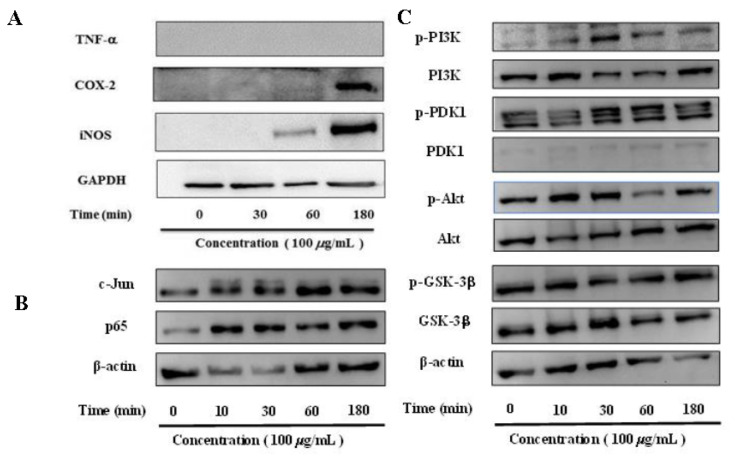
Although the fruit of Bur. has been consumed by montanic people in China for centuries, its chemical and biological composition was still unclear. A series of comprehensive investigations on its chemical constituents and bioactivities were carried out for the first time. As a result, six compounds were isolated and identified as the main components in this fruit. GC-MS analysis of the lipid components demonstrated that Bur. fruit contains some wholesome constituents such as fatty acids, vitamins, triterpenoids, and phytosterols. The fatty acids are mainly composed of linolenic acid (61.27%) and linoleic acid (22.79%). Furthermore, this fruit contains a relative high content of crude protein (9.41 ± 0.03%), total amino acids (9.28%), and total polyphenols (0.86 ± 0.01 g/100 g). The analysis of monosaccharide composition showed that the total polysaccharide mainly consists of glucose, glucuronic acid, xylose, arabinose, mannose, galactose, galacturonic acid, and rhamnose. The polysaccharide, polyphenol, water, ethanol, and flavonoid extracts exhibited prominent antioxidant activity determined by ABTS, DPPH, and FRAPS methods. Meanwhile, the total polysaccharide exhibited significant immunomodulatory effect by enhancing the release of cytokines and expression of iNOS and COX-2 in RAW264.7 cells, significantly decreasing the expression of c-Jun and p65 proteins in the cytoplasm; increasing the translocation of c-Jun and p65 to the nucleus; and regulating the phosphorylation level of Akt, PI3K, and PDK1 in the PI3K/AKT signaling pathway. This study proved that the fruit of is a reliable source of functional food.
尽管山茱萸已在中国山区人民中食用了数个世纪,但它的化学成分和生物活性仍不清楚。我们首次对其化学成分和生物活性进行了一系列全面的调查。结果,从该果实中分离并鉴定了 6 种化合物作为主要成分。GC-MS 分析表明,山茱萸果实含有一些有益的成分,如脂肪酸、维生素、三萜和植物甾醇。脂肪酸主要由亚麻酸(61.27%)和亚油酸(22.79%)组成。此外,这种水果还含有相对较高的粗蛋白(9.41±0.03%)、总氨基酸(9.28%)和总多酚(0.86±0.01 g/100 g)。单糖组成分析表明,总多糖主要由葡萄糖、葡萄糖醛酸、木糖、阿拉伯糖、甘露糖、半乳糖、半乳糖醛酸和鼠李糖组成。多糖、多酚、水、乙醇和类黄酮提取物通过 ABTS、DPPH 和 FRAPS 方法测定,具有显著的抗氧化活性。同时,总多糖通过增强 RAW264.7 细胞中细胞因子的释放和 iNOS 和 COX-2 的表达,显著降低细胞质中 c-Jun 和 p65 蛋白的表达,增加 c-Jun 和 p65 向核内的易位,以及调节 PI3K/AKT 信号通路中 Akt、PI3K 和 PDK1 的磷酸化水平,表现出显著的免疫调节作用。本研究证明山茱萸果实是一种可靠的功能性食品来源。