Islas-Vazquez Lorenzo, Cruz-Aguilar Marisa, Velazquez-Soto Henry, Jiménez-Corona Aida, Pérez-Tapia Sonia Mayra, Jimenez-Martinez Maria C
Department of Immunology and Research Unit, Institute of Ophthalmology "Conde de Valenciana Foundation", Mexico City 06800, Mexico.
Department of Ocular Epidemiology, Institute of Ophthalmology "Conde de Valenciana Foundation", Mexico City 06800, Mexico.
Vaccines (Basel). 2022 Oct 20;10(10):1761. doi: 10.3390/vaccines10101761.
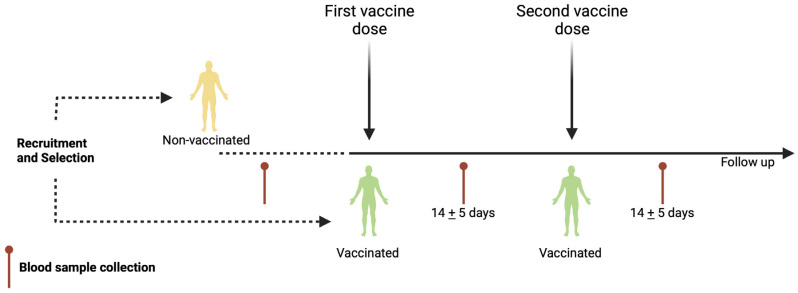
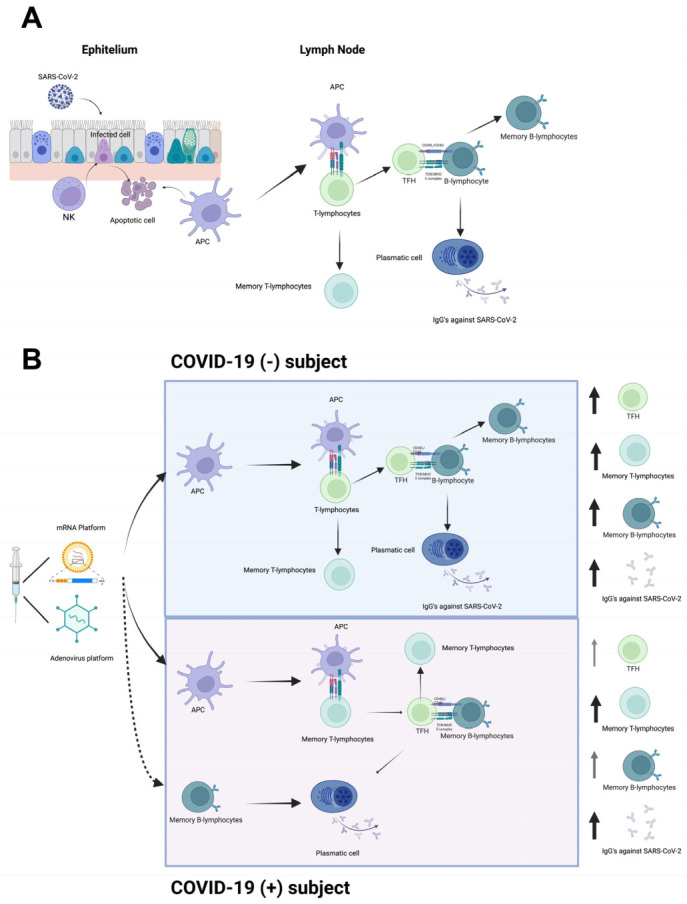
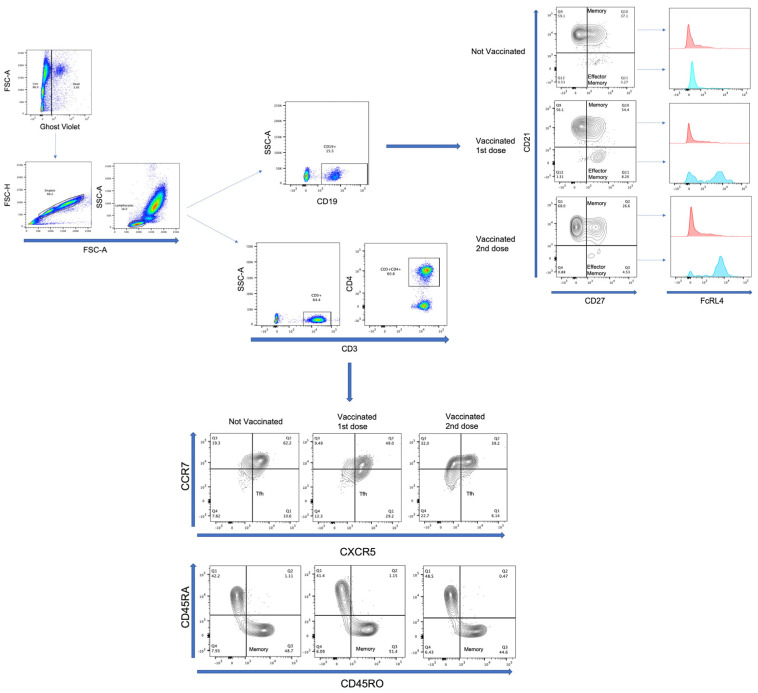
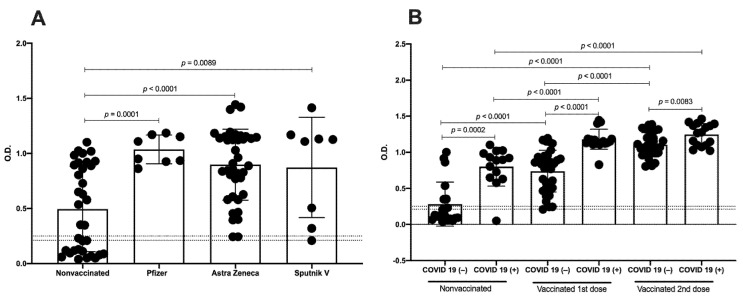
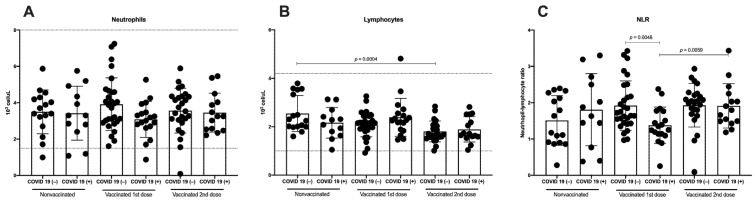
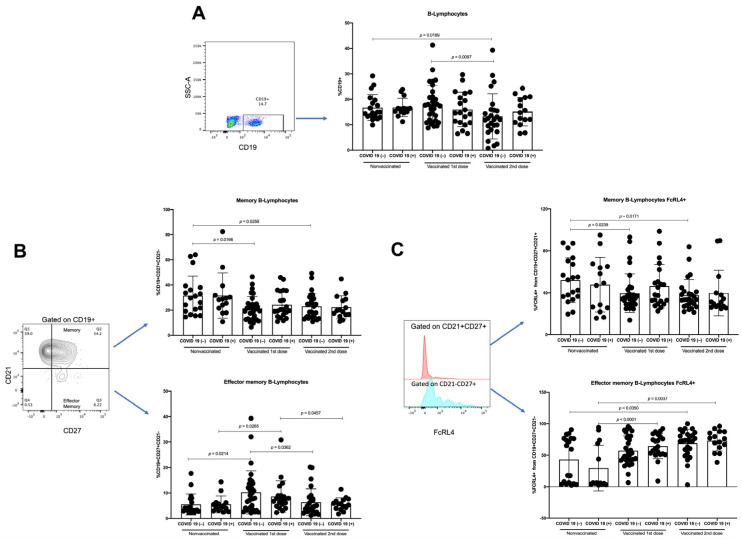
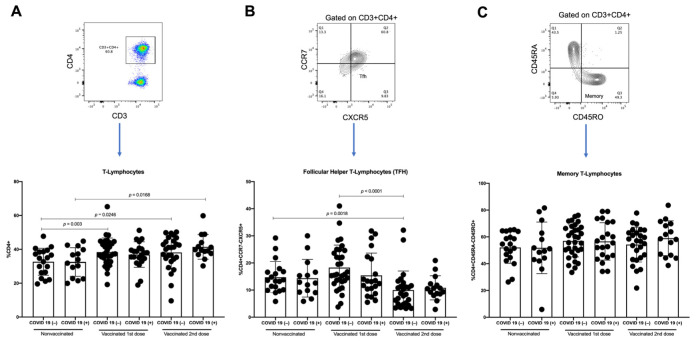
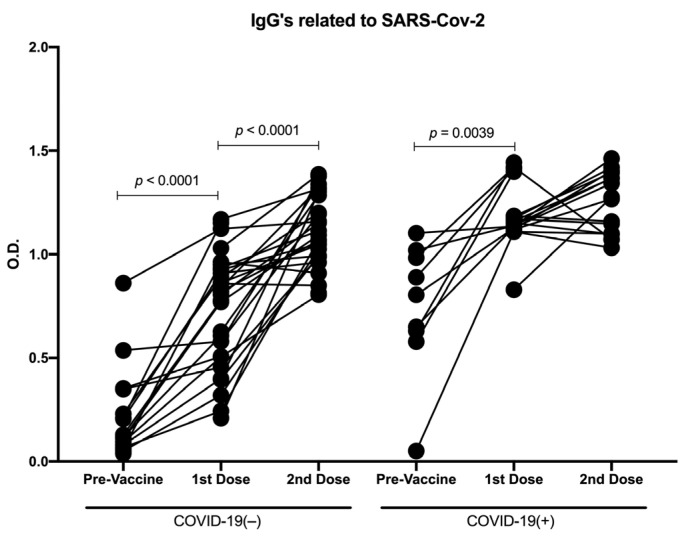
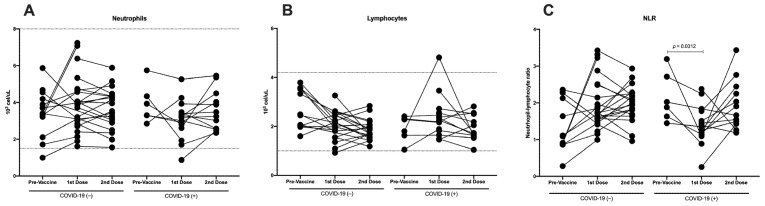
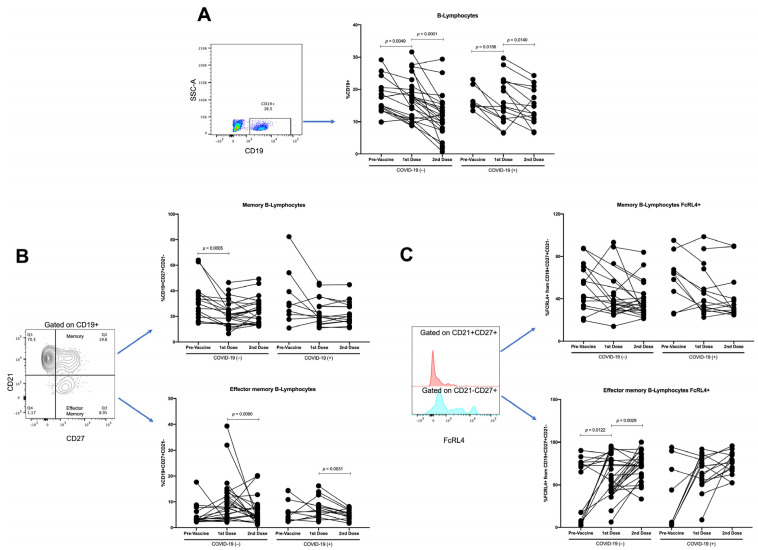
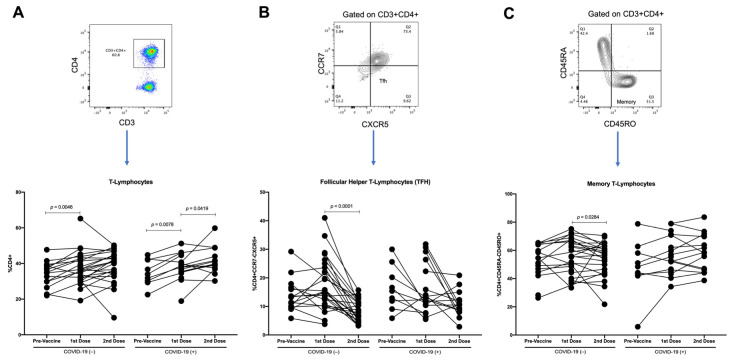
Vaccines have been recognized as having a central role in controlling the COVID-19 pandemic; however, most vaccine development research is focused on IgG-induced antibodies. Here, we analyzed the generation of IgGs related to SARS-CoV-2 and the changes in B- and T-lymphocyte proportions following vaccination against COVID-19. We included samples from 69 volunteers inoculated with the Pfizer-BioNTech (BNT162b2), Astra Zeneca (AZD1222 Covishield), or Sputnik V (Gam-COVID-Vac) vaccines. IgGs related to SARS-CoV-2 increased after the first vaccine dose compared with the nonvaccinated group (Pfizer, p = 0.0001; Astra Zeneca, p < 0.0001; Sputnik V, p = 0.0089). The results of the flow cytometry analysis of B- and T-lymphocytes showed a higher proportion of effector-memory B-lymphocytes in both first and second doses when compared with the nonvaccinated subjects. FcRL4+ cells were increased in second-dose-vaccinated COVID-19(−) and recovered COVID-19(+) participants when compared with the nonvaccinated participants. COVID-19(−) participants showed a lower proportion of follicular helper T-lymphocytes (TFH) in the second dose when compared with the first-vaccine-dose and nonvaccinated subjects. In conclusion, after the first vaccine dose, immunization against SARS-CoV-2 induces IgG production, and this could be mediated by TFH and effector-memory B-lymphocytes. Our data can be used in the design of vaccine schedules to evaluate immuno-bridging from a cellular point of view.
疫苗已被认为在控制新冠疫情中发挥核心作用;然而,大多数疫苗研发研究都集中在IgG诱导的抗体上。在此,我们分析了与严重急性呼吸综合征冠状病毒2(SARS-CoV-2)相关的IgG的产生以及接种新冠疫苗后B淋巴细胞和T淋巴细胞比例的变化。我们纳入了69名接种辉瑞-生物新技术公司(BNT162b2)、阿斯利康(AZD1222 Covishield)或卫星V(Gam-COVID-Vac)疫苗的志愿者的样本。与未接种疫苗的组相比,接种第一剂疫苗后,与SARS-CoV-2相关的IgG有所增加(辉瑞,p = 0.0001;阿斯利康,p < 0.0001;卫星V,p = 0.0089)。B淋巴细胞和T淋巴细胞的流式细胞术分析结果显示,与未接种疫苗的受试者相比,第一剂和第二剂疫苗接种后的效应记忆B淋巴细胞比例更高。与未接种疫苗的参与者相比,第二剂疫苗接种的新冠病毒阴性(COVID-19(−))和康复的新冠病毒阳性(COVID-19(+))参与者的FcRL4+细胞有所增加。与第一剂疫苗接种者和未接种疫苗的受试者相比,COVID-19(−)参与者在接种第二剂疫苗时滤泡辅助性T淋巴细胞(TFH)的比例较低。总之,接种第一剂疫苗后,针对SARS-CoV-2的免疫诱导了IgG的产生,这可能由TFH和效应记忆B淋巴细胞介导。我们的数据可用于疫苗接种计划的设计,从细胞角度评估免疫桥接。