Sukjoi Chutikarn, Buddhasiri Songphon, Tantibhadrasapa Arishabhas, Kaewsakhorn Thattawan, Phothaworn Preeda, Nale Janet Y, Lopez-Garcia Angela V, AbuOun Manal, Anjum Muna F, Malik Danish J, Galyov Edouard E, Clokie Martha R J, Korbsrisate Sunee, Thiennimitr Parameth
Department of Microbiology, Faculty of Medicine, Chiang Mai University, Chiang Mai, Thailand.
Department of Veterinary Biosciences and Veterinary Public Health, Faculty of Veterinary Medicine, Chiang Mai University, Chiang Mai, Thailand.
Front Microbiol. 2022 Oct 10;13:955136. doi: 10.3389/fmicb.2022.955136. eCollection 2022.
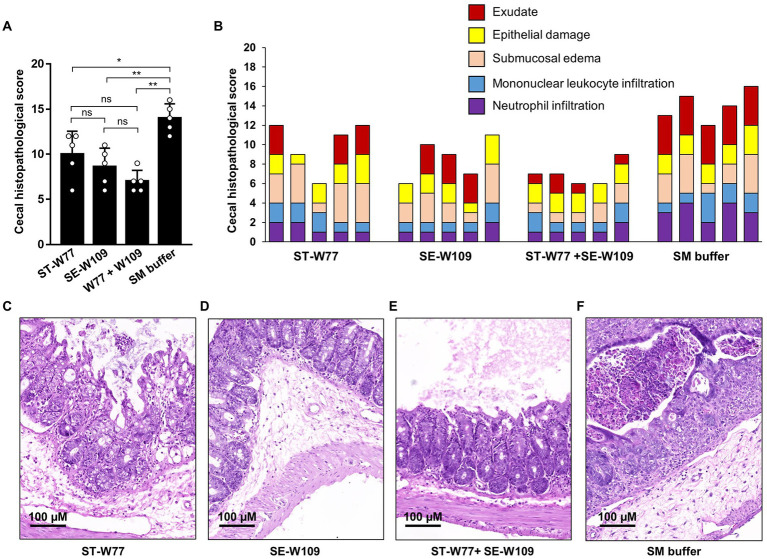
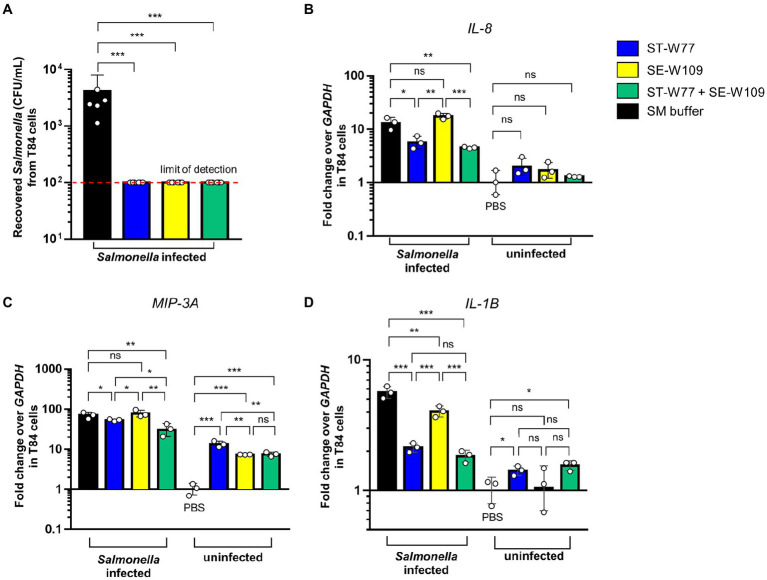
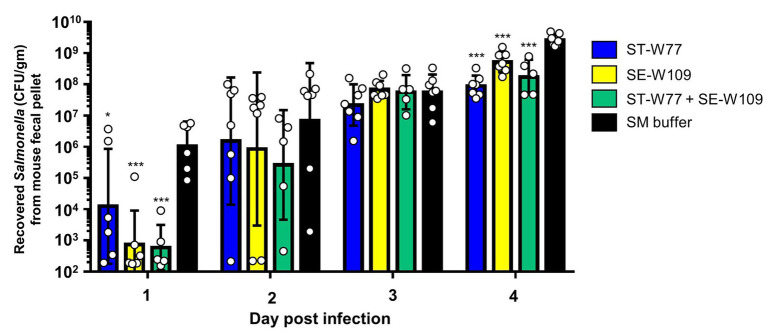
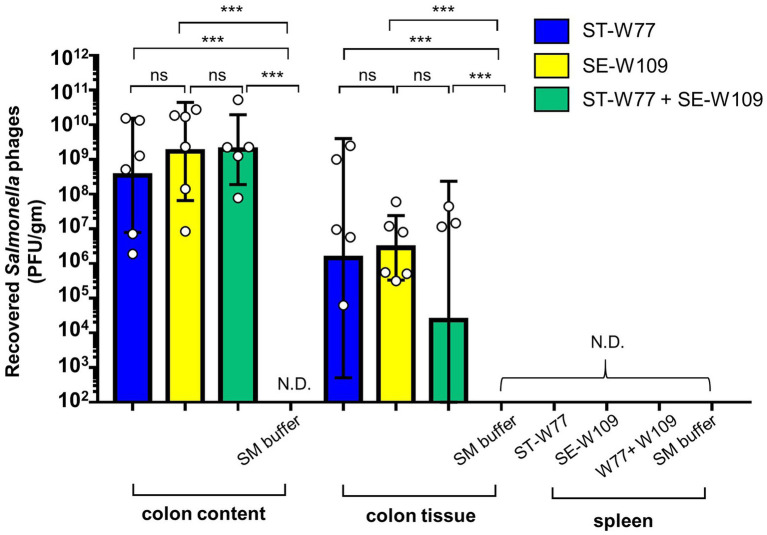
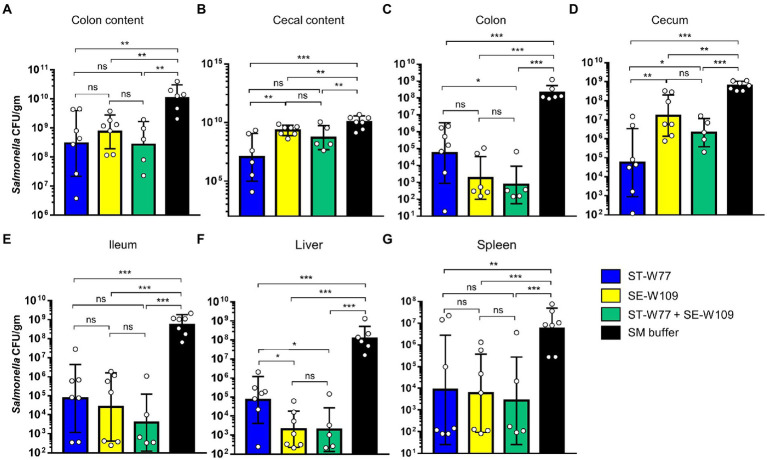
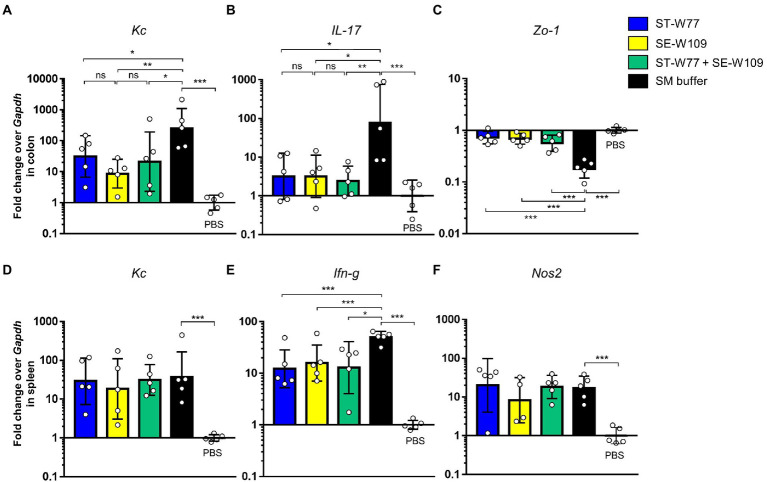
Acute non-typhoidal salmonellosis (NTS) caused by a Gram-negative bacterium serovar Typhimurium ( Tm) is one of the most common bacterial foodborne diseases worldwide. Bacteriophages (phages) can specifically target and lyse their host bacteria, including the multidrug-resistant strains, without collateral damage to other bacteria in the community. However, the therapeutic use of phages is still poorly investigated. phages ST-W77 and SE-W109 have previously been shown by our group to be useful for biocontrol properties. Here, we tested whether phages ST-W77 and SE-W109 can reduce invasion into cultured human cells and confer a therapeutic benefit for acute NTS in a mammalian host. Human colonocytes, T84 cells, were treated with phages ST-W77, SE-W109, and its combination for 5 min before Tm infection. Gentamicin protection assays demonstrated that ST-W77 and SE-W109 significantly reduced Tm invasion and inflammatory response in human colonocytes. Next, streptomycin-pretreated mice were orally infected with Tm (10 CFU/mouse) and treated with a single or a combination of ST-W77 and SE-W109 (10 PFU/mouse for 4 days) by oral feeding. Our data showed that phage-treated mice had lower Tm numbers and tissue inflammation compared to the untreated mice. Our study also revealed that ST-W77 and SE-W109 persist in the mouse gut lumen, but not in systemic sites. Together, these data suggested that phages ST-W77 and SE-W109 could be further developed as an alternative approach for treating an acute NTS in mammalian hosts.
由革兰氏阴性细菌鼠伤寒血清型(Tm)引起的急性非伤寒沙门氏菌病(NTS)是全球最常见的细菌性食源性疾病之一。噬菌体可以特异性地靶向并裂解其宿主细菌,包括多重耐药菌株,而不会对群落中的其他细菌造成附带损害。然而,噬菌体的治疗用途仍未得到充分研究。我们团队之前已证明噬菌体ST-W77和SE-W109具有生物防治特性。在此,我们测试了噬菌体ST-W77和SE-W109是否能减少对培养的人类细胞的侵袭,并为哺乳动物宿主中的急性NTS带来治疗益处。在感染Tm之前,将人结肠上皮细胞T84细胞用噬菌体ST-W77、SE-W109及其组合处理5分钟。庆大霉素保护试验表明,ST-W77和SE-W109显著减少了Tm对人结肠上皮细胞的侵袭和炎症反应。接下来,用链霉素预处理的小鼠经口感染Tm(10 CFU/小鼠),并通过口服给予单一或组合的ST-W77和SE-W109(10 PFU/小鼠,共4天)进行治疗。我们的数据显示,与未治疗的小鼠相比,经噬菌体治疗的小鼠体内的Tm数量和组织炎症较低。我们的研究还表明,ST-W77和SE-W109在小鼠肠道腔中持续存在,但不在全身部位。总之,这些数据表明,噬菌体ST-W77和SE-W109可进一步开发为治疗哺乳动物宿主急性NTS的替代方法。