Molecular Biology Division, Bhabha Atomic Research Centre, Mumbai, Maharashtra, India.
Life Sciences, Homi Bhabha National Institute, Mumbai, Maharashtra, India.
mBio. 2022 Dec 20;13(6):e0174222. doi: 10.1128/mbio.01742-22. Epub 2022 Oct 27.
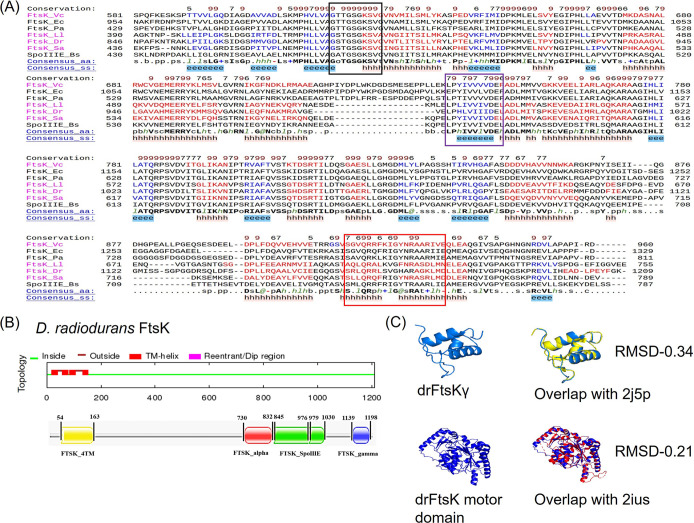
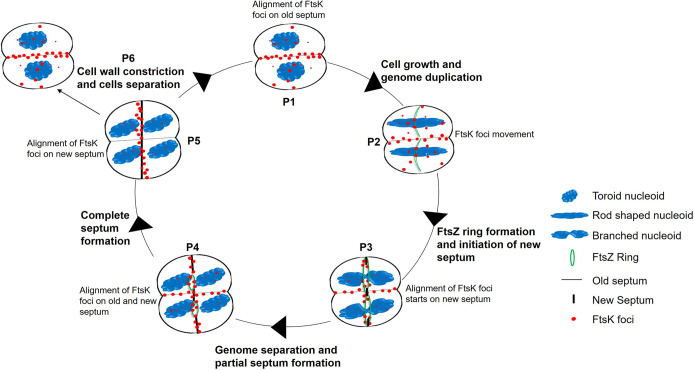
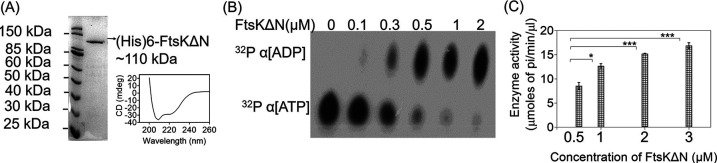
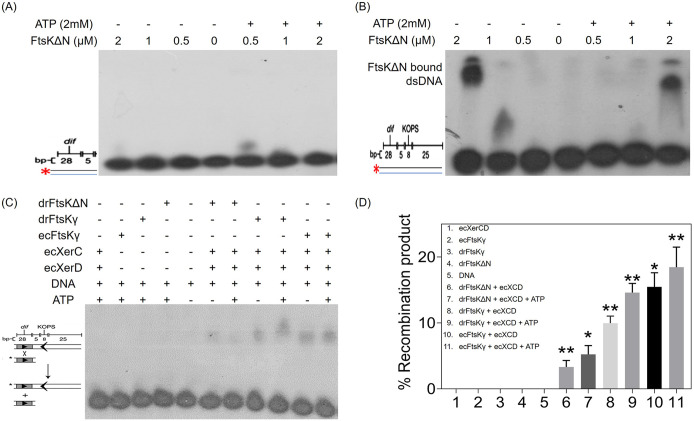
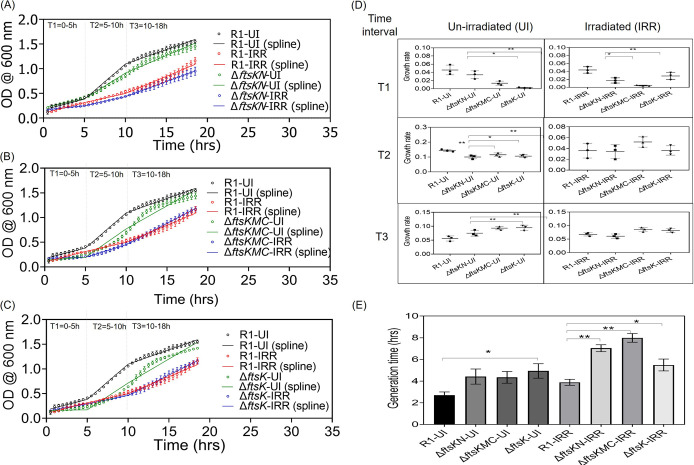
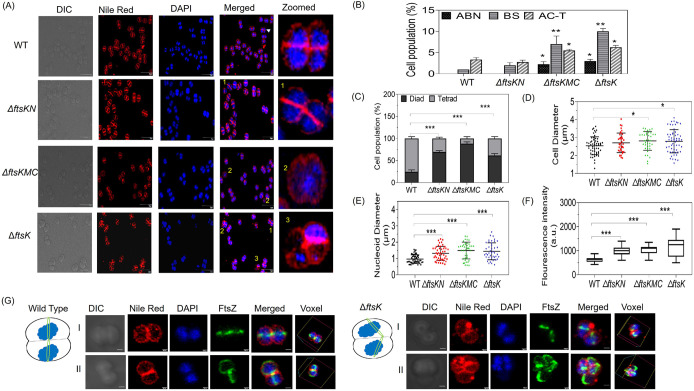
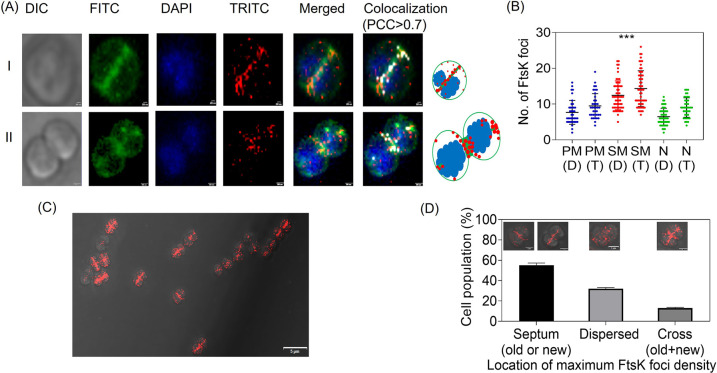
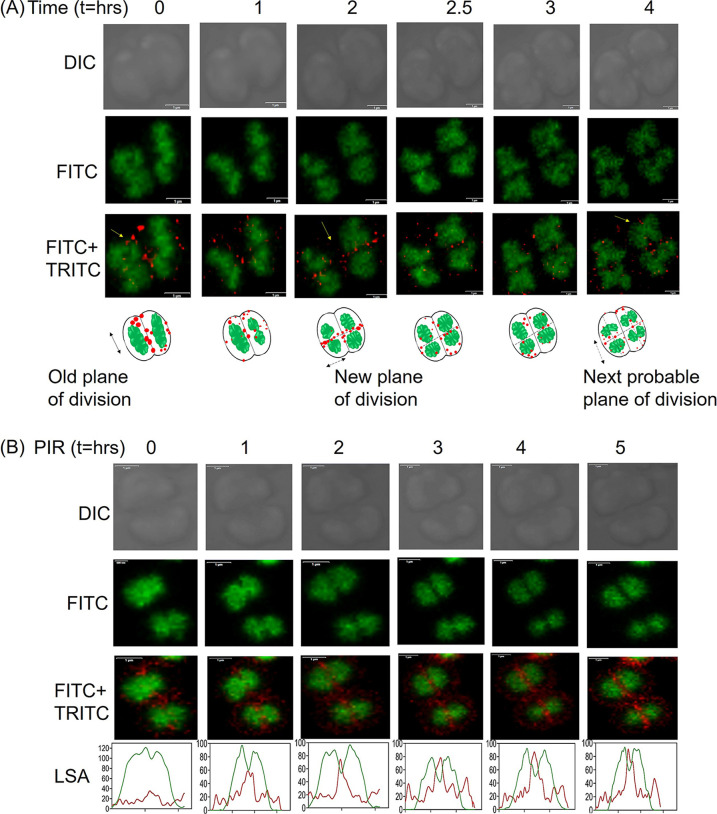
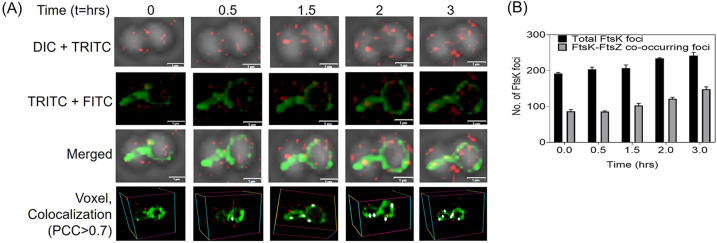
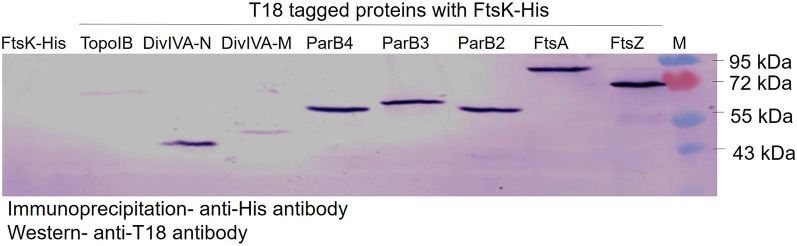
Filament temperature-sensitive mutant K (FtsK)/SpoIIIE family proteins are DNA translocases known as the fastest DNA motor proteins that use ATP for their movement on DNA. Most of the studies in single chromosome-containing bacteria have established the role of FtsK in chromosome dimer resolution (CDR), connecting the bacterial chromosome segregation process with cell division. Only limited reports, however, are available on the interdependent regulation of genome segregation and cell division in multipartite genome harboring (MGH) bacteria. In this study, for the first time, we report the characterization of FtsK from the radioresistant MGH bacterium Deinococcus radiodurans R1 (drFtsK). drFtsK shows the activity characteristics of a typical FtsK/SpoIIIE/Tra family. It stimulates the site-specific recombination catalyzed by Escherichia coli tyrosine recombinases. drFtsK interacts with various cell division and genome segregation proteins of D. radiodurans. Microscopic examination of different domain deletion mutants of this protein reveals alterations in cellular membrane architecture and nucleoid morphology. localization studies of drFtsK-RFP show that it forms multiple foci on nucleoid as well as on the membrane with maximum density on the septum. drFtsK coordinates its movement with nucleoid separation. The alignment of its foci shifts from old to new septum indicating its cellular dynamics with the FtsZ ring during the cell division process. Nearly, similar positional dynamicity of FtsK was observed in cells recovering from gamma radiation exposure. These results suggest that FtsK forms a part of chromosome segregation, cell envelope, and cell division machinery in D. radiodurans. Deinococcus radiodurans show extraordinary resistance to gamma radiation. It is polyploid and harbors a multipartite genome comprised of 2 chromosomes and 2 plasmids, packaged in a doughnut-shaped toroidal nucleoid. Very little is known about how the tightly packed genome is accurately segregated and the next divisional plane is determined. Filament temperature-sensitive mutant K (FtsK), a multifunctional protein, helps in pumping the septum-trapped DNA in several bacteria. Here, we characterized FtsK of D. radiodurans R1 (drFtsK) for the first time and showed it to be an active protein. The absence of drFtsK causes many defects in morphology at both cellular and nucleoid levels. The compact packaging of the deinococcal genome and cell membrane formation is hindered in mutants. drFtsK is dynamic, forms foci on both nucleoid and septum, and coordinates with FtsZ for the next cell division. Thus, drFtsK role in maintaining the normal genome phenotype and cell division in D. radiodurans is suggested.
细丝温度敏感突变体 K(FtsK)/SpoIIIE 家族蛋白是 DNA 转位酶,被称为移动速度最快的 DNA 马达蛋白,它们利用 ATP 在 DNA 上移动。在含有单条染色体的细菌中进行的大多数研究已经确定了 FtsK 在染色体二聚体分辨率(CDR)中的作用,将细菌染色体分离过程与细胞分裂联系起来。然而,关于多片段基因组(MGH)细菌中基因组分离和细胞分裂的相互依赖调节,仅有有限的报道。在这项研究中,我们首次报道了耐辐射 MGH 细菌 Deinococcus radiodurans R1(drFtsK)中 FtsK 的特征。drFtsK 表现出典型的 FtsK/SpoIIIE/Tra 家族的活性特征。它能刺激大肠埃希菌酪氨酸重组酶催化的位点特异性重组。drFtsK 与 D. radiodurans 的各种细胞分裂和基因组分离蛋白相互作用。对该蛋白的不同结构域缺失突变体的显微镜检查显示,细胞内膜结构和拟核形态发生改变。该蛋白的定位研究表明,它在拟核上以及膜上形成多个焦点,在隔膜上的密度最大。drFtsK 与拟核分离协调其运动。其焦点的排列从旧的到新的隔膜转移,表明在细胞分裂过程中,它与 FtsZ 环一起具有细胞动力学。在从γ辐射暴露中恢复的细胞中观察到类似的 FtsK 位置动态性。这些结果表明,FtsK 是 D. radiodurans 染色体分离、细胞包膜和细胞分裂机制的一部分。耐辐射的 Deinococcus radiodurans 对γ辐射具有非凡的抵抗力。它是多倍体,含有一个由 2 条染色体和 2 个质粒组成的多片段基因组,包装在一个甜甜圈形的环型拟核中。关于如何准确分离紧密包装的基因组以及确定下一个分裂平面的信息知之甚少。丝状温度敏感突变体 K(FtsK)是一种多功能蛋白,有助于在几种细菌中泵出被困在隔膜中的 DNA。在这里,我们首次对 D. radiodurans R1(drFtsK)的 FtsK 进行了表征,并证明它是一种活性蛋白。drFtsK 的缺失导致细胞和拟核水平的形态出现许多缺陷。deinococcal 基因组和细胞膜形成的紧密包装在 突变体中受到阻碍。drFtsK 是动态的,在拟核和隔膜上形成焦点,并与 FtsZ 协调进行下一次细胞分裂。因此,drFtsK 在维持 D. radiodurans 正常基因组表型和细胞分裂中的作用得到了提示。