Department of Biochemistry, Faculty of Medicine, Chiang Mai University, Chiang Mai, 50200, Thailand.
Medical Molecular Biotechnology Research Group, National Center for Genetic Engineering and Biotechnology (BIOTEC), 113 Thailand Science Park, Phahonyothin Road, Khlong Nueng, Khlong Luang, Pathum Thani, 12120, Thailand.
Malar J. 2022 Oct 27;21(1):302. doi: 10.1186/s12936-022-04330-3.
The resistance of Plasmodium falciparum to artemisinin-based (ART) drugs, the front-line drug family used in artemisinin-based combination therapy (ACT) for treatment of malaria, is of great concern. Mutations in the kelch13 (k13) gene (for example, those resulting in the Cys580Tyr [C580Y] variant) were identified as genetic markers for ART-resistant parasites, which suggests they are associated with resistance mechanisms. However, not all resistant parasites contain a k13 mutation, and clearly greater understanding of resistance mechanisms is required. A genome-wide association study (GWAS) found single nucleotide polymorphisms associated with ART-resistance in fd (ferredoxin), arps10 (apicoplast ribosomal protein S10), mdr2 (multidrug resistance protein 2), and crt (chloroquine resistance transporter), in addition to k13 gene mutations, suggesting that these alleles contribute to the resistance phenotype. The importance of the FD and ARPS10 variants in ART resistance was then studied since both proteins likely function in the apicoplast, which is a location distinct from that of K13.
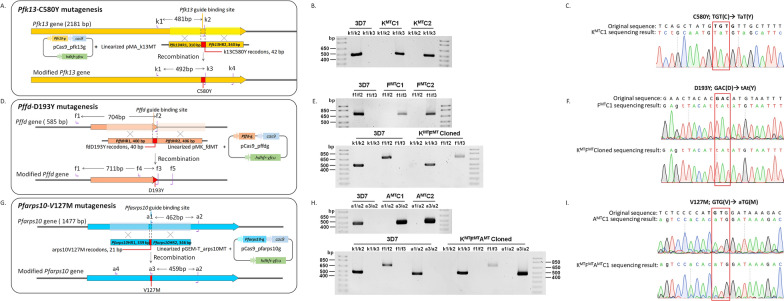
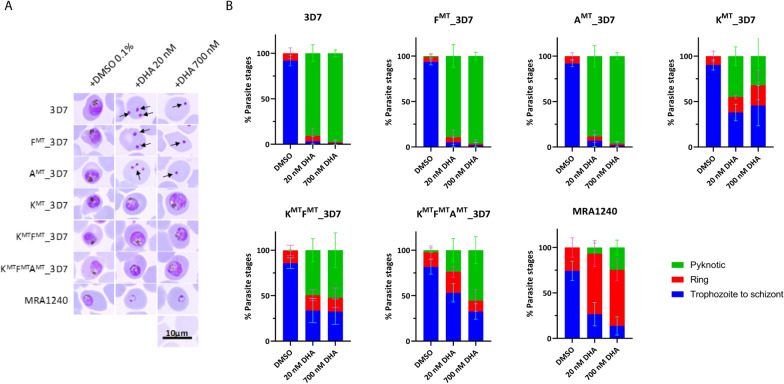
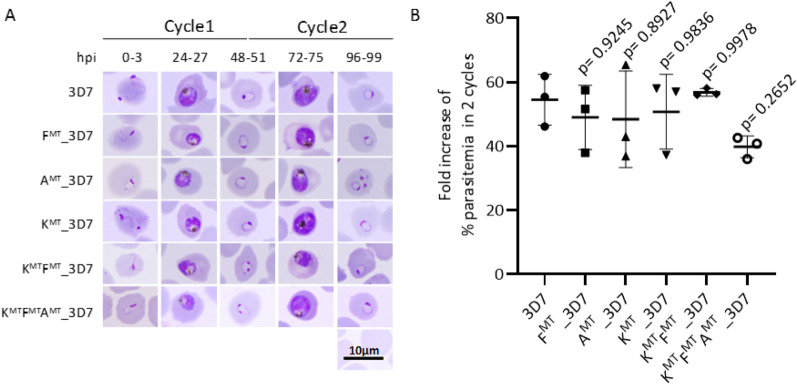
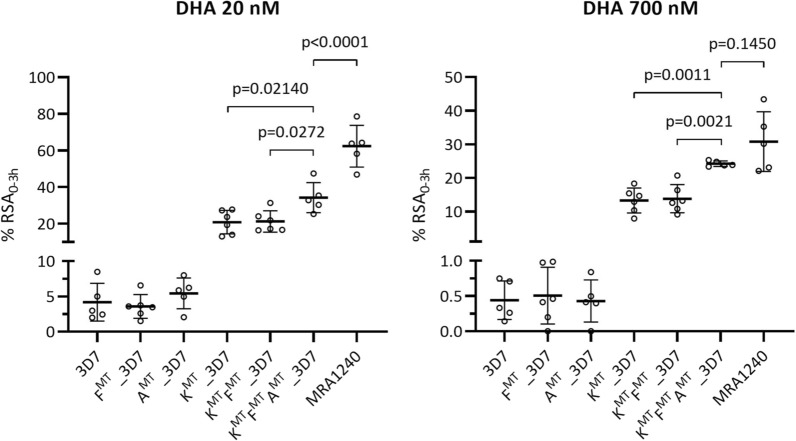
The reported mutations were introduced, together with a mutation to produce the k13-C580Y variant into the ART-sensitive 3D7 parasite line and the effect on ART-susceptibility using the 0-3 h ring survival assay (RSA) was investigated.
Introducing both fd-D193Y and arps10-V127M into a k13-C580Y-containing parasite, but not a wild-type k13 parasite, increased survival of the parasite in the RSA. The results suggest epistasis of arps10 and k13, with arps10-V127M a modifier of ART susceptibility in different k13 allele backgrounds.
疟原虫对青蒿素类(ART)药物的耐药性令人担忧,ART 类药物是用于青蒿素联合疗法(ACT)治疗疟疾的一线药物。kelch13(k13)基因的突变(例如导致 Cys580Tyr [C580Y] 变异的突变)被鉴定为对 ART 耐药寄生虫的遗传标记,这表明它们与耐药机制有关。然而,并非所有耐药寄生虫都含有 k13 突变,显然需要更深入地了解耐药机制。全基因组关联研究(GWAS)发现了与 fd(铁氧还蛋白)、arps10(质体核糖体蛋白 S10)、mdr2(多药耐药蛋白 2)和 crt(氯喹耐药转运蛋白)相关的与 ART 耐药相关的单核苷酸多态性,除了 k13 基因突变外,这表明这些等位基因有助于耐药表型。由于这两种蛋白质可能都在质体中发挥作用,而质体与 K13 的位置不同,因此随后研究了 FD 和 ARPS10 变体在 ART 耐药性中的重要性。
引入报道的突变,以及产生 k13-C580Y 变体的突变,然后用 0-3 小时环生存试验(RSA)研究对 ART 敏感性的影响。
将 fd-D193Y 和 arps10-V127M 同时引入含有 k13-C580Y 的寄生虫中,但不引入野生型 k13 寄生虫,可增加 RSA 中寄生虫的存活。结果表明 arps10 和 k13 之间存在上位性,arps10-V127M 是不同 k13 等位基因背景下 ART 敏感性的修饰因子。