Nikooyeh Bahareh, Rabiei Samira, Amini Maryam, Ghodsi Delaram, Rasekhi Hamid, Doustmohammadian Azam, Abdollahi Zahra, Minaie Mina, Sadeghi Farzaneh, Neyestani Tirang R
Department of Nutrition Research, National Nutrition and Food Technology Research Institute and Faculty of Nutrition Sciences and Food Technology, Shahid Beheshti University of Medical Sciences, Tehran, Iran.
Gastrointestinal and Liver Diseases Research Center (GILDRC), Iran University of Medical Sciences, Tehran, Iran.
BMC Nutr. 2022 Oct 27;8(1):122. doi: 10.1186/s40795-022-00612-w.
The pandemic of the newly emerged coronavirus infection and its related disease, Covid-19, has influenced various aspects of human life including dietary habits. This study aimed to examine changes in dairy products consumption during Covid-19 lockdown period in a huge sample of Iranian households.
A cross-sectional descriptive-analytical study using a web-based electronic self-administered questionnaire designed to detect any changes in the consumption frequency of dairy products in the Iranian households during Covid-19 lockdown.
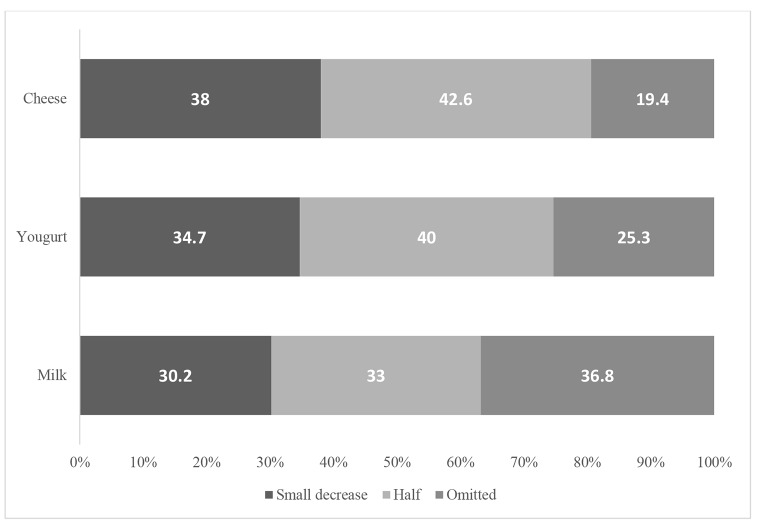
A total of 21,290 households were enrolled. During Covid-19 epidemic lockdown, about 29%, 26% and 7% of the households had decreased their consumption frequency of milk, yogurt and cheese, respectively. The female-headed households were 21% more likely to decrease their consumption of milk, compared with male-headed households (OR = 1.21, 95% CI: 1.05-1.4). The households residing in food insecure provinces were 29%, 20% and 45% more likely to decrease their consumption of milk, yogurt and cheese as compared with those living in the food secure provinces. About 37%, 25.3%, 19.4% of those households who reported a decrease in consumption of dairy products had fully omitted them.
We found considerable decrement of dairy products consumption, especially milk and yogurt, in a high proportion of the studied households. Inadequate intake and, in some households, omission of dairy products can potentially bring about serious health outcomes with heavier economic burden. Further studies to track these changes over time and to evaluate their health consequences are warranted.
新出现的冠状病毒感染及其相关疾病新冠肺炎的大流行已经影响到人类生活的各个方面,包括饮食习惯。本研究旨在调查在新冠肺炎封锁期间,大量伊朗家庭的乳制品消费变化情况。
采用基于网络的电子自填问卷进行横断面描述性分析研究,以检测新冠肺炎封锁期间伊朗家庭乳制品消费频率的任何变化。
共纳入21290户家庭。在新冠肺炎疫情封锁期间,分别约有29%、26%和7%的家庭减少了牛奶、酸奶和奶酪的消费频率。与男性户主家庭相比,女性户主家庭减少牛奶消费的可能性高21%(比值比=1.21,95%置信区间:1.05-1.4)。与生活在粮食安全省份的家庭相比,生活在粮食不安全省份的家庭减少牛奶、酸奶和奶酪消费的可能性分别高29%、20%和45%。在报告乳制品消费减少的家庭中,约37%、25.3%、19.4%的家庭完全不再消费这些产品。
我们发现,在很大比例的被研究家庭中,乳制品消费,尤其是牛奶和酸奶的消费大幅下降。摄入不足以及一些家庭完全不消费乳制品,可能会带来严重的健康后果,并造成更重的经济负担。有必要开展进一步研究,跟踪这些变化并评估其对健康的影响。