Moretti Elena, Signorini Cinzia, Noto Daria, Corsaro Roberta, Collodel Giulia
Department of Molecular and Developmental Medicine, University of Siena, Siena, Italy.
Front Reprod Health. 2022 Aug 3;4:945351. doi: 10.3389/frph.2022.945351. eCollection 2022.
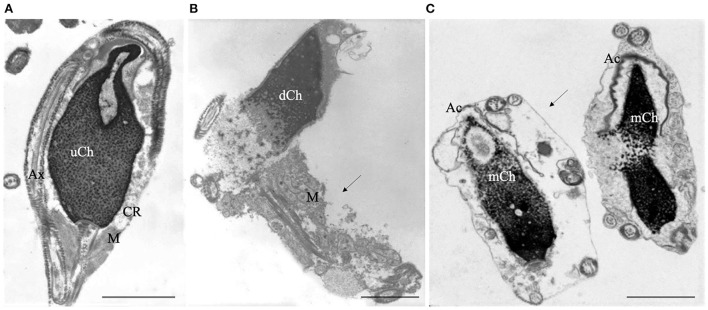
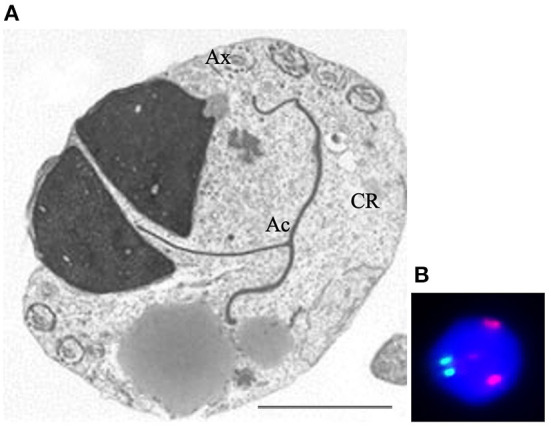
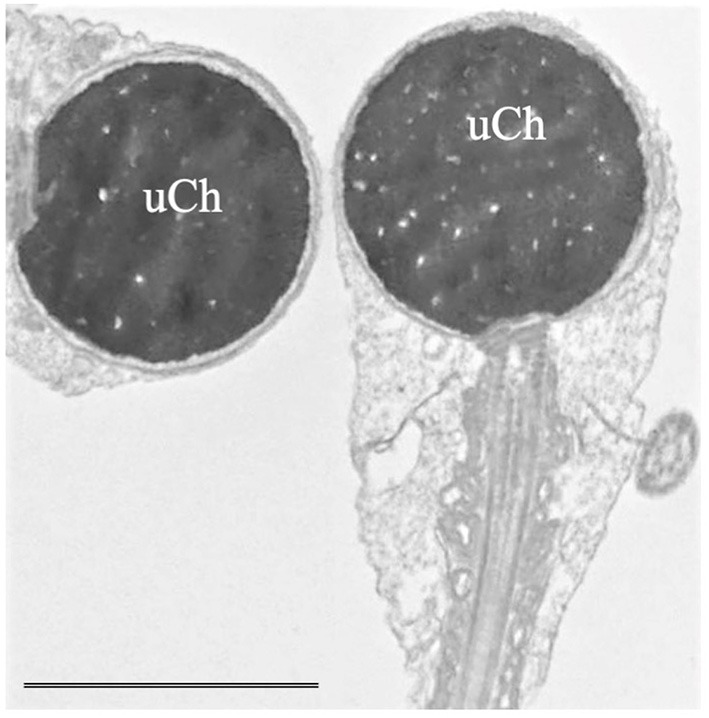
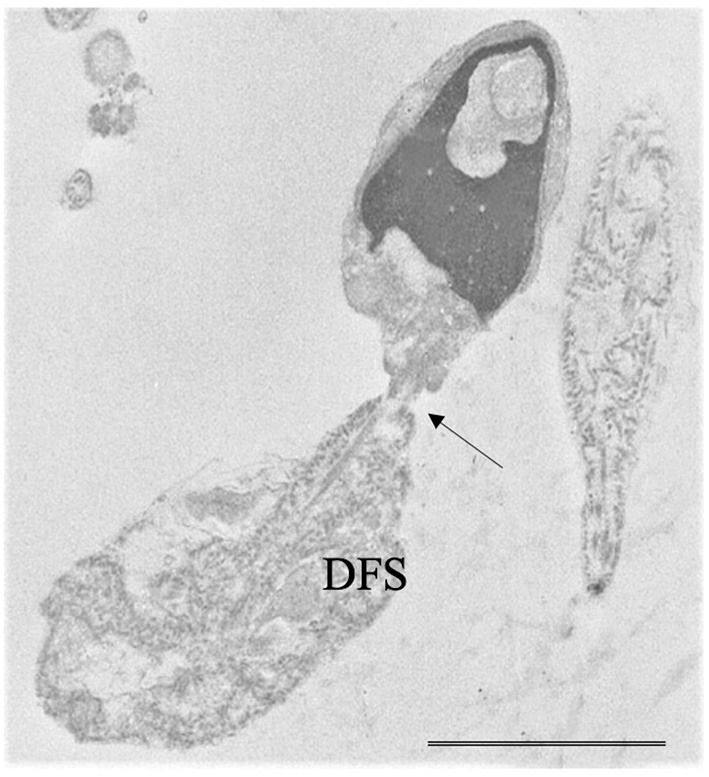
This brief report concerns the role of human sperm morphology assessment in different fields of male infertility: basic research, genetics, assisted reproduction technologies, oxidative stress. One of the best methods in studying sperm morphology is transmission electron microscopy (TEM) that enables defining the concept of sperm pathology and classifying alterations in non-systematic and systematic. Non-systematic sperm defects affect head and tail in variable ratio, whereas the rare systematic defects are characterized by a particular anomaly that marks most sperm of an ejaculate. TEM analysis and fluorescence hybridization represent outstanding methods in the study of sperm morphology and cytogenetic in patients with altered karyotype characterizing their semen quality before intracytoplasmic sperm injection. In recent years, the genetic investigations on systematic sperm defects, made extraordinary progress identifying candidate genes whose mutations induce morphological sperm anomalies. The question if sperm morphology has an impact on assisted fertilization outcome is debated. Nowadays, oxidative stress represents one of the most important causes of altered sperm morphology and function and can be analyzed from two points of view: 1) spermatozoa with cytoplasmic residue produce reactive oxygen species, 2) the pathologies with inflammatory/oxidative stress background cause morphological alterations. Finally, sperm morphology is also considered an important endpoint in experiments where toxic substances, drugs, antioxidants are tested. We think that the field of sperm morphology is far from being exhausted and needs other research. This parameter can be still considered a valuable indicator of sperm dysfunction both in basic and clinical research.
基础研究、遗传学、辅助生殖技术、氧化应激。研究精子形态的最佳方法之一是透射电子显微镜(TEM),它能够定义精子病理学的概念,并对非系统性和系统性改变进行分类。非系统性精子缺陷以不同比例影响头部和尾部,而罕见的系统性缺陷则以一种特定异常为特征,这种异常在射精的大多数精子中都有体现。TEM分析和荧光杂交是研究核型改变患者精子形态和细胞遗传学的杰出方法,可在胞浆内单精子注射前对其精液质量进行表征。近年来,对系统性精子缺陷的基因研究取得了非凡进展,确定了其突变会导致精子形态异常的候选基因。精子形态是否会影响辅助受精结果这一问题仍存在争议。如今,氧化应激是精子形态和功能改变的最重要原因之一,可从两个角度进行分析:1)带有细胞质残余物的精子会产生活性氧;2)具有炎症/氧化应激背景的病症会导致形态改变。最后,在测试有毒物质、药物、抗氧化剂的实验中,精子形态也被视为一个重要的终点指标。我们认为精子形态领域远未穷尽,还需要其他研究。在基础研究和临床研究中,该参数仍可被视为精子功能障碍的一个有价值指标。