Minato Takashi, Sakai Kurima, Uchida Takahisa, Ishiguro Hiroshi
Guardian Robot Project, RIKEN, Kyoto, Japan.
Hiroshi Ishiguro Laboratories, Advanced Telecommunications Research Institute International, Kyoto, Japan.
Front Robot AI. 2022 Oct 11;9:905030. doi: 10.3389/frobt.2022.905030. eCollection 2022.
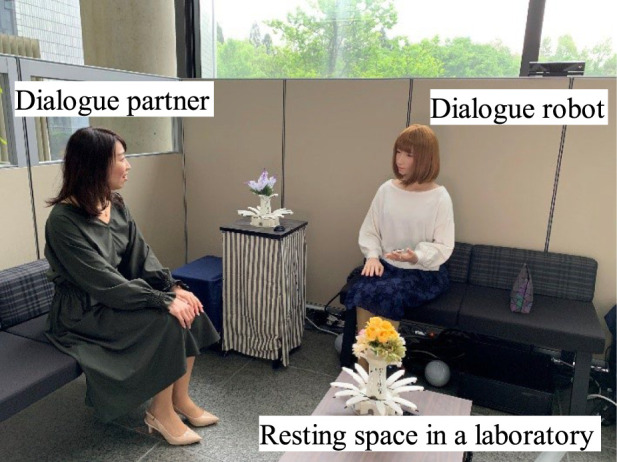
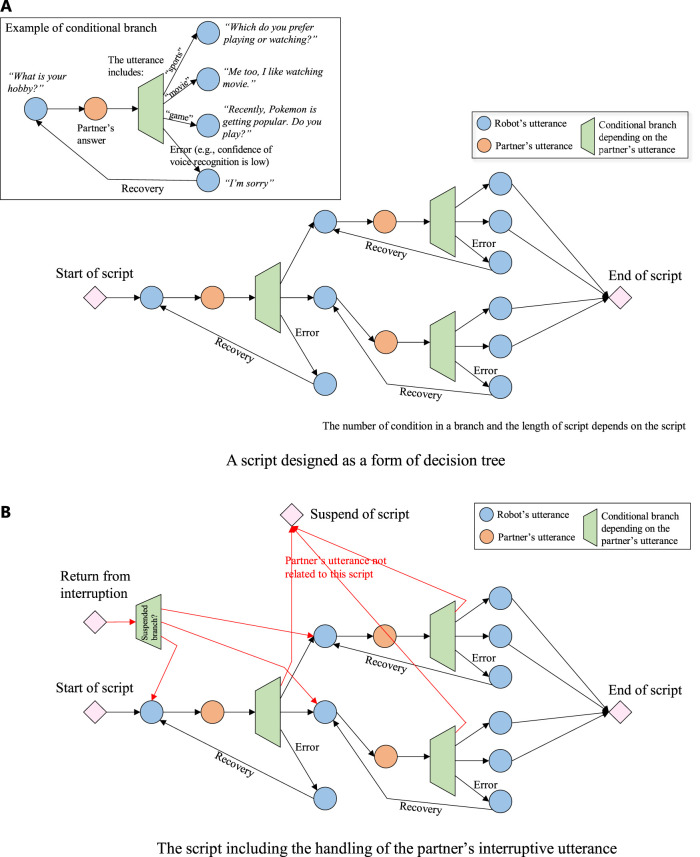
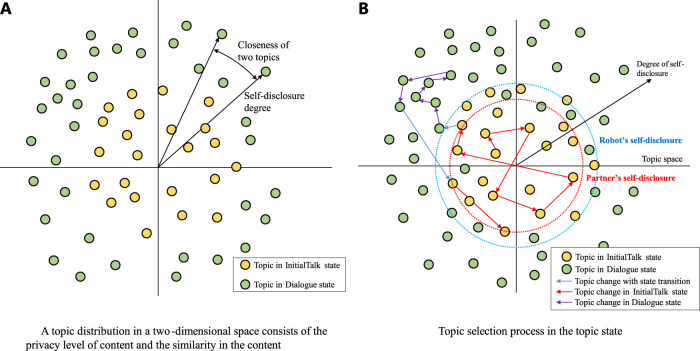
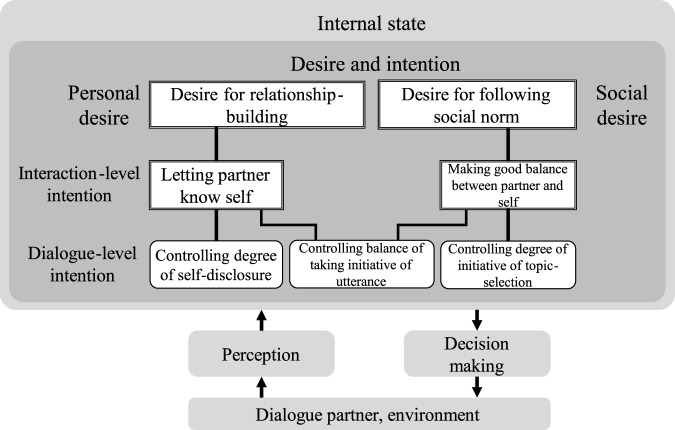
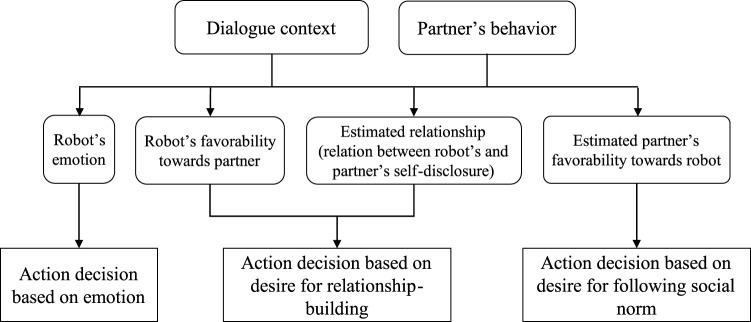
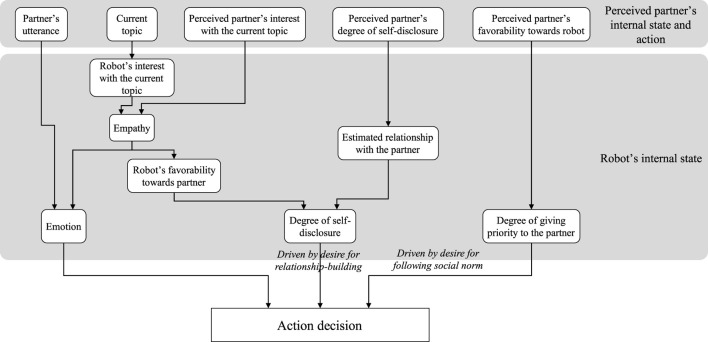
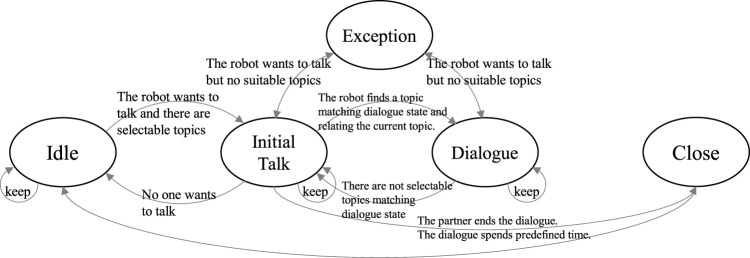
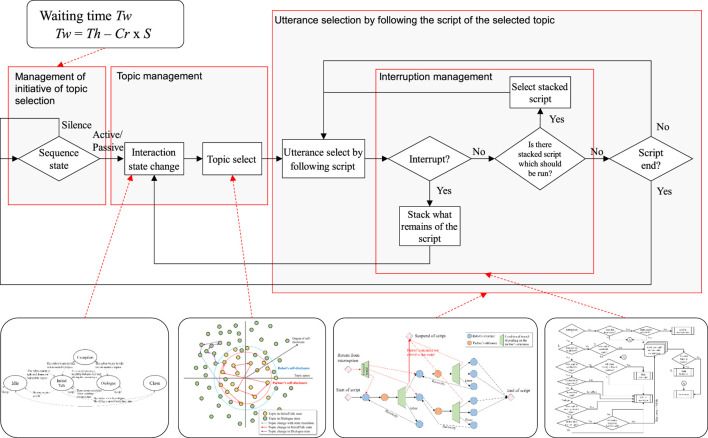
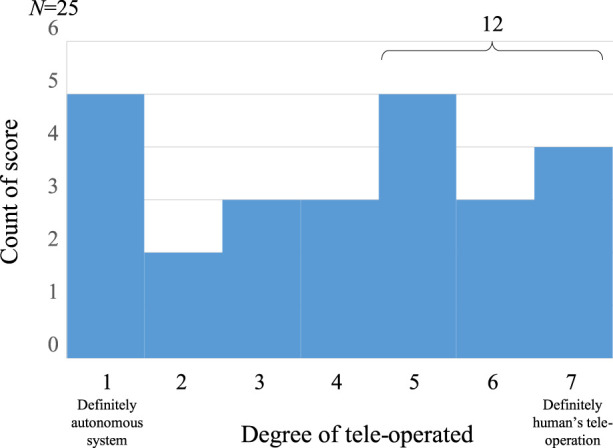
This study shows an autonomous android robot that can have a natural daily dialogue with humans. The dialogue system for daily dialogue is different from a task-oriented dialogue system in that it is not given a clear purpose or the necessary information. That is, it needs to generate an utterance in a situation where there is no clear request from humans. Therefore, to continue a dialogue with a consistent content, it is necessary to essentially change the design policy of dialogue management compared with the existing dialogue system. The purpose of our study is to constructively find out the dialogue system architecture for realizing daily dialogue through implementing an autonomous dialogue robot capable of daily natural dialogue. We defined the android's desire necessary for daily dialogue and the dialogue management system in which the android changes its internal (mental) states in accordance to the desire and partner's behavior and chooses a dialogue topic suitable for the current situation. The developed android could continue daily dialogue for about 10 min in the scene where the robot and partner met for the first time in the experiment. Moreover, a multimodal Turing test has shown that half of the participants had felt that the android was remotely controlled to some degree, that is, the android's behavior was humanlike. This result suggests that the system construction method assumed in this study is an effective approach to realize daily dialogue, and the study discusses the system architecture for daily dialogue.
本研究展示了一个能够与人类进行自然日常对话的自主人形机器人。日常对话的对话系统与面向任务的对话系统不同,因为它没有明确的目的或必要信息。也就是说,它需要在没有人类明确请求的情况下生成话语。因此,为了以连贯的内容继续对话,与现有的对话系统相比,有必要从根本上改变对话管理的设计策略。我们研究的目的是通过实现一个能够进行日常自然对话的自主对话机器人,建设性地找出实现日常对话的对话系统架构。我们定义了日常对话所需的机器人欲望以及机器人根据欲望和伙伴行为改变其内部(心理)状态并选择适合当前情况的对话主题的对话管理系统。在实验中机器人与伙伴首次见面的场景中,所开发的机器人能够持续进行约10分钟的日常对话。此外,多模态图灵测试表明,一半的参与者感觉该机器人在某种程度上是被远程控制的,也就是说,该机器人的行为很像人类。这一结果表明本研究中假设的系统构建方法是实现日常对话的有效途径,并且该研究讨论了日常对话的系统架构。