Medical Artificial Intelligence and Automation (MAIA) Laboratory, Department of Radiation Oncology, University of Texas Southwestern Medical Center, Dallas, Texas, USA.
Department of Radiation Oncology, Yonsei Cancer Center, Yonsei University College of Medicine, Seoul, South Korea.
Med Phys. 2023 Apr;50(4):1947-1961. doi: 10.1002/mp.15960. Epub 2022 Nov 12.
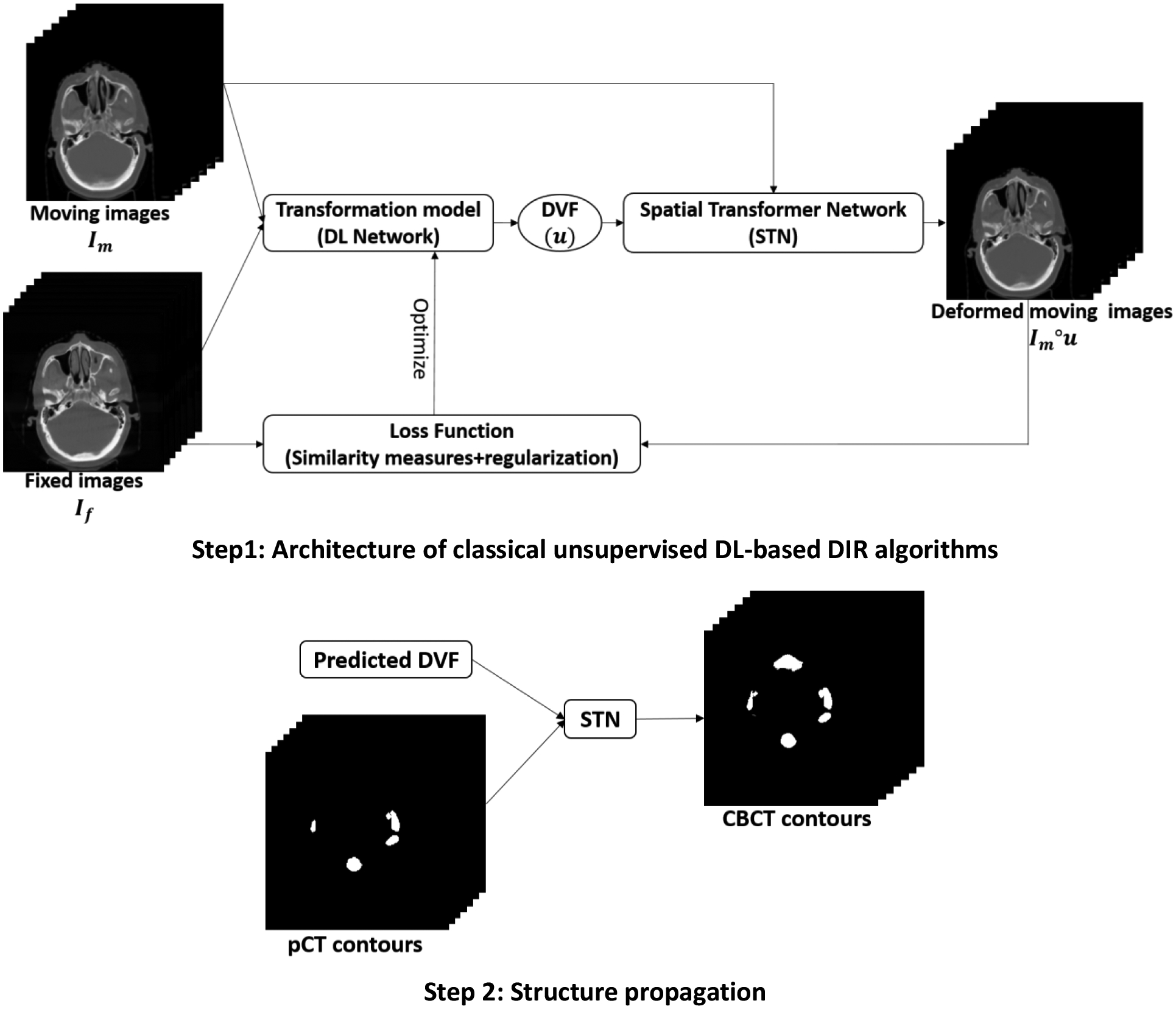
Online adaptive radiotherapy (ART) requires accurate and efficient auto-segmentation of target volumes and organs-at-risk (OARs) in mostly cone-beam computed tomography (CBCT) images, which often have severe artifacts and lack soft-tissue contrast, making direct segmentation very challenging. Propagating expert-drawn contours from the pretreatment planning CT through traditional or deep learning (DL)-based deformable image registration (DIR) can achieve improved results in many situations. Typical DL-based DIR models are population based, that is, trained with a dataset for a population of patients, and so they may be affected by the generalizability problem.
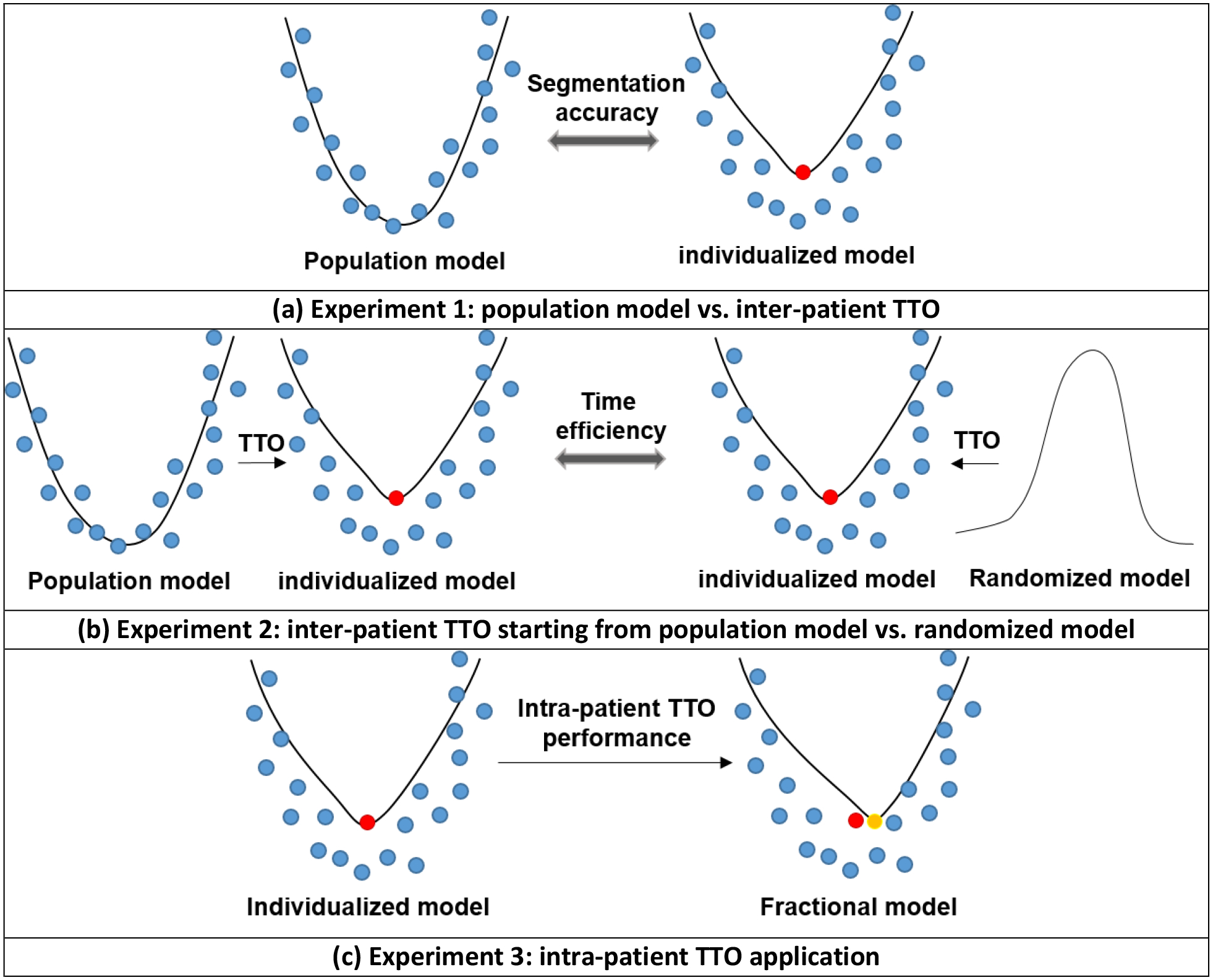
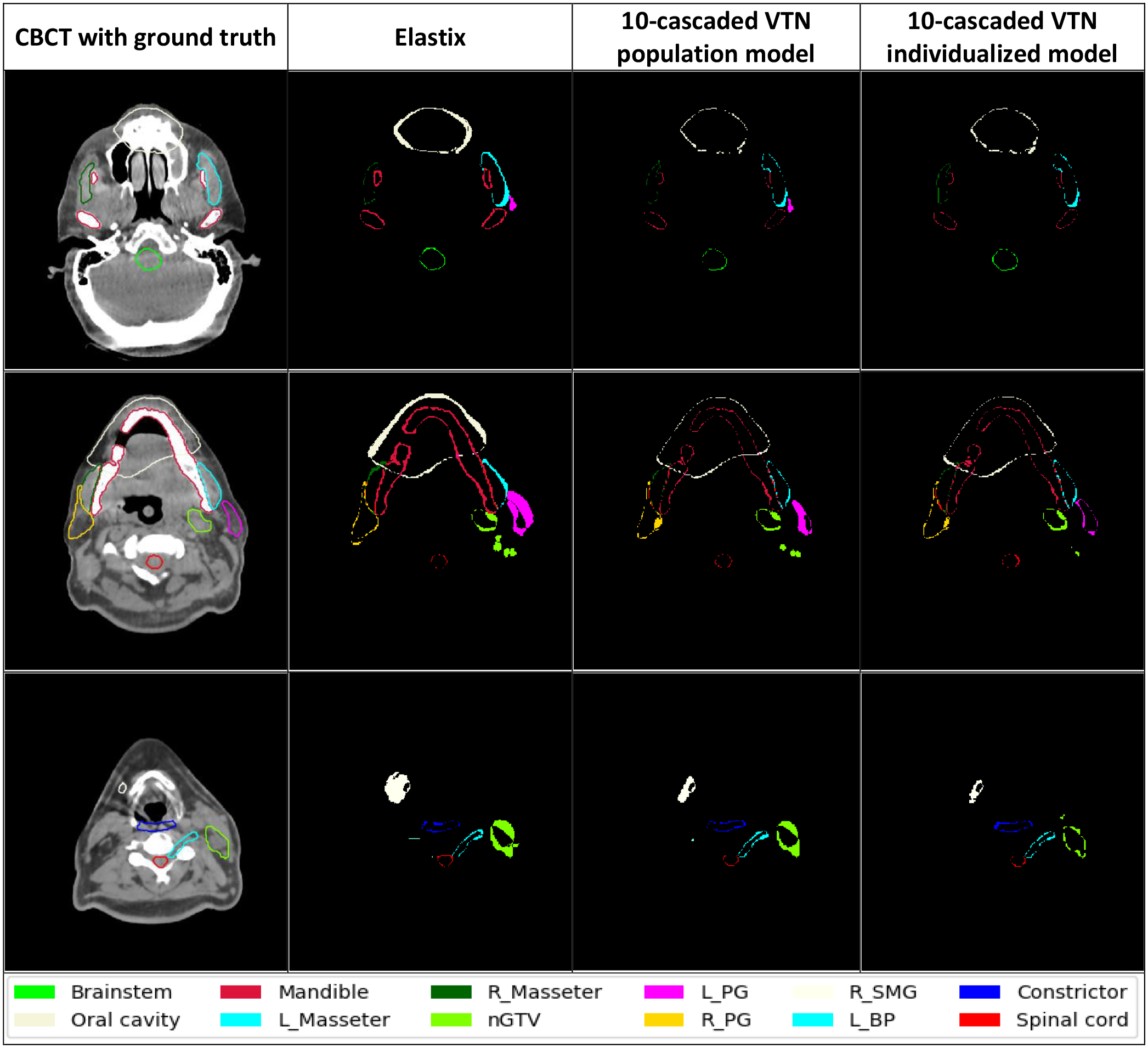
In this paper, we propose a method called test-time optimization (TTO) to refine a pretrained DL-based DIR population model, first for each individual test patient, and then progressively for each fraction of online ART treatment. Our proposed method is less susceptible to the generalizability problem and thus can improve overall performance of different DL-based DIR models by improving model accuracy, especially for outliers. Our experiments used data from 239 patients with head-and-neck squamous cell carcinoma to test the proposed method. First, we trained a population model with 200 patients and then applied TTO to the remaining 39 test patients by refining the trained population model to obtain 39 individualized models. We compared each of the individualized models with the population model in terms of segmentation accuracy.
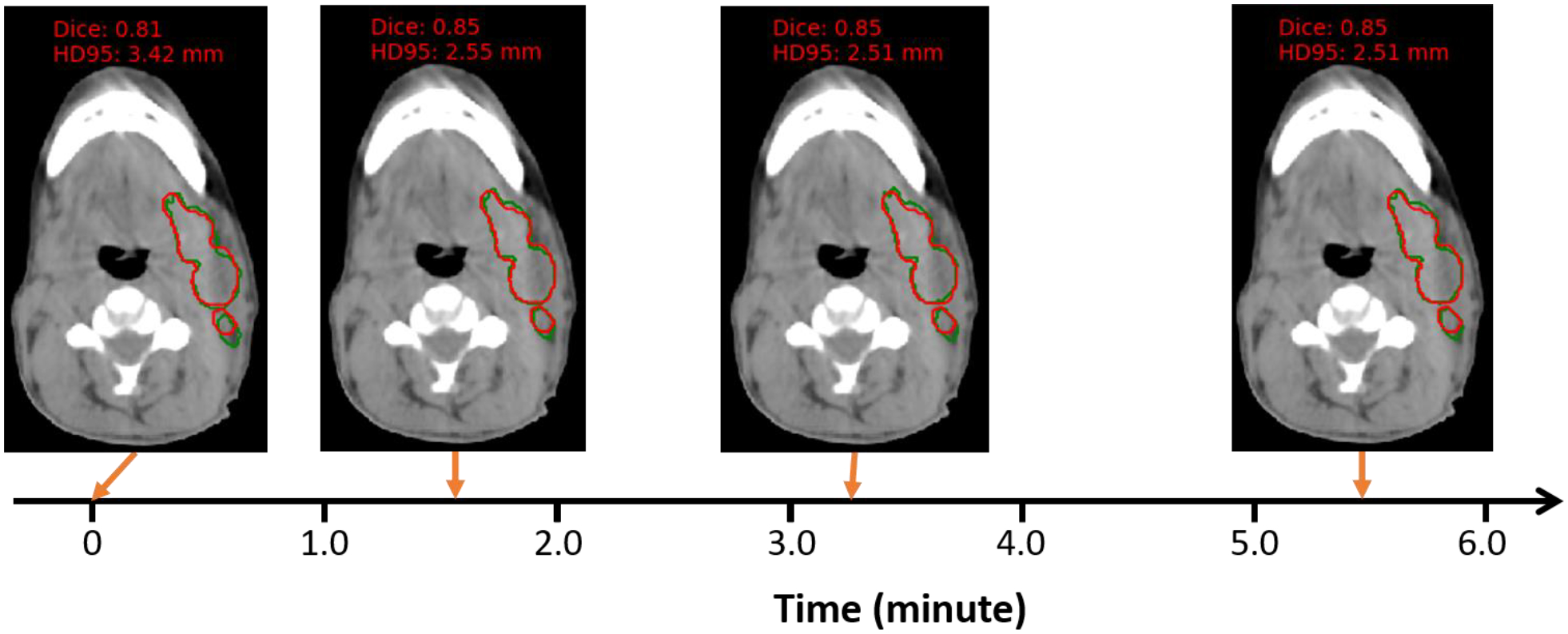
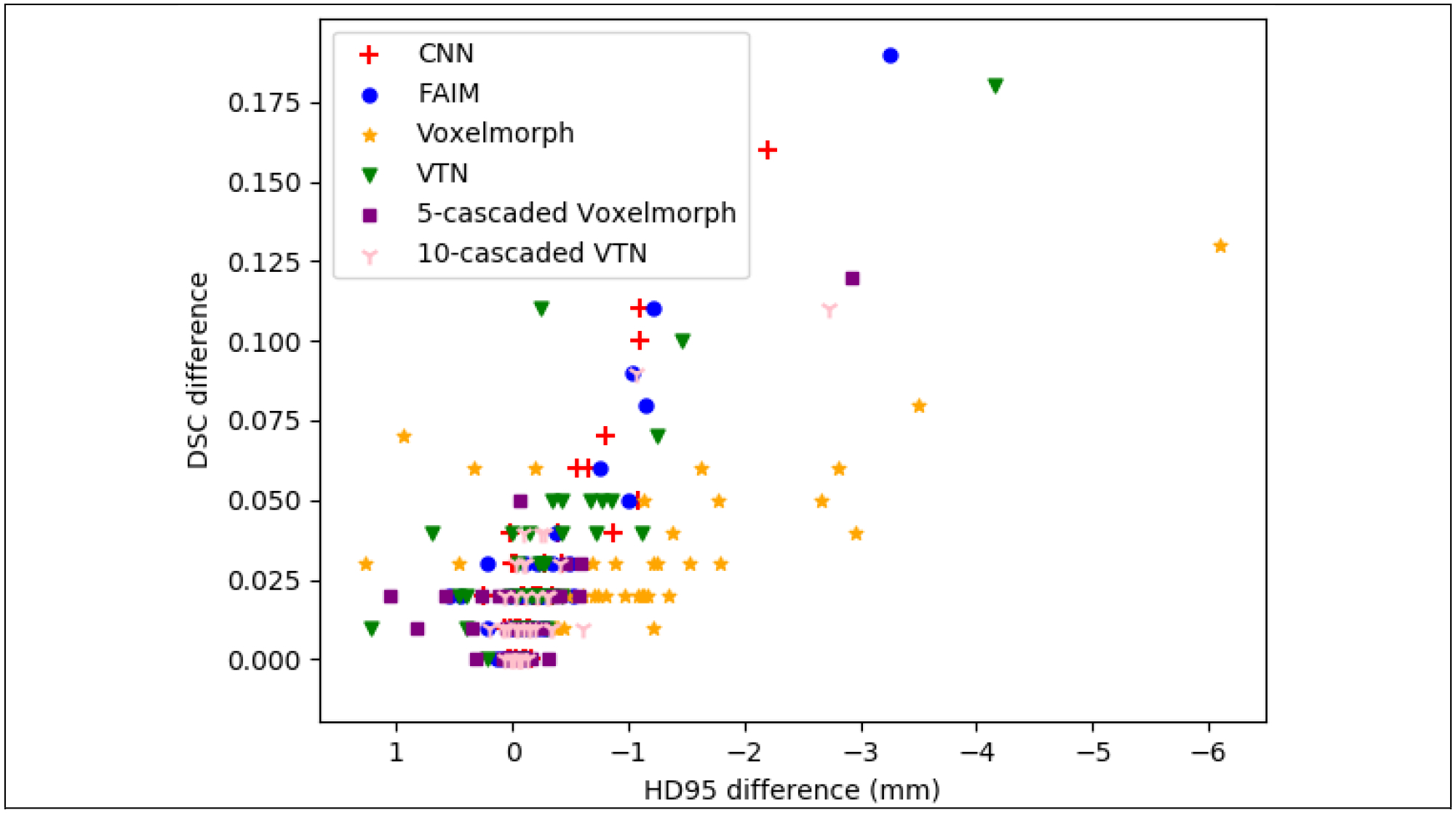
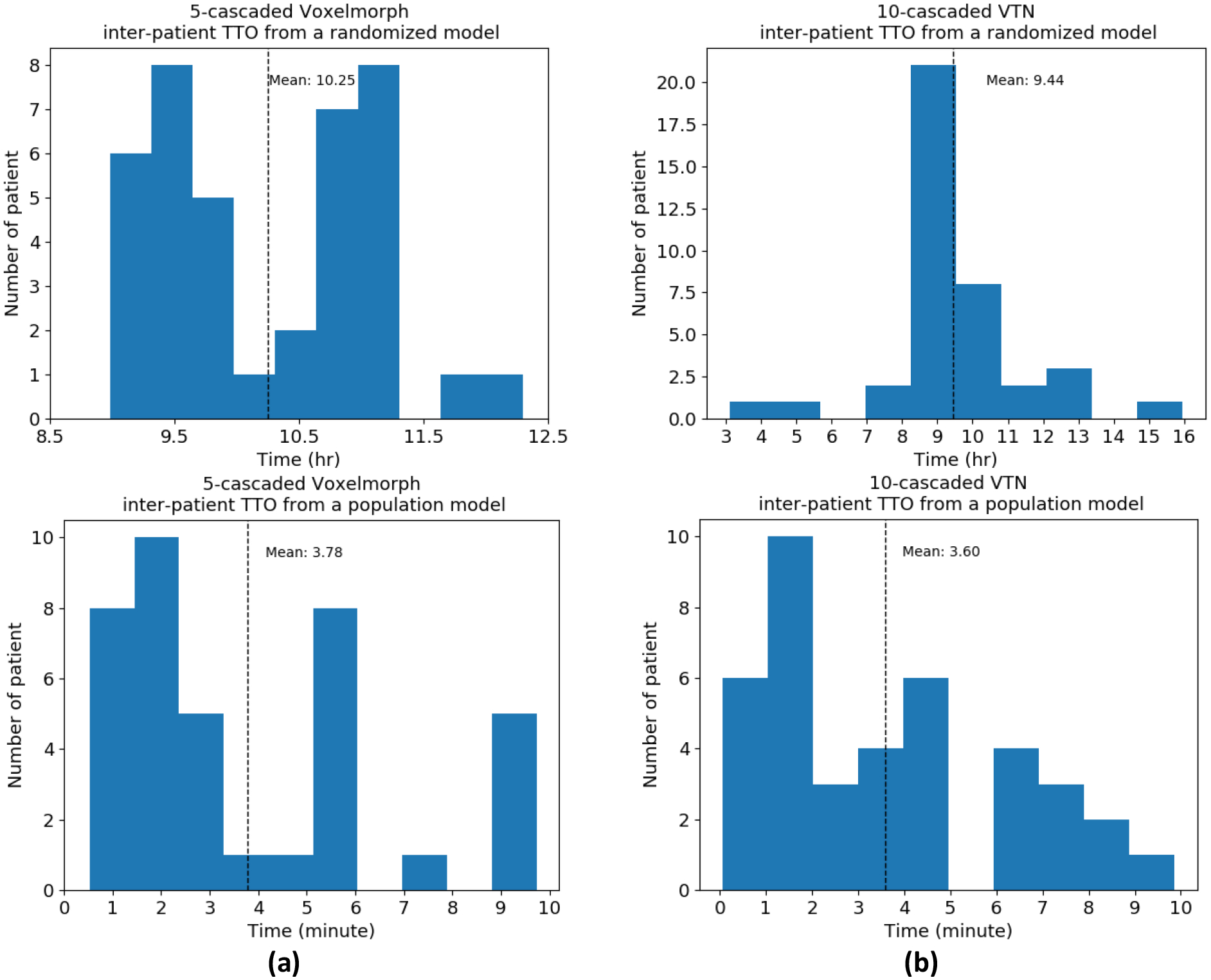
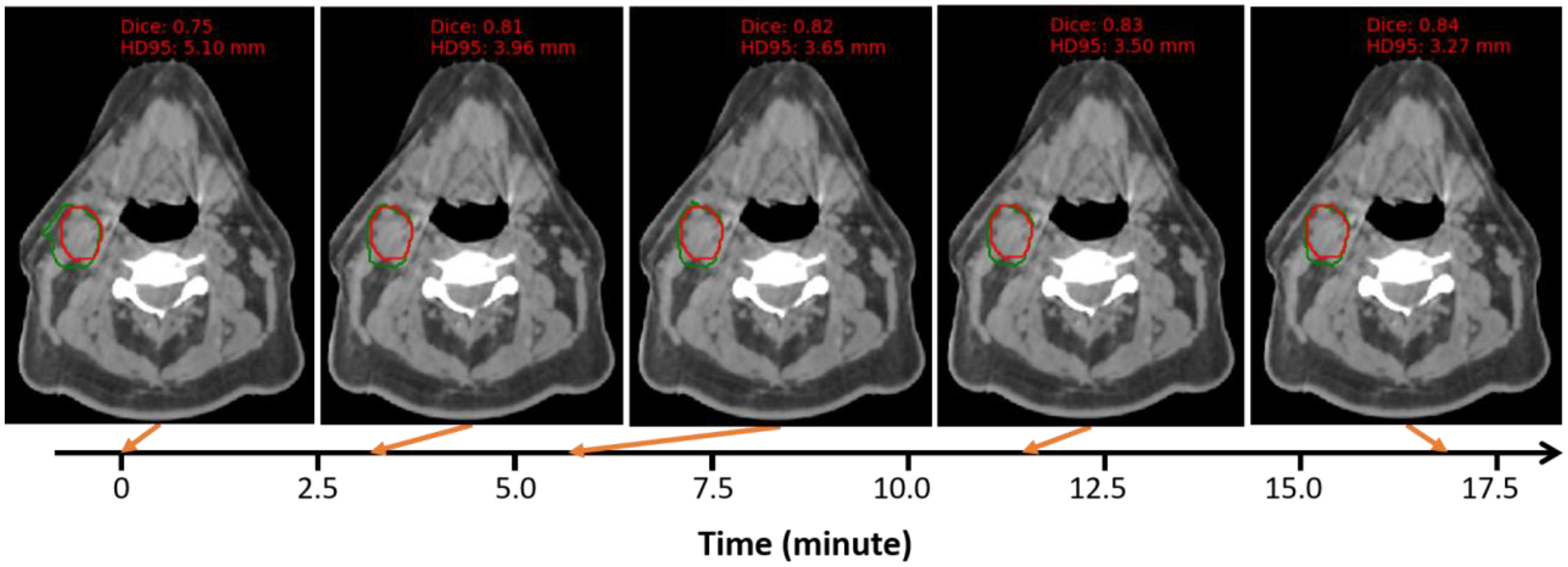
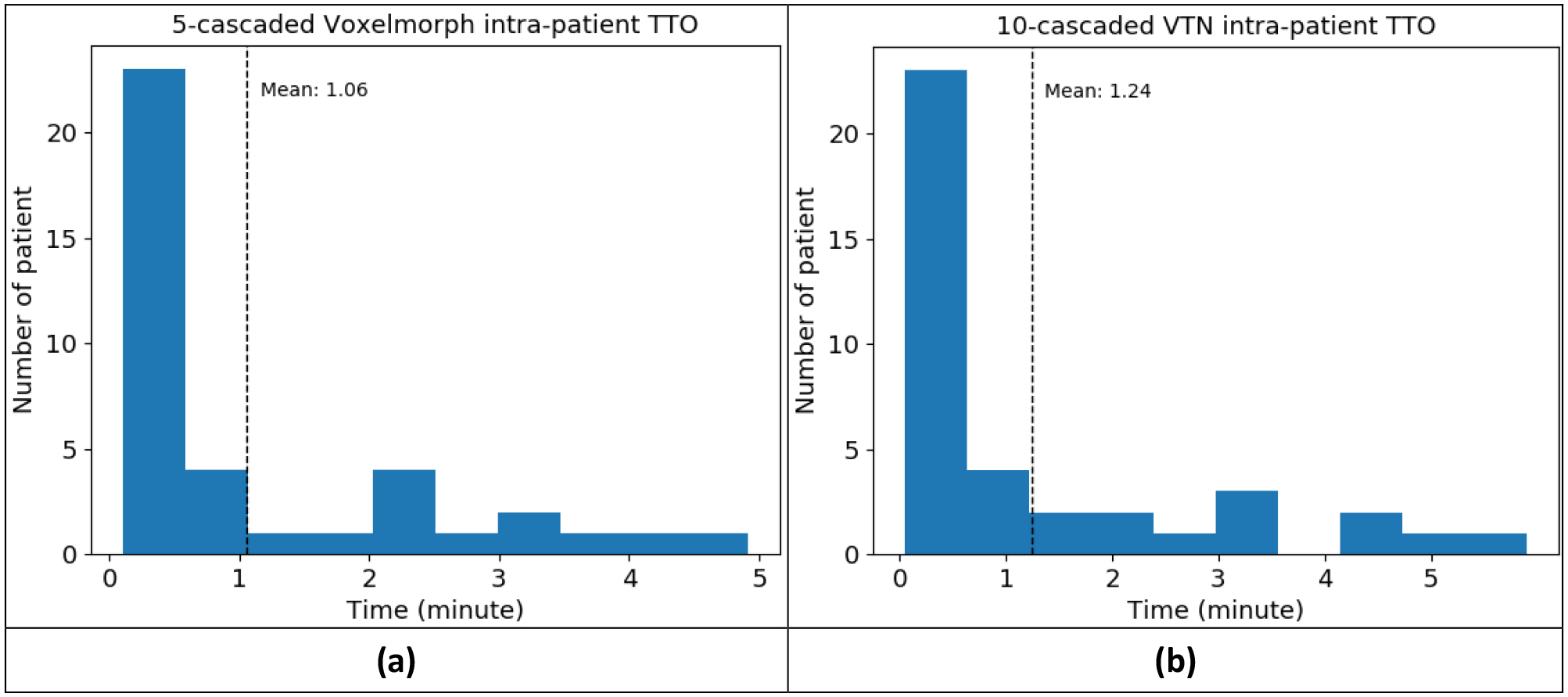
The average improvement of the Dice similarity coefficient (DSC) and 95% Hausdorff distance (HD95) of segmentation can be up to 0.04 (5%) and 0.98 mm (25%), respectively, with the individualized models compared to the population model over 17 selected OARs and a target of 39 patients. Although the average improvement may seem mild, we found that the improvement for outlier patients with structures of large anatomical changes is significant. The number of patients with at least 0.05 DSC improvement or 2 mm HD95 improvement by TTO averaged over the 17 selected structures for the state-of-the-art architecture VoxelMorph is 10 out of 39 test patients. By deriving the individualized model using TTO from the pretrained population model, TTO models can be ready in about 1 min. We also generated the adapted fractional models for each of the 39 test patients by progressively refining the individualized models using TTO to CBCT images acquired at later fractions of online ART treatment. When adapting the individualized model to a later fraction of the same patient, the model can be ready in less than a minute with slightly improved accuracy.
The proposed TTO method is well suited for online ART and can boost segmentation accuracy for DL-based DIR models, especially for outlier patients where the pretrained models fail.
在线自适应放疗(ART)需要在大多数锥形束 CT(CBCT)图像中准确高效地对靶区和危及器官(OAR)进行自动分割,这些图像通常存在严重的伪影,且软组织对比度差,使得直接分割极具挑战性。通过传统或基于深度学习(DL)的变形图像配准(DIR)将专家绘制的轮廓从预处理计划 CT 传播到可以在许多情况下获得改进的结果。典型的基于 DL 的 DIR 模型是基于人群的,也就是说,使用针对人群患者的数据集进行训练,因此它们可能受到泛化问题的影响。
在本文中,我们提出了一种称为测试时优化(TTO)的方法,用于首先为每个单独的测试患者,然后为在线 ART 治疗的每个部分逐渐改进预先训练的基于 DL 的 DIR 人群模型。我们提出的方法不易受到泛化问题的影响,因此可以通过提高模型准确性(特别是对异常值)来提高不同基于 DL 的 DIR 模型的整体性能。我们的实验使用了 239 名头颈部鳞状细胞癌患者的数据来测试所提出的方法。首先,我们使用 200 名患者训练了一个人群模型,然后通过对其余 39 名测试患者应用 TTO 来细化训练好的人群模型,以获得 39 个个体化模型。我们比较了每个个体化模型与人群模型在分割准确性方面的差异。
与人群模型相比,17 个选定 OAR 和 39 名患者的目标的分割的 Dice 相似系数(DSC)和 95%Hausdorff 距离(HD95)的平均改善可达 0.04(5%)和 0.98mm(25%)。虽然平均提高幅度可能看起来很小,但我们发现,对于结构变化较大的异常值患者,改进效果显著。通过 TTO 从预先训练的人群模型中得出个体化模型,对于 17 个选定结构,使用 VoxelMorph 等最先进的架构,39 名测试患者中至少有 0.05 DSC 改善或 2mm HD95 改善的患者人数平均为 10 名。通过使用 TTO 从预先训练的人群模型中生成个体化模型,大约 1 分钟内即可准备好 TTO 模型。我们还通过使用 TTO 逐步细化个体化模型,为在线 ART 治疗的每个后续部分生成了每个 39 名测试患者的适应分数模型。当将个体化模型适配到同一患者的后续部分时,模型可以在不到一分钟的时间内准备就绪,并且准确性略有提高。
所提出的 TTO 方法非常适合在线 ART,可以提高基于 DL 的 DIR 模型的分割准确性,特别是对于预训练模型失败的异常值患者。