Ogunbosi Babatunde Oluwatosin, Jarrett Olatokunbo Olumide, Orimadegun Adebola Emmanuel, Ayoola Omolola Oluwakemi, Osinusi Kike
Department of Paediatrics, Faculty of Clinical Sciences, College of Medicine, University of Ibadan, Nigeria.
Institute of Child Health, College of Medicine, University of Ibadan, Nigeria.
Niger J Paediatr. 2022 Jul-Sep;49(3):266-271.
Alterations in blood glucose levels are common and an important determinant of a patient's admission outcomes, point-of-care glucometers, which are affected by a variety of factors, are increasingly used in clinical care. In this study we compared blood glucose levels determined by two commonly used glucometers (One Touch and Accu-check) with those of a standard laboratory method and determined the effect of haematocrit on glucose readings.
Blood glucose levels were measured with One Touch and Accu-Check glucometers and the glucose oxidase method at the same time in 295 children aged 0 to 15 years over a 6-month period. Bland-Altman and correlation analysis were used to explore biases among the three methods. For all statistical tests, a p-value of less than 0.05 was considered statistically significant.
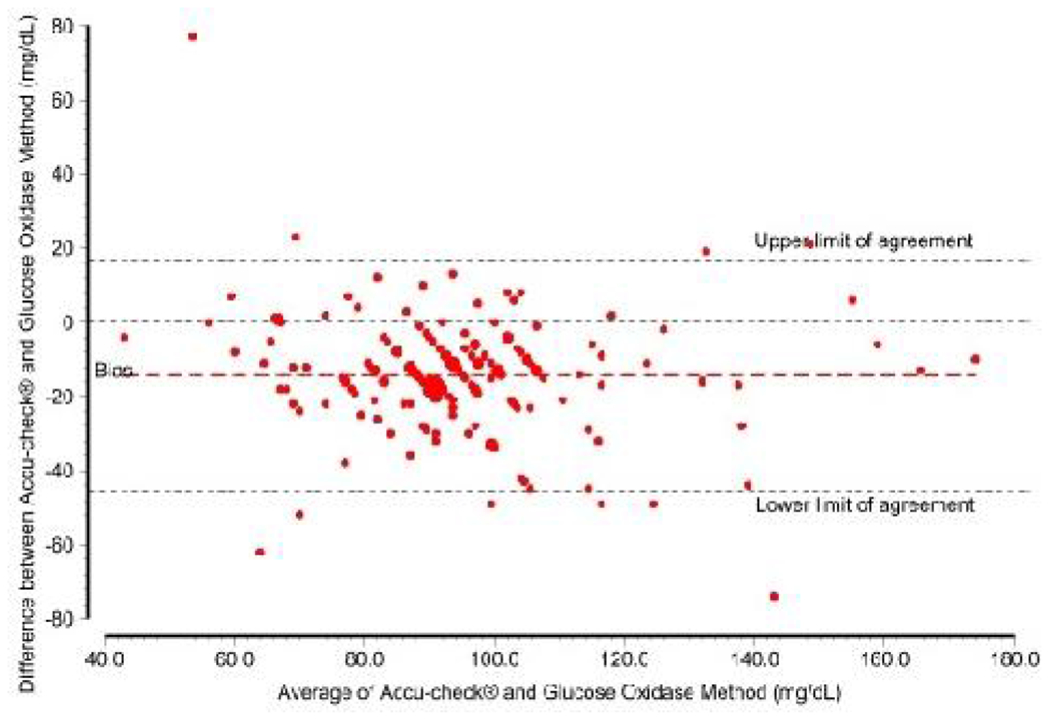
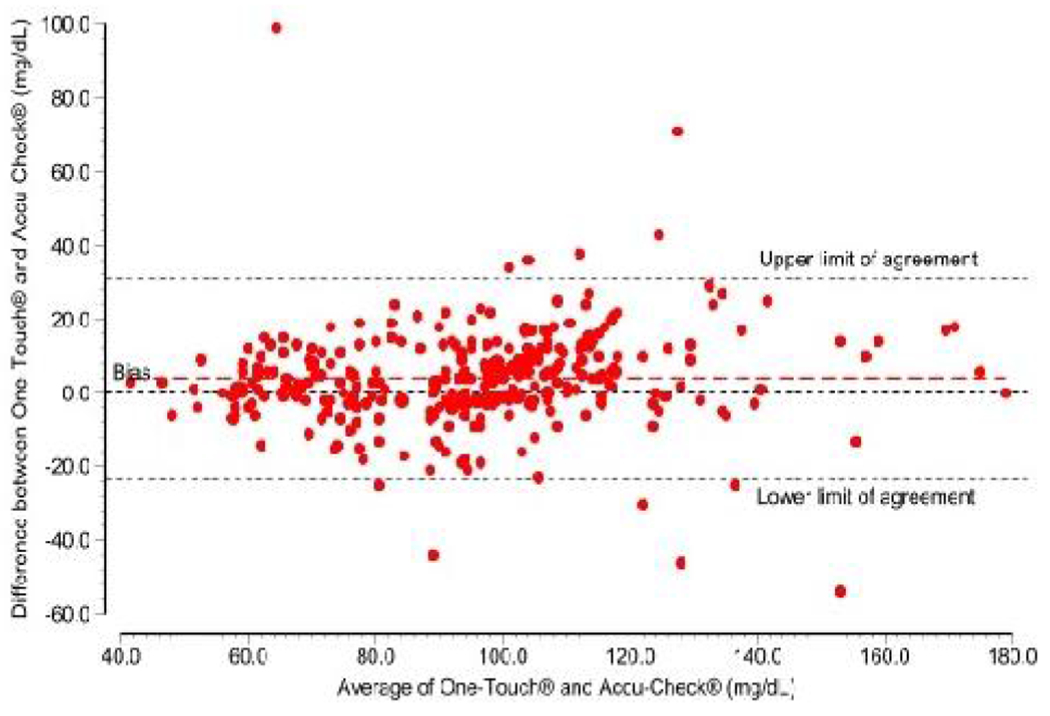
Most were males (51.2%) and the median (range) age was 1 year (1 day, 12 years). There was a significant correlation between each of the glucometer methods and laboratory blood sugar, and the correlation between the two glucometers was strong and significant. This correlation remained statistically significant even after controlling for haematocrit values. There was an acceptable level of bias (3.9 mg/dL) between the One Touch and Accu-check glucometers, but each had a remarkably large bias compared with the glucose oxidase method.
The use of a tested glucometer in clinical settings can aid in rapid decision-making, but there is a need to periodically cross-check with the glucose oxidase method in the laboratory to optimise treatment outcomes for children with dysglycaemia.
血糖水平的改变很常见,并且是患者入院结局的一个重要决定因素,受多种因素影响的即时血糖仪在临床护理中越来越常用。在本研究中,我们将两种常用血糖仪(One Touch和Accu-check)测定的血糖水平与标准实验室方法测定的血糖水平进行了比较,并确定了血细胞比容对血糖读数的影响。
在6个月的时间里,对295名0至15岁的儿童同时使用One Touch和Accu-Check血糖仪以及葡萄糖氧化酶法测量血糖水平。采用Bland-Altman分析和相关性分析来探讨这三种方法之间的偏差。对于所有统计检验,p值小于0.05被认为具有统计学意义。
大多数为男性(51.2%),中位(范围)年龄为1岁(1天,12岁)。每种血糖仪方法与实验室血糖之间均存在显著相关性,并且两种血糖仪之间的相关性很强且具有统计学意义。即使在控制血细胞比容值后,这种相关性仍具有统计学意义。One Touch和Accu-check血糖仪之间的偏差水平可接受(3.9mg/dL),但与葡萄糖氧化酶法相比,每种血糖仪都存在明显较大的偏差。
在临床环境中使用经过测试的血糖仪有助于快速决策,但需要定期与实验室的葡萄糖氧化酶法进行交叉核对,以优化血糖异常儿童的治疗结局。