College of Pharmaceutical Sciences, Southwest University, Chongqing, 400715, P. R. China.
Nat Commun. 2022 Oct 31;13(1):6522. doi: 10.1038/s41467-022-34340-3.
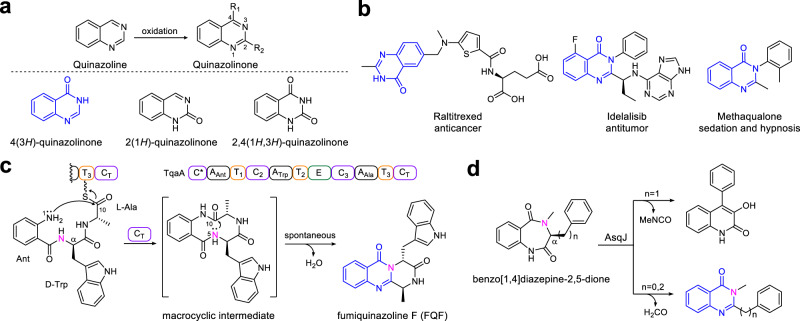
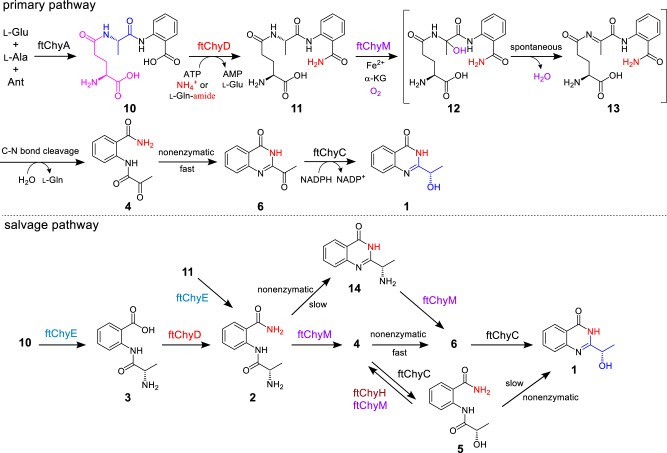
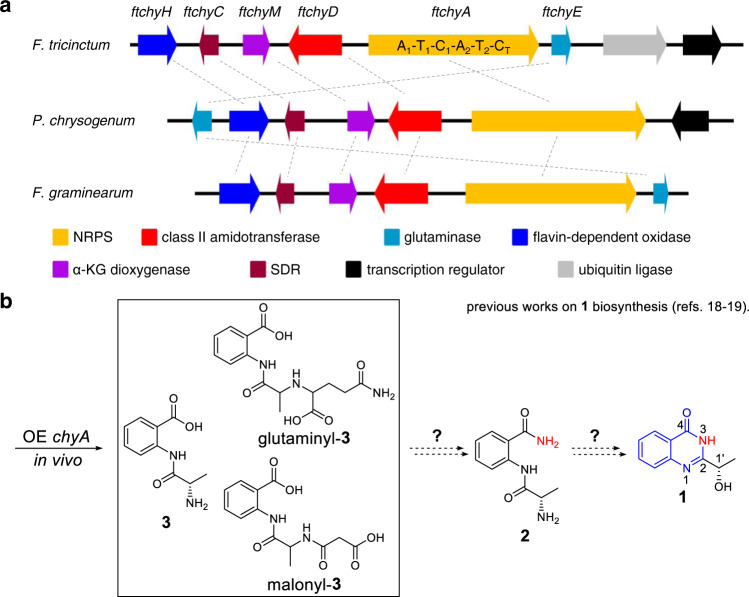
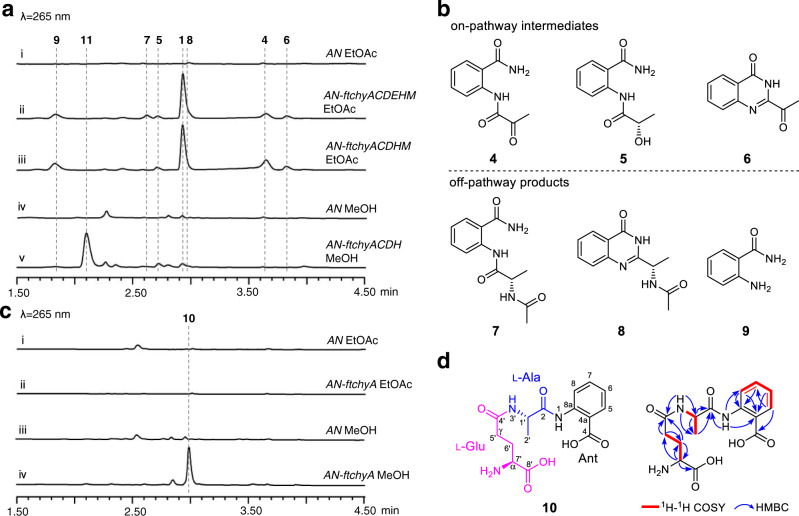
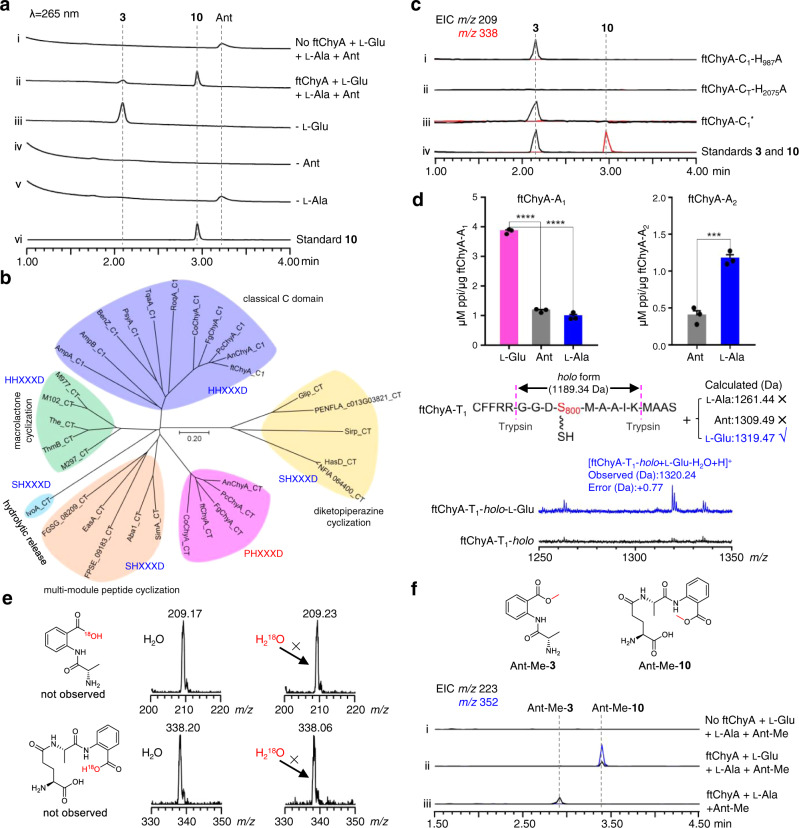
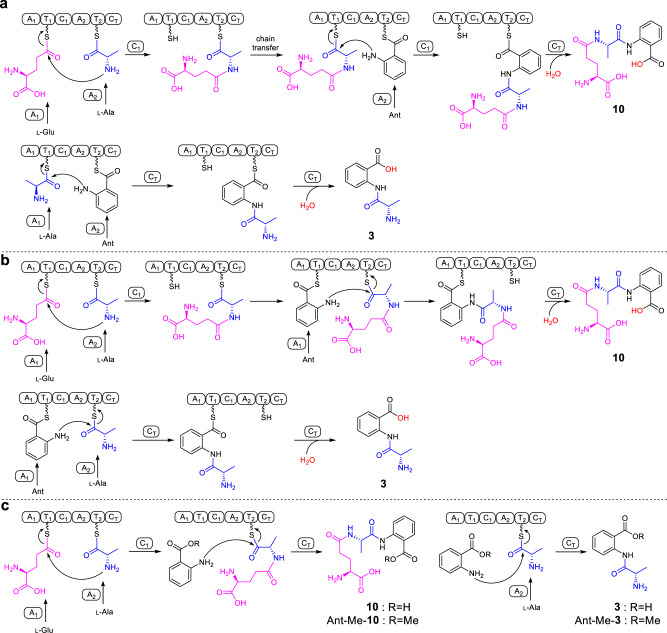
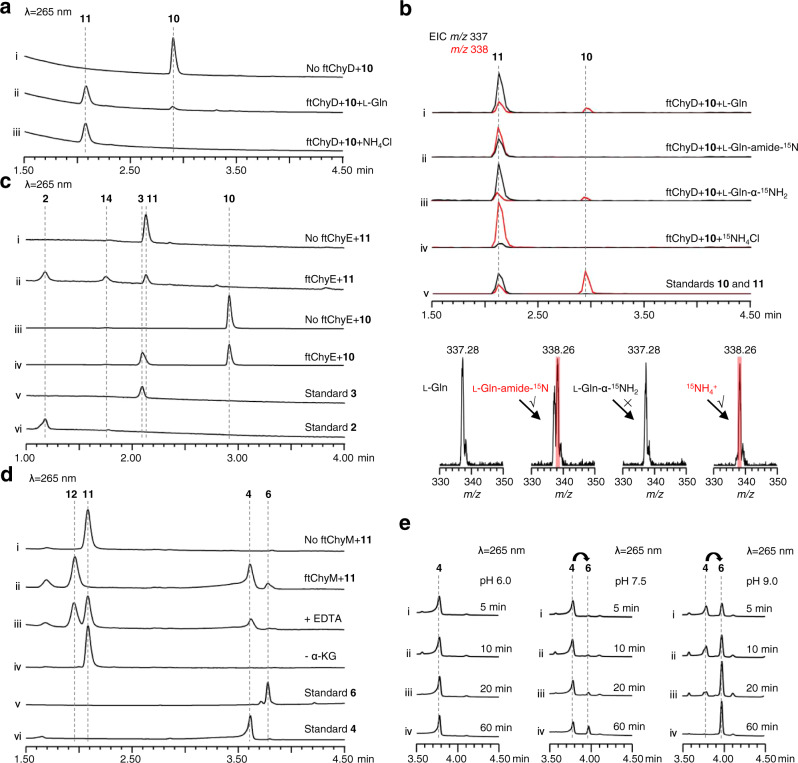
4(3H)-quinazolinone is the core scaffold in more than 200 natural alkaloids and numerous drugs. Many chemosynthetic methodologies have been developed to generate it; however, investigation of its native enzymatic formation mechanism in fungi has been largely limited to fumiquinazolines, where the two nitrogen atoms come from anthranilate (N-1) and the α-NH of amino acids (N-3). Here, via biochemical investigation of the chrysogine pathway, unexpected assembly machinery for 4(3H)-quinazolinone is unveiled, which involves a fungal two-module nonribosomal peptide synthase ftChyA with an unusual terminal condensation domain catalysing tripeptide formation; reveals that N-3 originates from the inorganic ammonium ions or the amide of L-Gln; demonstrates an unusual α-ketoglutarate-dependent dioxygenase ftChyM catalysis of the C-N bond oxidative cleavage of a tripeptide to form a dipeptide. Our study uncovers a unique release and tailoring mechanism for nonribosomal peptides and an alternative route for the synthesis of 4(3H)-quinazolinone scaffolds.
4(3H)-喹唑啉酮是 200 多种天然生物碱和许多药物的核心骨架。已经开发了许多化学合成方法来生成它;然而,真菌中其天然酶促形成机制的研究在很大程度上仅限于呋喹唑啉,其中两个氮原子来自邻氨基苯甲酸(N-1)和氨基酸的α-NH(N-3)。在这里,通过对 chrysogine 途径的生化研究,揭示了 4(3H)-喹唑啉酮的意想不到的组装机制,其中涉及真菌的两个模块非核糖体肽合酶 ftChyA 具有不寻常的末端缩合结构域,催化三肽形成;揭示 N-3 源自无机铵离子或 L-Gln 的酰胺;证明了一种不寻常的α-酮戊二酸依赖性双加氧酶 ftChyM 催化三肽的 C-N 键氧化裂解形成二肽。我们的研究揭示了非核糖体肽的独特释放和修饰机制以及 4(3H)-喹唑啉酮支架的替代合成途径。