Cognitive Psychology Unit, Leiden Institute for Brain and Cognition, Institute of Psychology, Leiden University, Leiden, The Netherlands.
Department of Child and Adolescent Psychiatry, Faculty of Medicine, TU Dresden, Dresden, Germany.
Sci Rep. 2022 Nov 1;12(1):18425. doi: 10.1038/s41598-022-21703-5.
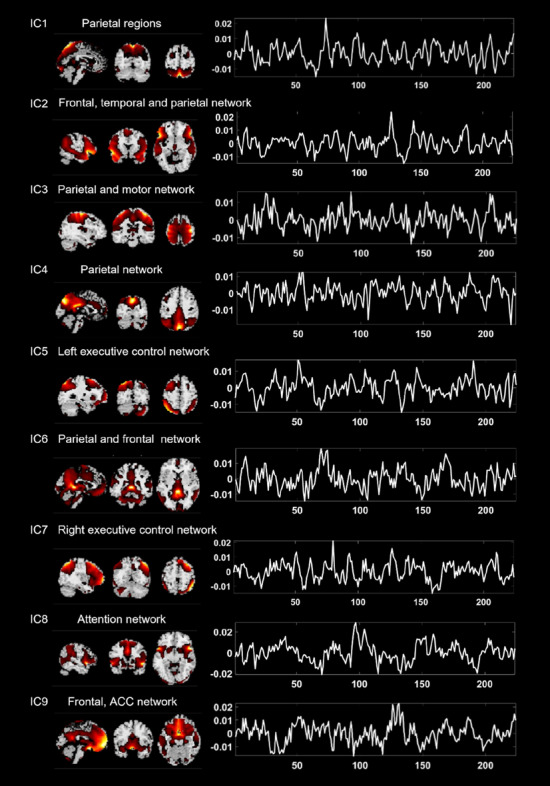
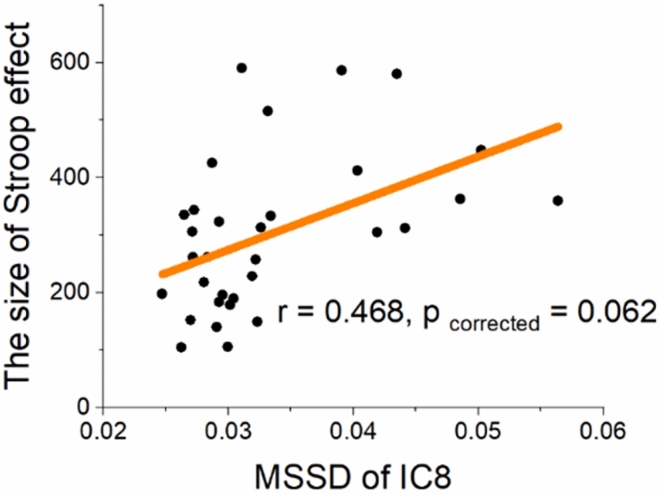
Numerous studies demonstrate that moment-to-moment neural variability is behaviorally relevant and beneficial for tasks and behaviors requiring cognitive flexibility. However, it remains unclear whether the positive effect of neural variability also holds for cognitive persistence. Moreover, different brain variability measures have been used in previous studies, yet comparisons between them are lacking. In the current study, we examined the association between resting-state BOLD signal variability and two metacontrol policies (i.e., persistence vs. flexibility). Brain variability was estimated from resting-state fMRI (rsfMRI) data using two different approaches (i.e., Standard Deviation (SD), and Mean Square Successive Difference (MSSD)) and metacontrol biases were assessed by three metacontrol-sensitive tasks. Results showed that brain variability measured by SD and MSSD was highly positively related. Critically, higher variability measured by MSSD in the attention network, parietal and frontal network, frontal and ACC network, parietal and motor network, and higher variability measured by SD in the parietal and motor network, parietal and frontal network were associated with reduced persistence (or greater flexibility) of metacontrol (i.e., larger Stroop effect or worse RAT performance). These results show that the beneficial effect of brain signal variability on cognitive control depends on the metacontrol states involved. Our study highlights the importance of temporal variability of rsfMRI activity in understanding the neural underpinnings of cognitive control.
许多研究表明,神经变异性与需要认知灵活性的任务和行为具有行为相关性和有益性。然而,神经变异性的积极影响是否也适用于认知持久性仍不清楚。此外,以前的研究中使用了不同的大脑变异性测量方法,但缺乏它们之间的比较。在当前的研究中,我们检查了静息状态 BOLD 信号变异性与两种元控制策略(即持久性与灵活性)之间的关联。使用两种不同的方法(即标准差 (SD) 和均方连续差 (MSSD))从静息态 fMRI (rsfMRI) 数据中估计大脑变异性,并通过三个元控制敏感任务评估元控制偏差。结果表明,SD 和 MSSD 测量的大脑变异性高度正相关。关键的是,注意力网络、顶叶和额叶网络、额叶和 ACC 网络、顶叶和运动网络中 MSSD 测量的变异性较高,顶叶和运动网络、顶叶和额叶网络中 SD 测量的变异性较高与元控制的持久性(或更大的灵活性)降低有关(即更大的斯特鲁普效应或更差的 RAT 表现)。这些结果表明,大脑信号变异性对认知控制的有益影响取决于所涉及的元控制状态。我们的研究强调了理解认知控制的神经基础时,rsfMRI 活动的时间变异性的重要性。