Master. First Teaching Hospital of Tianjin University of Traditional Chinese Medicine - National Clinical Research Center for Chinese Medicine Acupuncture and Moxibustion - Tianjin, China.
Bachelor. First Teaching Hospital of Tianjin University of Traditional Chinese Medicine - National Clinical Research Center for Chinese Medicine Acupuncture and Moxibustion - Tianjin, China.
Acta Cir Bras. 2022 Oct 28;37(7):e370701. doi: 10.1590/acb370701. eCollection 2022.
Tanshinone IIA is a well-known lipophilic active constituent refined from traditional Chinese medicines, danshen. It has been previously demonstrated to possess various biological properties, including anti-inflammatory, antioxidant, promoting angiogenesis effect and so on. However, the mechanism of tanshinone IIA on myocardial ischemia-reperfusion injury (MI/RI) remains unclear. In this study, we investigated the effect of tanshinone IIA on MI/RI.
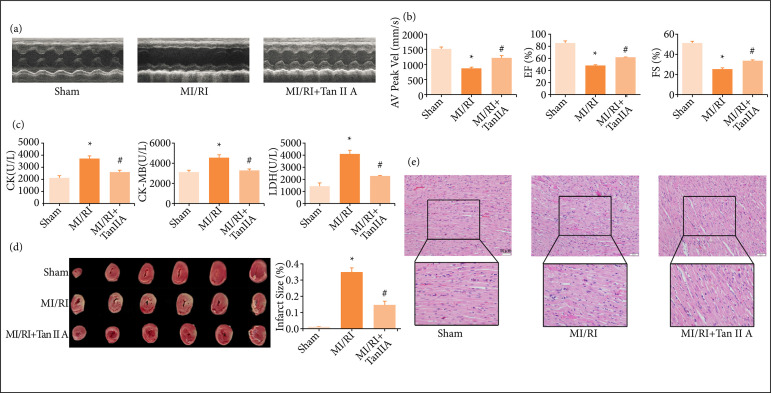
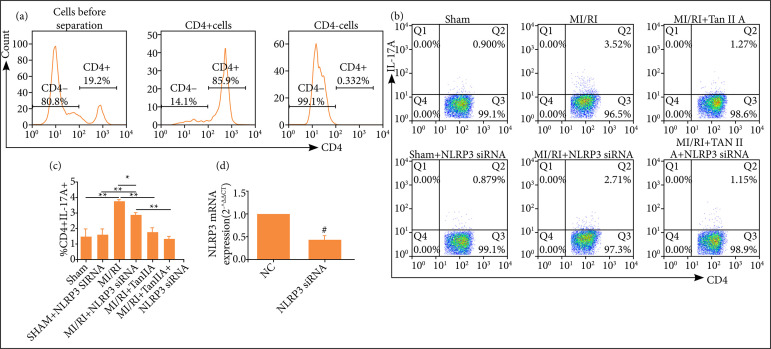
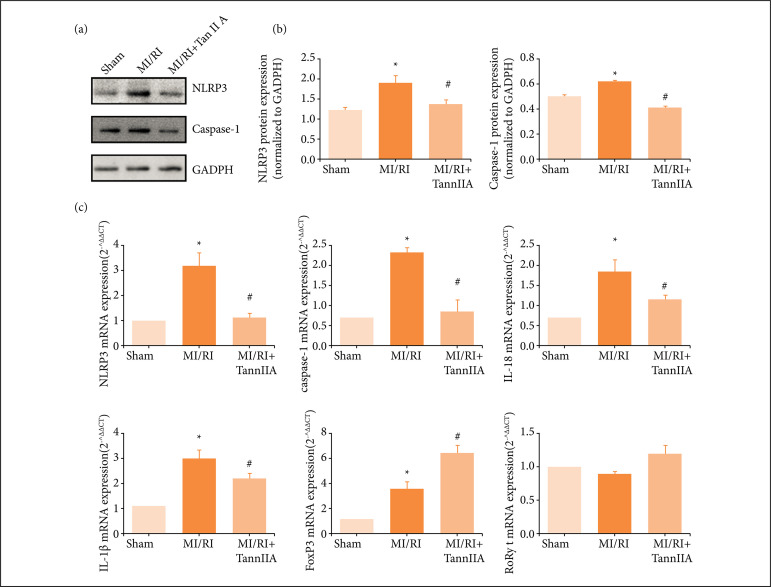
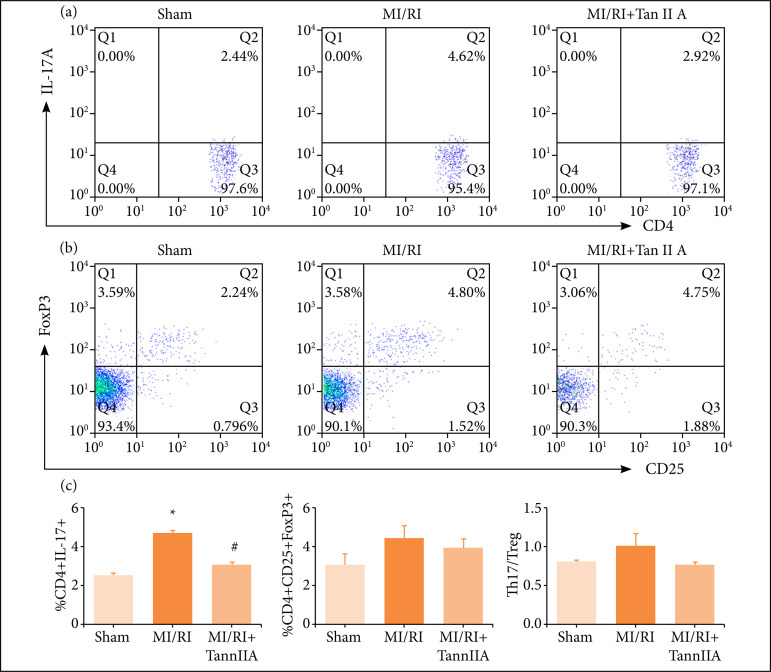
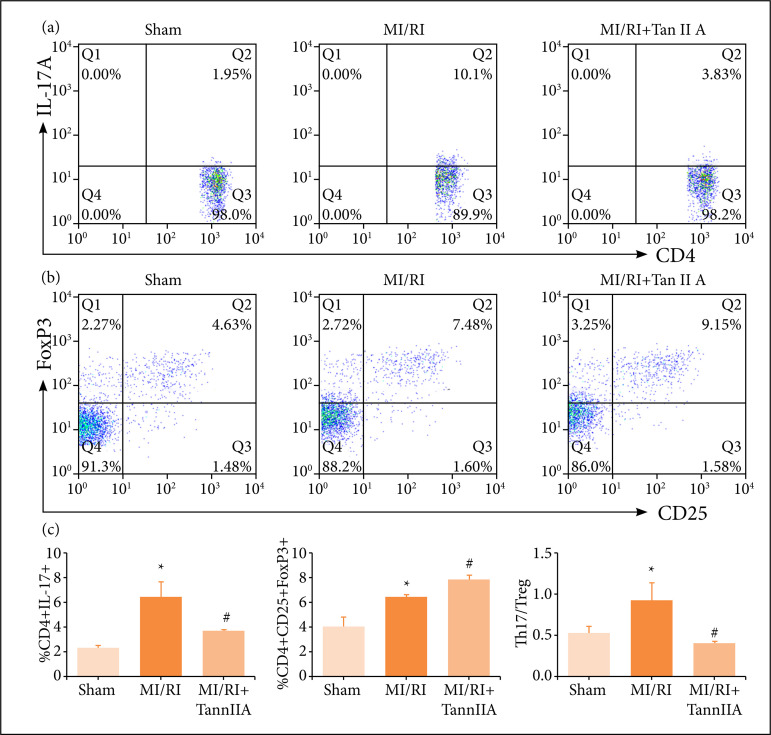
MI/RI rat models were set up. Echocardiographic evaluation and hematoxylin and eosin staining were performed to analyze the cardiac function and morphology of MI/RI. Western blot was conducted for the detection of protein expression of pyrin domain containing 3 (NLRP3) and caspase-1 in heart tissues. Flow cytometry and real-time polymerase chain reaction were used for the detection of proinflammatory cytokines and Th17 cells differentiation.
We found that tanshinone IIA alleviated the myocardial damage of MI/RI, ameliorated the overall and local inflammatory reaction, and produced a cardioprotective effect by inhibiting of NLRP3 inflammasome activation and Th17/Treg cells differentiation.
Our results highlighted the cardio-protective effect of tanshinone IIA on MI/RI and uncovered its underlying mechanism related to the NLRP3 inflammasome inhibition and the modulation of Th17/Treg cells differentiation.
丹参酮 IIA 是一种从传统中药丹参中提取的亲脂性活性成分,具有多种生物学特性,包括抗炎、抗氧化、促进血管生成等。然而,丹参酮 IIA 对心肌缺血再灌注损伤(MI/RI)的作用机制尚不清楚。在本研究中,我们研究了丹参酮 IIA 对 MI/RI 的作用。
建立 MI/RI 大鼠模型。进行超声心动图评估和苏木精-伊红染色,以分析 MI/RI 大鼠的心脏功能和形态。通过 Western blot 检测心脏组织中吡喃结构域包含蛋白 3(NLRP3)和半胱氨酸天冬氨酸蛋白酶-1(caspase-1)的蛋白表达。通过流式细胞术和实时聚合酶链反应检测促炎细胞因子和 Th17 细胞分化。
我们发现丹参酮 IIA 减轻了 MI/RI 引起的心肌损伤,改善了整体和局部炎症反应,并通过抑制 NLRP3 炎性小体激活和 Th17/Treg 细胞分化产生了心脏保护作用。
我们的结果强调了丹参酮 IIA 对 MI/RI 的心脏保护作用,并揭示了其抑制 NLRP3 炎性小体和调节 Th17/Treg 细胞分化的潜在机制。