Lee Eun-Hyun, Lee Young Whee, Lee Kwan-Woo, Kim Hae Jin, Hong Seongbin, Kim So Hun, Kang Eun Hee
Graduate School of Public Health, Ajou University, 164 Worldcup-ro, Yeongtong-gu, 16499, Suwon, Gyeonggi-do, Republic of Korea.
Department of Nursing, Inha University, Incheon, Republic of Korea.
BMC Nurs. 2022 Nov 4;21(1):297. doi: 10.1186/s12912-022-01062-2.
The internet has become a major source of health information, and obtaining appropriate information requires various abilities and skills, labeled as electronic health literacy (eHealth literacy). The existing instruments for measuring eHealth literacy are outdated because they were developed during the Web 1.0 era, or not sufficiently sensitive for people with a specific condition or disease because they were designed to assess eHealth literacy over a broad range for a general population. Approximately one in ten adults worldwide live with diabetes. Health professionals have a responsibility to identify patients with low eHealth literacy to prevent them from obtaining misleading internet diabetes information.
The aims were to develop a condition-specific eHealth literacy scale for diabetes and to evaluate its psychometric properties among people with type 2 diabetes.
An instrument development design was used. This study recruited 453 people diagnosed with type 2 diabetes at the outpatient clinics of hospitals in 2021. Psychometric properties (internal consistency, measurement invariance, and content, structural, convergent, and known-groups validities) were analyzed.
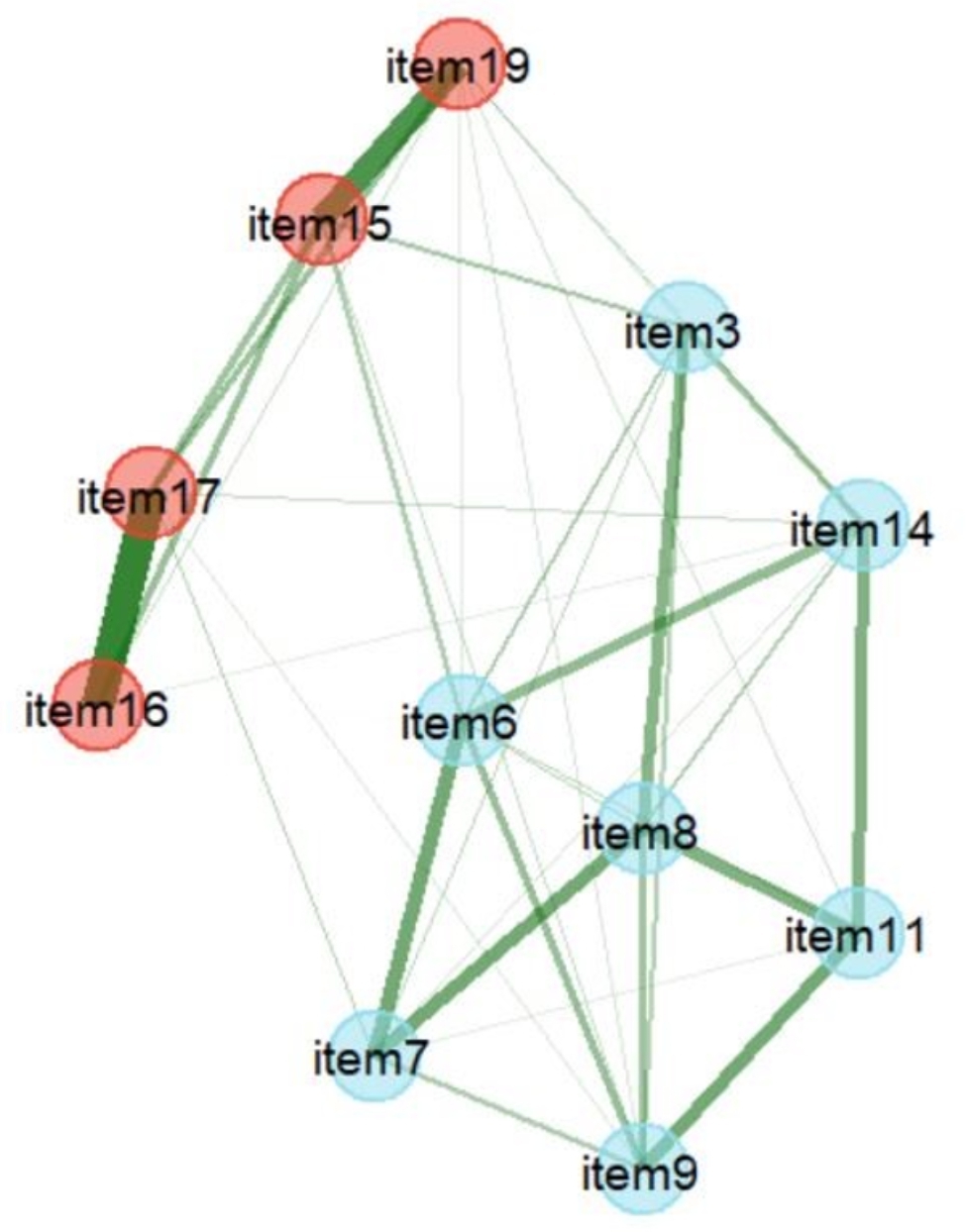
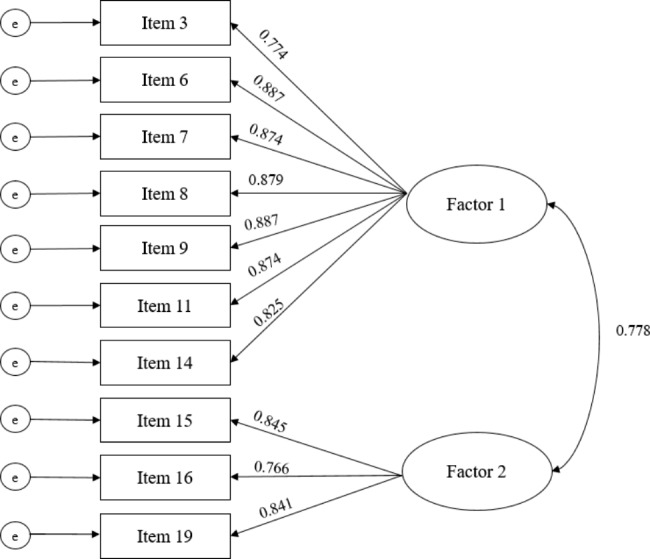
An expert panel assessed content validity. Exploratory factor analysis, exploratory graph analysis, and confirmatory factor analysis (CFA) for structural validity yielded a two-factor solution (CFI = 0.977, SRMR = 0.029, RMSEA = 0.077). Cronbach's alpha and omega values were excellent for each factor (0.87-0.94). Multigroup CFA yielded configural and metric measurement invariance across the gender, age, and glycemic control status groups. Convergent validity with a comparator instrument to measure health literacy was supported by a moderate correlation, and known-groups validity determined using groups with different internet-use frequencies was satisfied with a high effect size.
A new condition-specific eHealth literacy scale for people with type 2 diabetes was developed, comprising 10 items. The scale exhibited good psychometric properties; however, test-retest reliability must be determined for the stability of the scale and cross-cultural validity is required among different languages. The brief scale has the merits of being feasible to use in busy clinical practice and being less burdensome to respondents. The scale can be applied in clinical trials of internet-based diabetes interventions for assessing the eHealth literacy of respondents.
互联网已成为健康信息的主要来源,获取适当的信息需要各种能力和技能,这些能力和技能被称为电子健康素养(eHealth素养)。现有的测量eHealth素养的工具已经过时,因为它们是在网络1.0时代开发的,或者对于患有特定疾病的人来说不够敏感,因为它们旨在评估一般人群在广泛范围内的eHealth素养。全球约十分之一的成年人患有糖尿病。健康专业人员有责任识别eHealth素养较低的患者,以防止他们获取误导性的互联网糖尿病信息。
目的是开发一种针对糖尿病的特定疾病eHealth素养量表,并在2型糖尿病患者中评估其心理测量特性。
采用工具开发设计。本研究于2021年在医院门诊招募了453名被诊断为2型糖尿病的患者。分析了心理测量特性(内部一致性、测量不变性以及内容、结构、收敛和已知组效度)。
一个专家小组评估了内容效度。用于结构效度的探索性因素分析、探索性图表分析和验证性因素分析(CFA)得出了一个双因素解决方案(CFI = 0.977,SRMR = 0.029,RMSEA = 0.077)。每个因素的克朗巴哈α系数和ω值都非常好(0.87 - 0.94)。多组CFA在性别、年龄和血糖控制状态组中产生了构型和度量测量不变性。与用于测量健康素养的比较工具的收敛效度得到了中等相关性的支持,并且使用具有不同互联网使用频率的组确定的已知组效度在高效应量下得到满足。
开发了一种新的针对2型糖尿病患者的特定疾病eHealth素养量表,包括10个项目。该量表表现出良好的心理测量特性;然而,必须确定重测信度以评估量表的稳定性,并且需要在不同语言中进行跨文化效度研究。该简短量表具有在繁忙的临床实践中易于使用且对受访者负担较小的优点。该量表可应用于基于互联网的糖尿病干预临床试验中,以评估受访者的eHealth素养。