Department of Medicine, The University of Hong Kong, Hong Kong, China.
State Key Laboratory of Pharmaceutical Biotechnology, The University of Hong Kong, Hong Kong, China.
Cardiovasc Diabetol. 2022 Nov 5;21(1):234. doi: 10.1186/s12933-022-01677-4.
Bioactive lipids play an important role in insulin secretion and sensitivity, contributing to the pathophysiology of type 2 diabetes (T2D). This study aimed to identify novel lipid species associated with incident T2D in a nested case-control study within a long-term prospective Chinese community-based cohort with a median follow-up of ~ 16 years.
Plasma samples from 196 incident T2D cases and 196 age- and sex-matched non-T2D controls recruited from the Hong Kong Cardiovascular Risk Factor Prevalence Study (CRISPS) were first analyzed using untargeted lipidomics. Potential predictive lipid species selected by the Boruta analysis were then verified by targeted lipidomics. The associations between these lipid species and incident T2D were assessed. Effects of novel lipid species on insulin secretion in mouse islets were investigated.
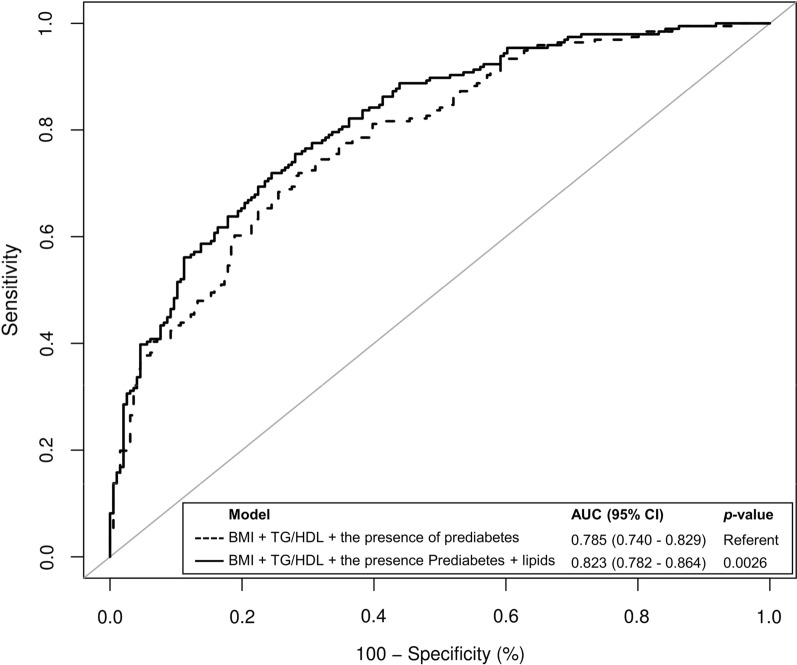
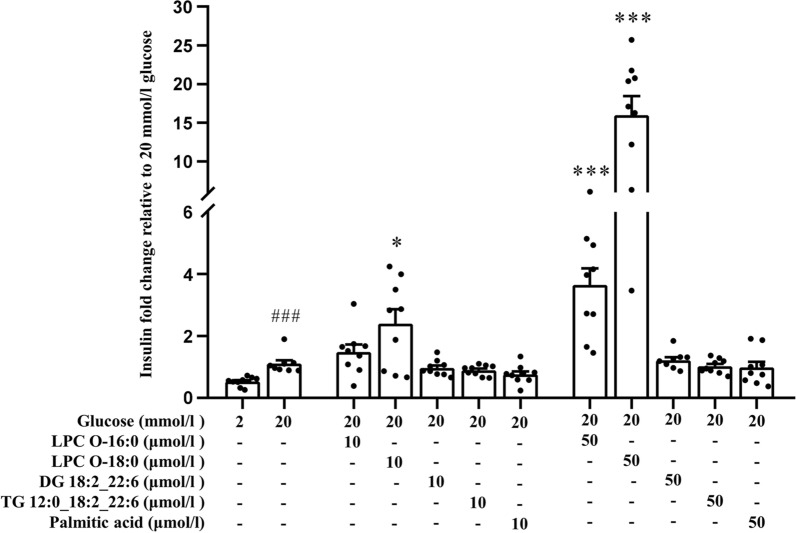
Boruta analysis identified 16 potential lipid species. After adjustment for body mass index (BMI), triacylglycerol/high-density lipoprotein (TG/HDL) ratio and the presence of prediabetes, triacylglycerol (TG) 12:0_18:2_22:6, TG 16:0_11:1_18:2, TG 49:0, TG 51:1 and diacylglycerol (DG) 18:2_22:6 were independently associated with increased T2D risk, whereas lyso-phosphatidylcholine (LPC) O-16:0, LPC P-16:0, LPC O-18:0 and LPC 18:1 were independently associated with decreased T2D risk. Addition of the identified lipid species to the clinical prediction model, comprised of BMI, TG/HDL ratio and the presence of prediabetes, achieved a 3.8% improvement in the area under the receiver operating characteristics curve (AUROC) (p = 0.0026). Further functional study revealed that, LPC O-16:0 and LPC O-18:0 significantly potentiated glucose induced insulin secretion (GSIS) in a dose-dependent manner, whereas neither DG 18:2_22:6 nor TG 12:0_18:2_22:6 had any effect on GSIS.
Addition of the lipid species substantially improved the prediction of T2D beyond the model based on clinical risk factors. Decreased levels of LPC O-16:0 and LPC O-18:0 may contribute to the development of T2D via reduced insulin secretion.
生物活性脂质在胰岛素分泌和敏感性中发挥重要作用,导致 2 型糖尿病(T2D)的病理生理学发生变化。本研究旨在通过对一项长期前瞻性中国社区队列的嵌套病例对照研究中进行的靶向脂质组学分析,鉴定与 T2D 发病相关的新型脂质种类。该队列的中位随访时间约为 16 年。
从香港心血管风险因素患病率研究(CRISPS)中招募的 196 例 T2D 新发病例和 196 例年龄和性别匹配的非 T2D 对照者的血浆样本首先进行非靶向脂质组学分析。通过 Boruta 分析选择的潜在预测脂质种类,然后通过靶向脂质组学进行验证。评估这些脂质种类与 T2D 发病的相关性。研究了新型脂质种类对小鼠胰岛胰岛素分泌的影响。
Boruta 分析确定了 16 种潜在的脂质种类。在调整体重指数(BMI)、三酰甘油/高密度脂蛋白(TG/HDL)比值和糖尿病前期存在后,三酰甘油(TG)12:0_18:2_22:6、TG 16:0_11:1_18:2、TG 49:0、TG 51:1 和二酰基甘油(DG)18:2_22:6 与 T2D 发病风险增加独立相关,而溶血磷脂酰胆碱(LPC)O-16:0、LPC P-16:0、LPC O-18:0 和 LPC 18:1 与 T2D 发病风险降低独立相关。将鉴定出的脂质种类添加到由 BMI、TG/HDL 比值和糖尿病前期组成的临床预测模型中,可使受试者工作特征曲线(ROC)下面积(AUROC)提高 3.8%(p=0.0026)。进一步的功能研究表明,LPC O-16:0 和 LPC O-18:0 以剂量依赖性方式显著增强葡萄糖诱导的胰岛素分泌(GSIS),而 DG 18:2_22:6 和 TG 12:0_18:2_22:6 对 GSIS 均无影响。
新型脂质种类的加入大大提高了 T2D 预测的准确性,其效果超过了基于临床危险因素的模型。LPC O-16:0 和 LPC O-18:0 水平降低可能通过减少胰岛素分泌而导致 T2D 的发生。