Mader Edward C, Mader Annie Cielo L, Singh Prachi
Department of Neurology, Louisiana State University Health Sciences Center, New Orleans, USA.
Science and Math Division, Delgado Community College, New Orleans, USA.
Cureus. 2022 Oct 31;14(10):e30928. doi: 10.7759/cureus.30928. eCollection 2022 Oct.
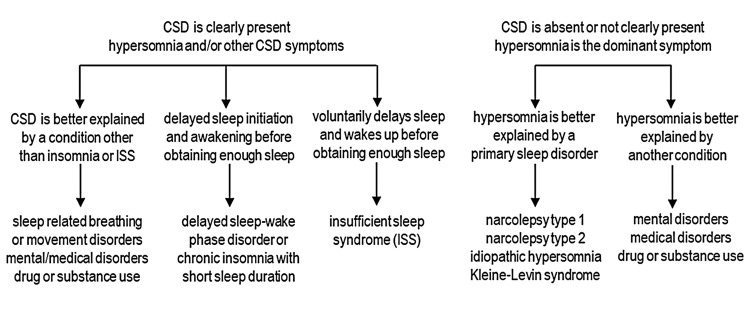
Chronic sleep deficiency (CSD) poses a threat to physical health, mental well-being, and social functioning. The concept of behaviorally induced CSD has not changed much since it was first introduced four decades ago. Behaviorally induced CSD is currently referred to as insufficient sleep syndrome (ISS). In the latest edition of the International Classification of Sleep Disorders (ICSD-3, 2014), ISS is considered a disorder of central hypersomnolence with diagnostic codes ICD-9-CM 307.44 and ICD-10-CM F51.12. In this review, we will describe the biological importance of sleep, the ramifications of CSD on the individual and society, the nosological status and diagnostic features of ISS, and the apparent lack of attention to ISS in contemporary medical practice and public health programs. The last three decades have seen a global rise in voluntary sleep curtailment such that ISS may already be the leading cause of CSD, not only in adults but also in school-aged children and adolescents. Acknowledging ISS as a public health priority is a necessary first step in our response to the global threat of CSD and CSD-related health consequences. It is only by confronting ISS directly that we can hope to develop and implement effective educational and advocacy programs, along with more responsible public health policies and regulations.
慢性睡眠不足(CSD)对身体健康、心理健康和社会功能构成威胁。自四十年前首次提出以来,行为诱导性CSD的概念变化不大。行为诱导性CSD目前被称为睡眠不足综合征(ISS)。在最新版的《国际睡眠障碍分类》(ICSD - 3,2014)中,ISS被视为一种中枢性过度嗜睡障碍,诊断编码为ICD - 9 - CM 307.44和ICD - 10 - CM F51.12。在本综述中,我们将描述睡眠的生物学重要性、CSD对个人和社会的影响、ISS的疾病分类地位和诊断特征,以及当代医疗实践和公共卫生项目中对ISS明显缺乏关注的情况。在过去三十年中,全球范围内自愿减少睡眠时间的情况有所增加,以至于ISS可能已经成为CSD的主要原因,不仅在成年人中如此,在学龄儿童和青少年中也是如此。将ISS视为公共卫生优先事项是我们应对CSD全球威胁及与CSD相关的健康后果的必要第一步。只有直接面对ISS,我们才有希望制定和实施有效的教育及宣传项目,以及更具责任感的公共卫生政策和法规。