Kumar Vinay, Rosenzweig Rachel, Asalla Suman, Nehra Sarita, Prabhu Sumanth D, Bansal Shyam S
Department of Physiology and Cell Biology, The Ohio State University Wexner Medical Center, Columbus, Ohio, USA.
The Dorothy M. Davis Heart and Lung Research Institute, The Ohio State University Wexner Medical Center, Columbus, Ohio, USA.
JACC Basic Transl Sci. 2022 Jul 6;7(10):1038-1049. doi: 10.1016/j.jacbts.2022.05.005. eCollection 2022 Oct.
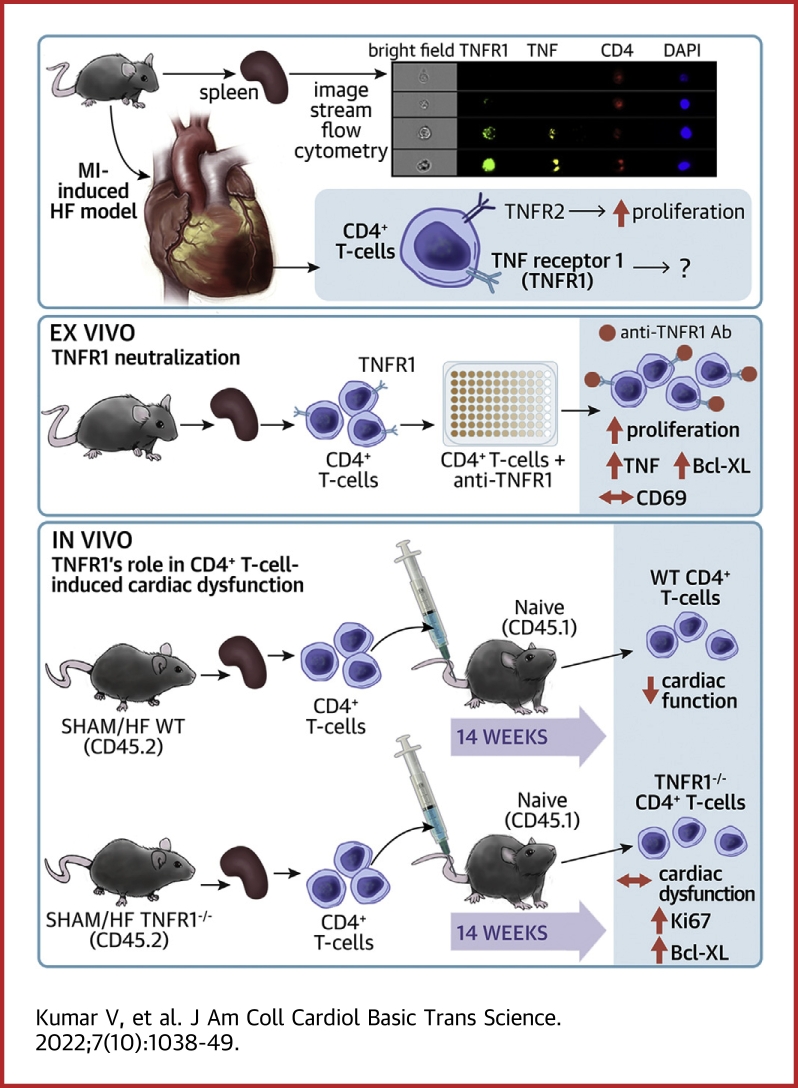
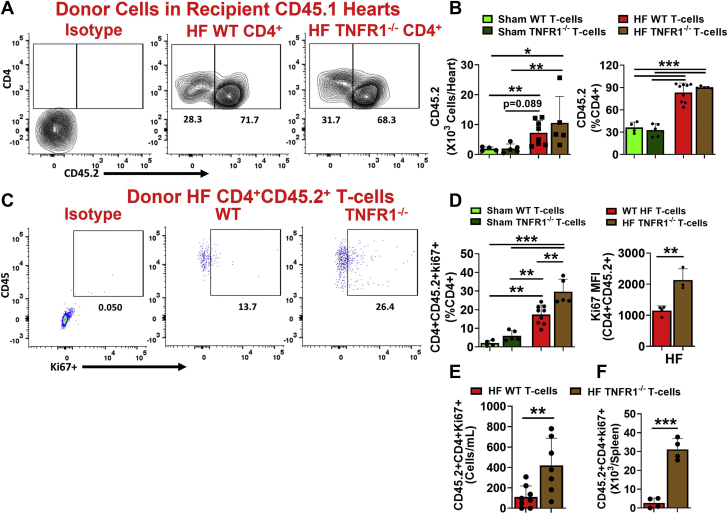
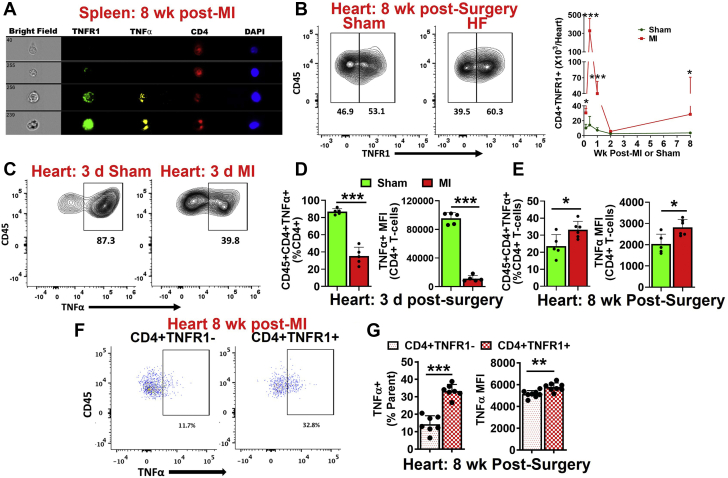
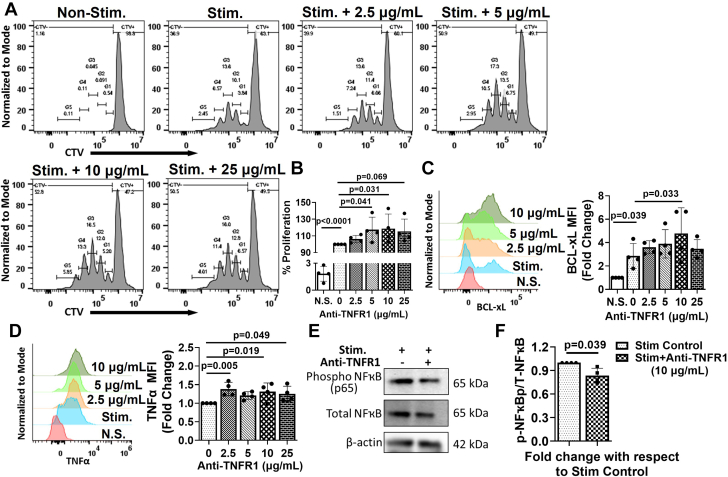
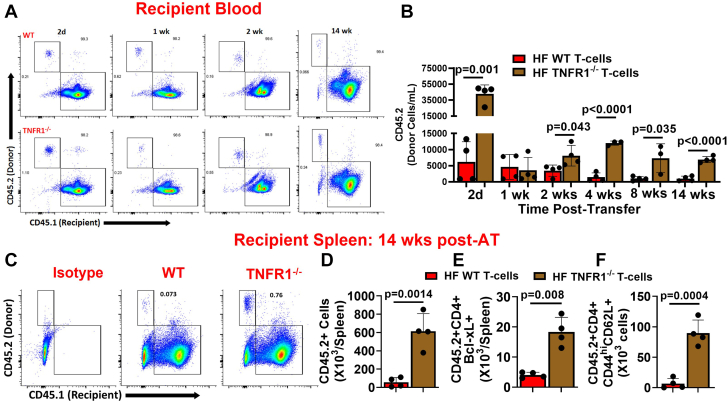
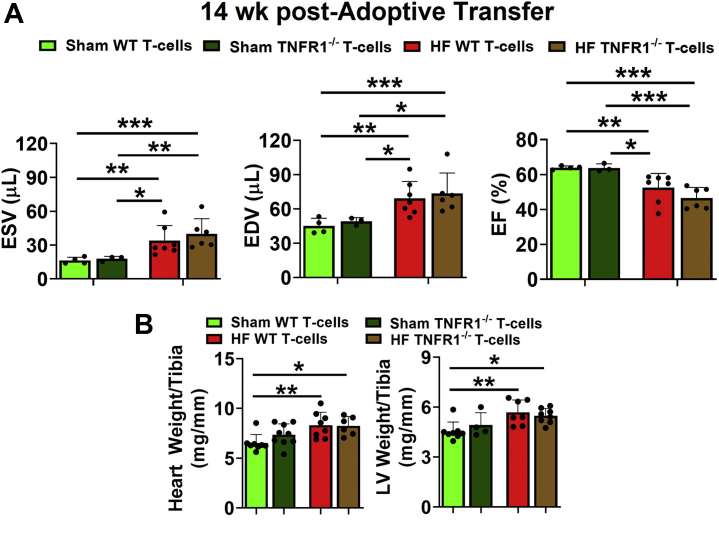
CD4 T cells turn pathological during heart failure (HF). We show that the expression of tumor necrosis factor (TNF)-α and tumor necrosis factor receptor (TNFR1) increases in HF-activated CD4 T cells. However, the role of the TNF-α/TNFR1 axis in T-cell activation/proliferation is unknown. We show that TNFR1 neutralization during T-cell activation (ex vivo) or the loss of TNFR1 in adoptively transferred HF-activated CD4 T cells (in vivo) augments their prosurvival and proliferative signaling. Importantly, TNFR1 neutralization does not affect CD69 expression or the pathological activity of HF-activated TNFR1 CD4 T cells. These results show that during HF TNFR1 plays an important role in quelling prosurvival and proliferative signals in CD4 T cells without altering their pathological activity.
在心力衰竭(HF)期间,CD4 T细胞会发生病理性变化。我们发现,肿瘤坏死因子(TNF)-α和肿瘤坏死因子受体(TNFR1)在HF激活的CD4 T细胞中的表达增加。然而,TNF-α/TNFR1轴在T细胞活化/增殖中的作用尚不清楚。我们发现,在T细胞活化过程中(体外)中和TNFR1或在过继转移的HF激活的CD4 T细胞中(体内)缺失TNFR1会增强它们的生存和增殖信号。重要的是,中和TNFR1不会影响CD69的表达或HF激活的TNFR1 CD4 T细胞的病理活性。这些结果表明,在HF期间,TNFR1在抑制CD4 T细胞的生存和增殖信号方面发挥重要作用,而不会改变它们的病理活性。