Abou Taleb Sally, Moatasim Yassmin, GabAllah Mohamed, Asfour Marwa Hasanein
Pharmaceutical Technology Department, National Research Centre, El-Buhouth Street, Dokki, Cairo, 12622, Egypt.
Center of Scientific Excellence for Influenza Viruses, National Research Centre, El-Buhouth Street, Dokki, Cairo, 12622, Egypt.
J Drug Deliv Sci Technol. 2022 Nov;77:103921. doi: 10.1016/j.jddst.2022.103921. Epub 2022 Oct 28.
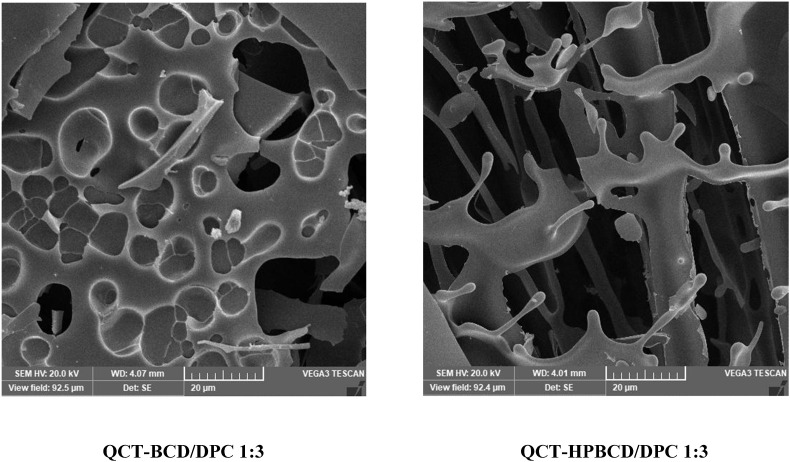
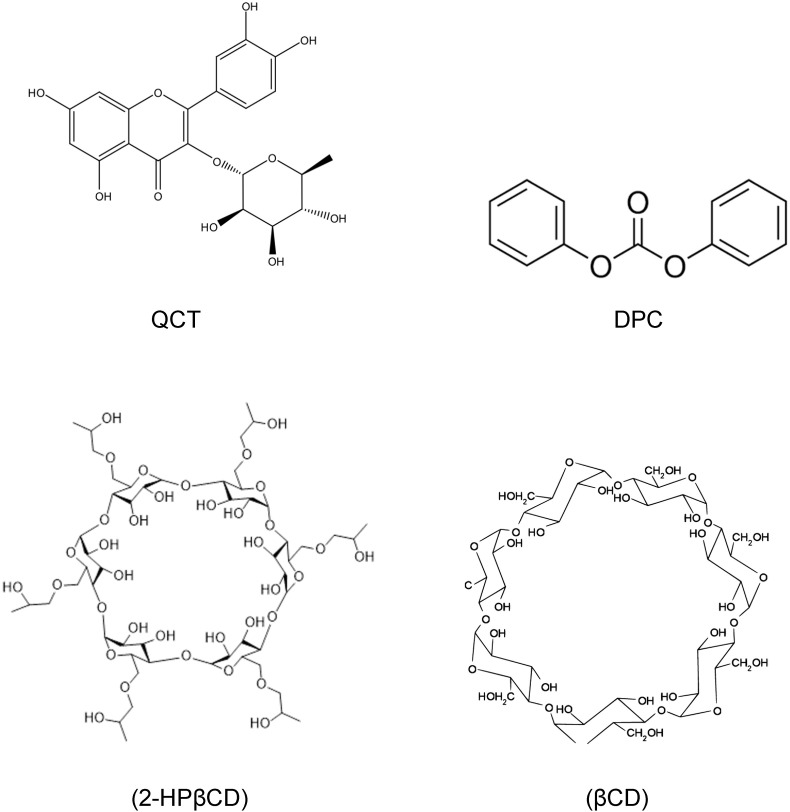
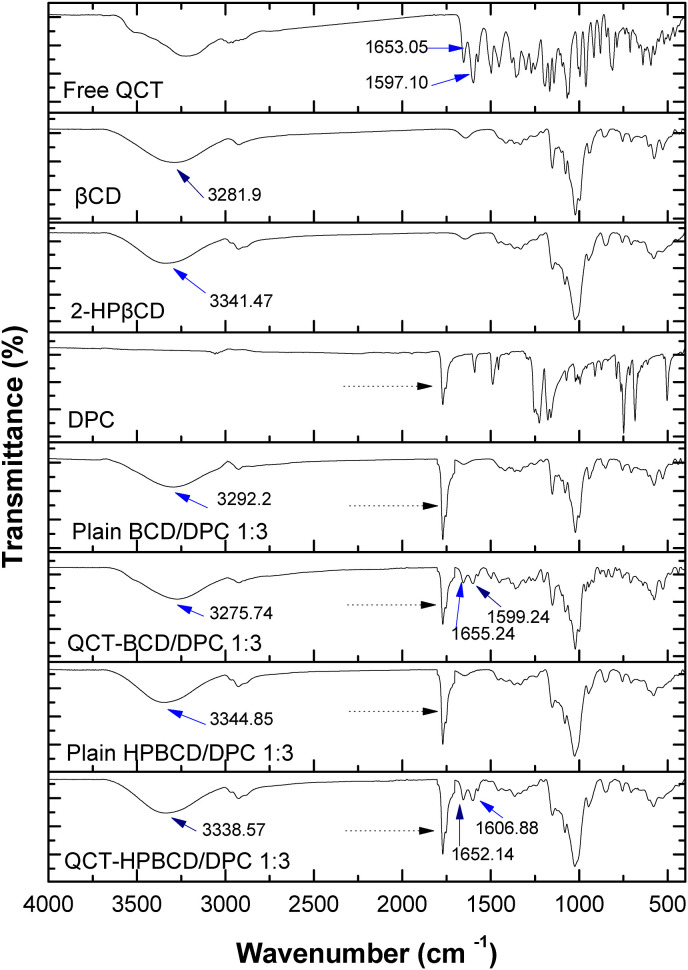
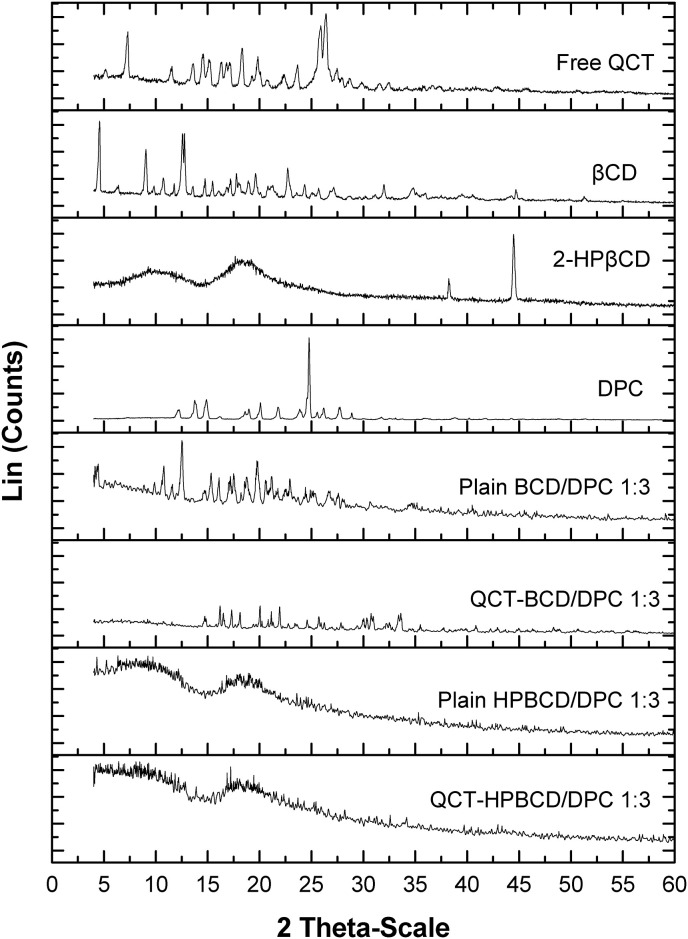
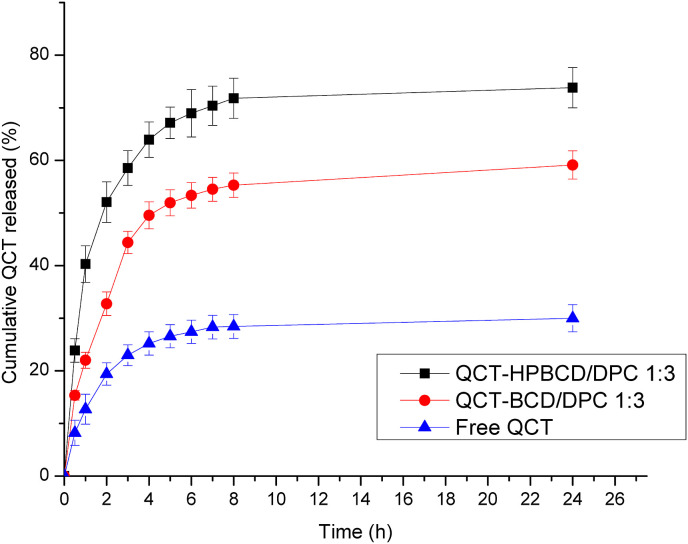
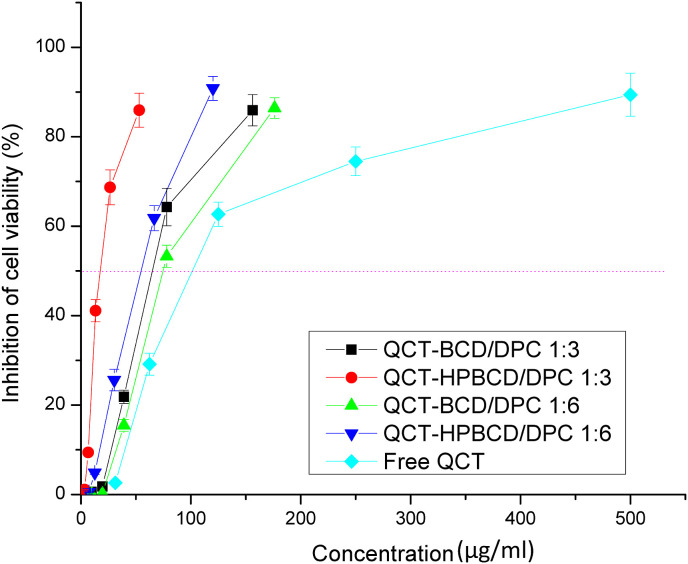
Lung cancer and pandemic acute respiratory disease, COVID-19, are examples of the most worldwide widespread diseases. The aim of the current study is to develop cyclodextrin based nanosponge (CD-NS) for loading the flavonoid drug, quercitrin (QCT). This is to improve its solubility in an attempt to enhance its activity against lung cancer as well as SARS-CoV-2 virus responsible for COVID-19. Preparation of CD-NS was performed by ultrasound-assisted synthesis method. Two CDs were employed, namely, β cyclodextrin (βCD) and 2-hydroxy propyl-β-cyclodextrin (2-HPβCD) that were crosslinked with diphenyl carbonate, one at a time. QCT loaded CD-NS revealed entrapment efficiency and particle size ranged between 94.17 and 99.03% and 97.10-325.90 nm, respectively. QCT loaded 2-HPβCD-NS revealed smaller particle size compared with that of QCT loaded βCD-NS. Zeta potential absolute values of the prepared formulations were >20 mV, indicating physically stable nanosystems. The selected formulations were investigated by Fourier transform infrared spectroscopy, X-ray powder diffraction and scanning electron microscopy which proved the formation of QCT loaded CD-NS exhibiting porous structure. QCT exhibited partial and complete amorphization in βCD-NS and 2-HPβCD-NS, respectively. release revealed an improved release of QCT from CD-NS formulations. The biological activity of free QCT and QCT loaded CD-NS was investigated against lung cancer cell line A549 as well as SARS-CoV-2 virus. The results revealed that IC values of free QCT against lung cancer cell line A549 and SARS-CoV-2 were higher than those exhibited by QCT loaded CD-NS by 1.57-5.35 and 5.95-26.95 folds, respectively. QCT loaded 2-HPβCD-NS revealed enhanced release and superior biological activity compared with QCT loaded βCD-NS.
肺癌和大流行急性呼吸道疾病COVID-19是全球范围内传播最广的疾病实例。本研究的目的是开发基于环糊精的纳米海绵(CD-NS)来负载类黄酮药物槲皮苷(QCT)。这是为了提高其溶解度,以增强其对肺癌以及导致COVID-19的SARS-CoV-2病毒的活性。CD-NS的制备采用超声辅助合成法。使用了两种环糊精,即β-环糊精(βCD)和2-羟丙基-β-环糊精(2-HPβCD),每次分别与碳酸二苯酯交联。负载QCT的CD-NS的包封率和粒径分别在94.17%至99.03%和97.10至325.90纳米之间。与负载QCT的βCD-NS相比,负载QCT的2-HPβCD-NS显示出更小的粒径。所制备制剂的ζ电位绝对值>20 mV,表明纳米系统物理稳定。通过傅里叶变换红外光谱、X射线粉末衍射和扫描电子显微镜对所选制剂进行了研究,证明了负载QCT的CD-NS形成了多孔结构。QCT在βCD-NS和2-HPβCD-NS中分别表现出部分和完全非晶化。释放显示QCT从CD-NS制剂中的释放有所改善。研究了游离QCT和负载QCT的CD-NS对肺癌细胞系A549以及SARS-CoV-2病毒的生物活性。结果显示,游离QCT对肺癌细胞系A549和SARS-CoV-2的IC值分别比负载QCT的CD-NS高1.57至5.35倍和5.95至26.95倍。与负载QCT的βCD-NS相比,负载QCT的2-HPβCD-NS显示出增强的释放和优异的生物活性。