Stratingh Institute for Chemistry, University of Groningen, Nijenborgh 4, 9747, AG Groningen, The Netherlands.
Current address: School of Life Science and Health Engineering, Jiangnan University, Wuxi, 214122, China.
Angew Chem Int Ed Engl. 2023 Jan 2;62(1):e202214191. doi: 10.1002/anie.202214191. Epub 2022 Nov 30.
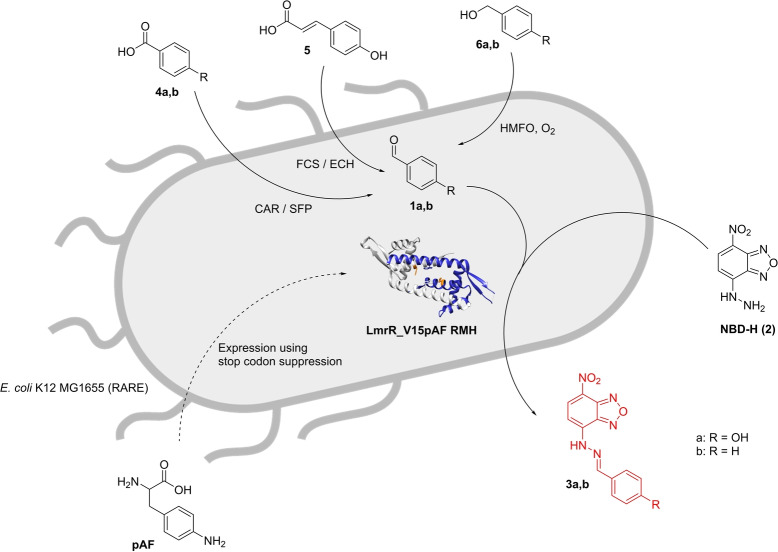
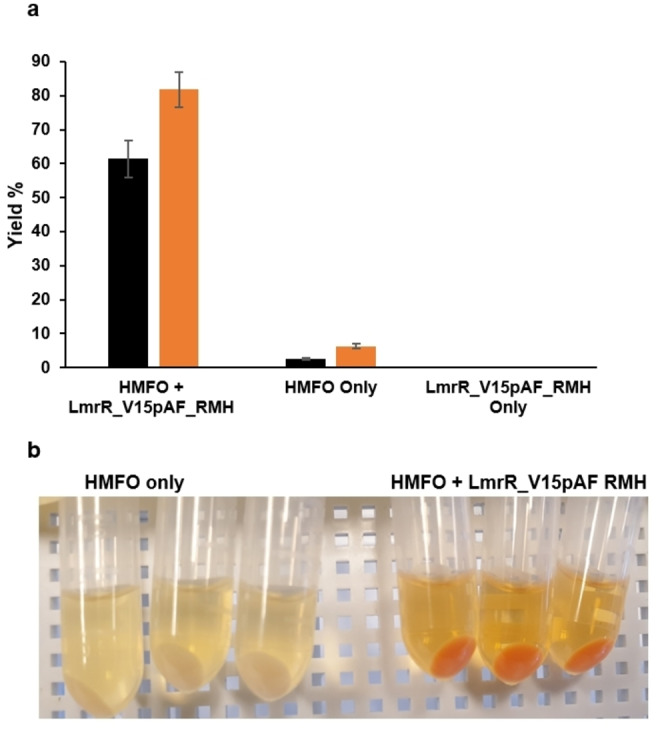
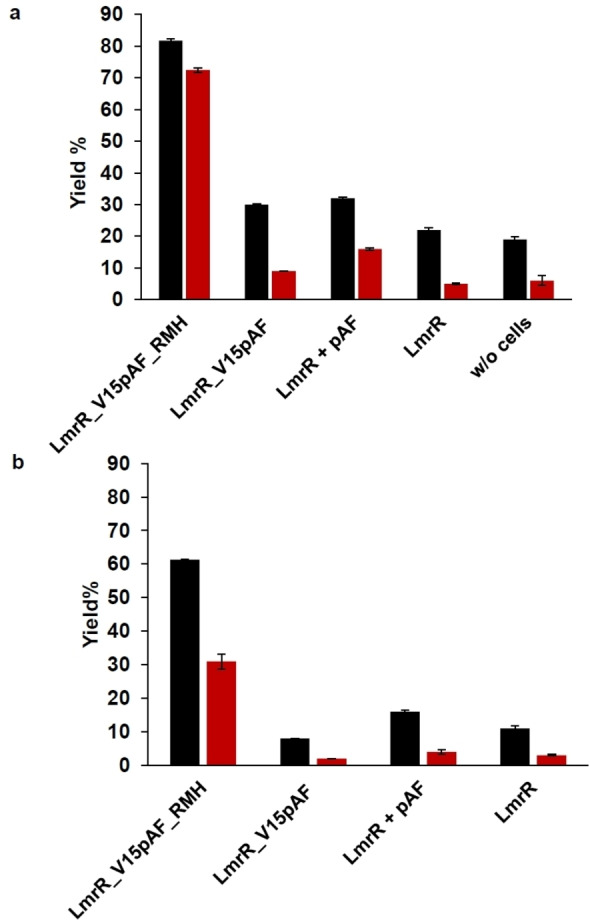
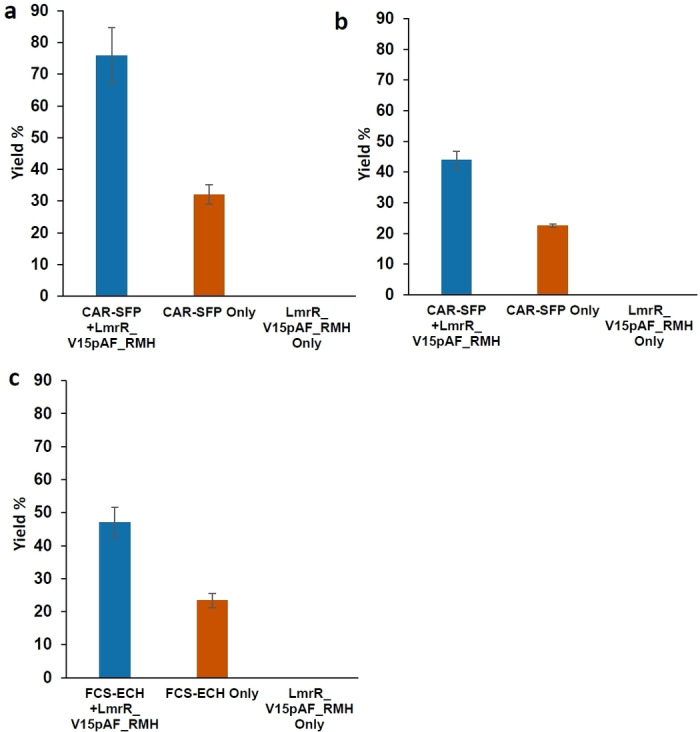
Artificial enzymes utilizing the genetically encoded non-proteinogenic amino acid p-aminophenylalanine (pAF) as a catalytic residue are able to react with carbonyl compounds through an iminium ion mechanism to promote reactions that have no equivalent in nature. Herein, we report an in vivo biocatalytic cascade that is augmented with such an artificial enzyme-catalysed new-to-nature reaction. The artificial enzyme in this study is a pAF-containing evolved variant of the lactococcal multidrug-resistance regulator, designated LmrR_V15pAF_RMH, which efficiently converts benzaldehyde derivatives produced in vivo into the corresponding hydrazone products inside E. coli cells. These in vivo biocatalytic cascades comprising an artificial-enzyme-catalysed reaction are an important step towards achieving a hybrid metabolism.
利用遗传编码的非蛋白氨基酸对氨基苯丙氨酸 (pAF) 作为催化残基的人工酶能够通过亚胺离子机制与羰基化合物反应,促进自然界中没有等效反应的发生。在此,我们报告了一种体内生物催化级联反应,该反应增强了这种人工酶催化的新自然反应。本研究中的人工酶是乳球菌多药耐药调节剂的含有 pAF 的进化变体,命名为 LmrR_V15pAF_RMH,它能够有效地将体内产生的苯甲醛衍生物转化为大肠杆菌细胞内相应的腙产物。这些包含人工酶催化反应的体内生物催化级联反应是实现混合代谢的重要步骤。