Hubrecht Institute, Royal Netherlands Academy of Arts and Sciences (KNAW) and University Medical Center (UMC) Utrecht, Oncode Institute, 3584 CT Utrecht, The Netherlands.
Biomolecular Mass Spectrometry and Proteomics, Bijvoet Center for Biomolecular Research and Utrecht Institute for Pharmaceutical Sciences, Utrecht University, 3584 CH Utrecht, The Netherlands.
Proc Natl Acad Sci U S A. 2022 Nov 16;119(46):e2212057119. doi: 10.1073/pnas.2212057119. Epub 2022 Nov 7.
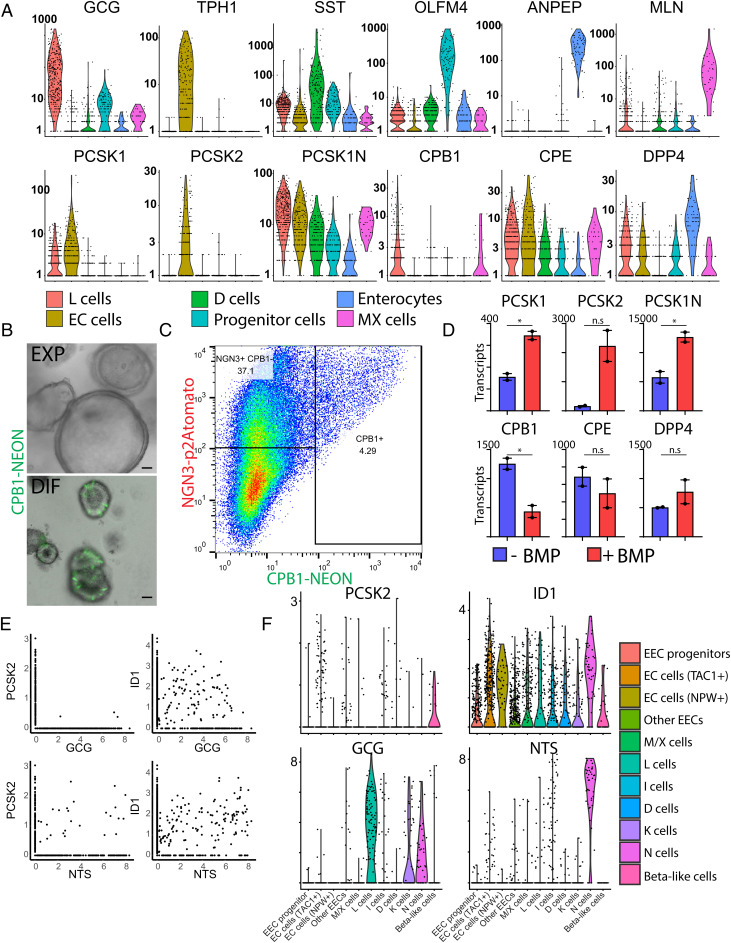
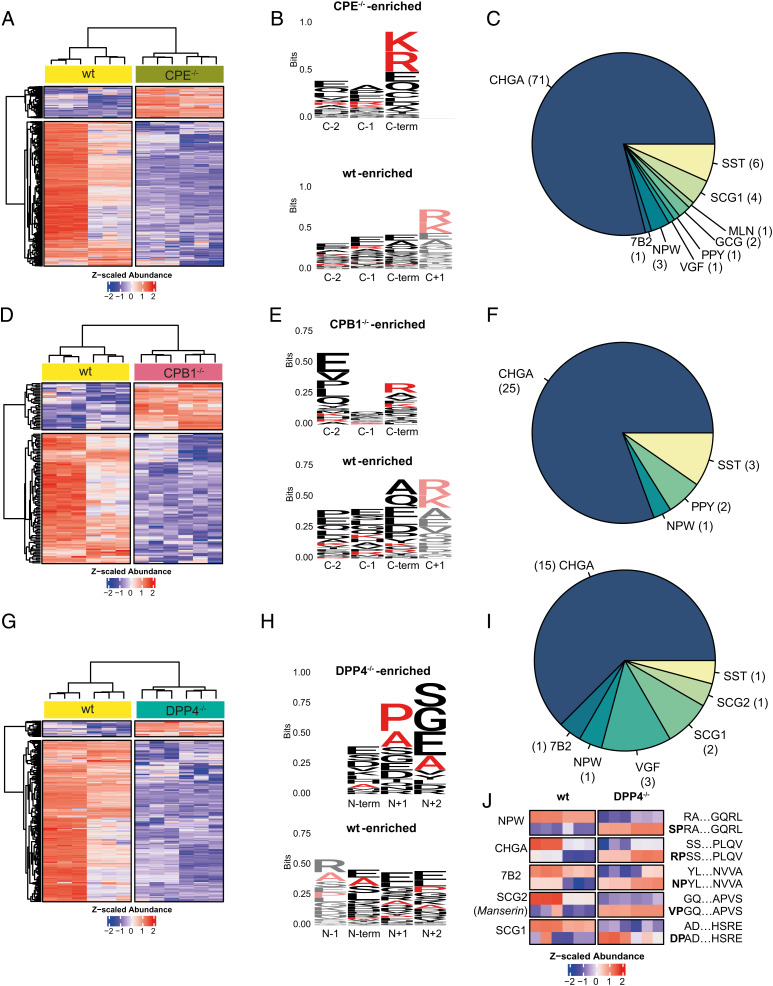
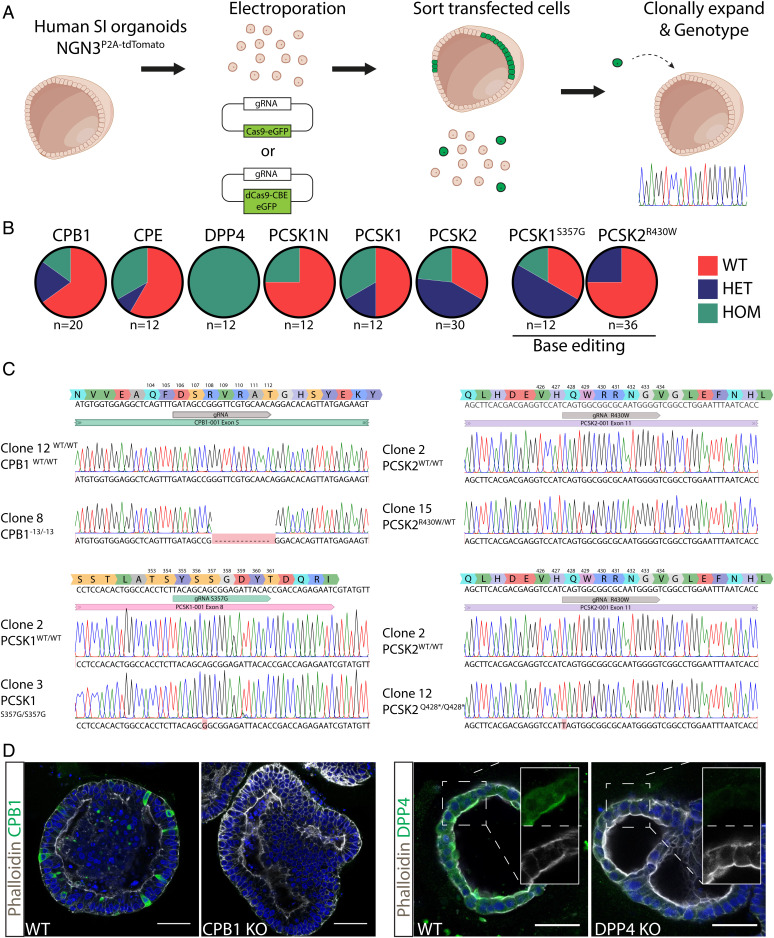
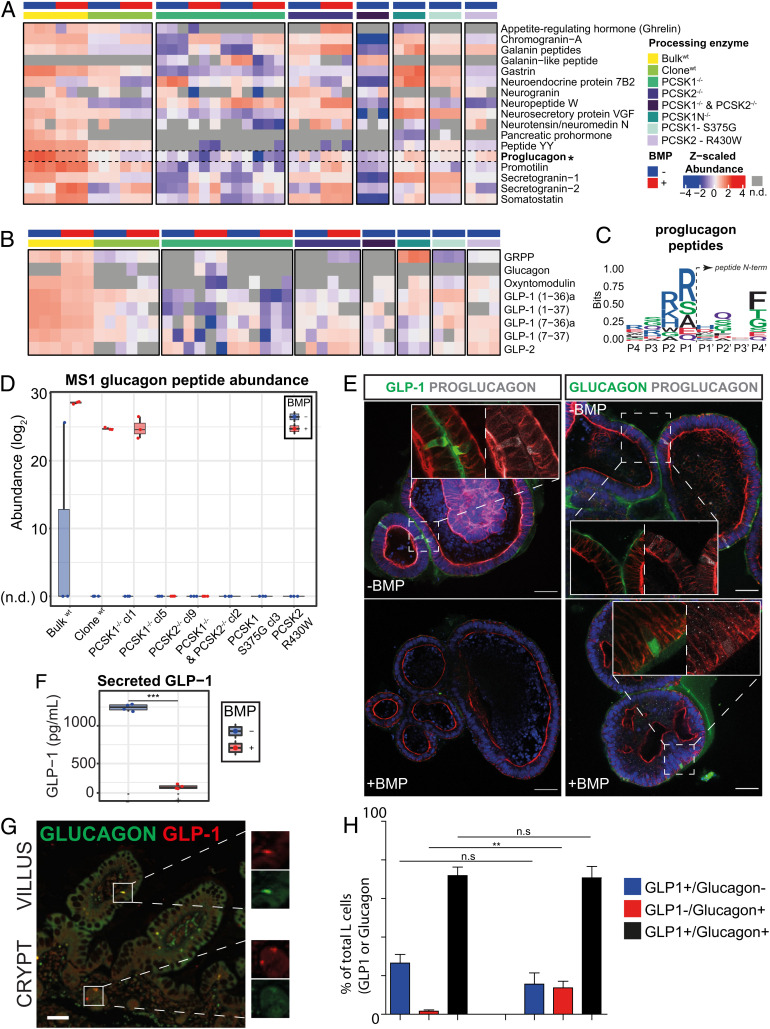
Enteroendocrine cells (EECs) secrete hormones in response to ingested nutrients to control physiological processes such as appetite and insulin release. EEC hormones are synthesized as large proproteins that undergo proteolytic processing to generate bioactive peptides. Mutations in EEC-enriched proteases are associated with endocrinopathies. Due to the relative rarity of EECs and a paucity of in vitro models, intestinal prohormone processing remains challenging to assess. Here, human gut organoids in which EECs can efficiently be induced are subjected to CRISPR-Cas9-mediated modification of EEC-expressed endopeptidase and exopeptidase genes. We employ mass spectrometry-based analyses to monitor peptide processing and identify glucagon production in intestinal EECs, stimulated upon bone morphogenic protein (BMP) signaling. We map the substrates and products of major EECs endo- and exopeptidases. Our studies provide a comprehensive description of peptide hormones produced by human EECs and define the roles of specific proteases in their generation.
肠内分泌细胞 (EEC) 会响应摄入的营养物质分泌激素,以控制食欲和胰岛素释放等生理过程。EEC 激素最初合成时是大型前体蛋白,需要经过蛋白水解加工才能生成有生物活性的肽。富含 EEC 的内切蛋白酶的突变与内分泌疾病有关。由于 EEC 相对较少,体外模型也很少,因此肠道激素前体加工仍然难以评估。在本研究中,我们使用能够高效诱导 EEC 的人肠道类器官,通过 CRISPR-Cas9 对 EEC 表达的内肽酶和外肽酶基因进行修饰。我们采用基于质谱的分析方法来监测肽加工,并鉴定肠内分泌细胞在骨形态发生蛋白 (BMP) 信号刺激下产生的胰高血糖素。我们还对主要的 EEC 内肽酶和外肽酶的底物和产物进行了作图。我们的研究全面描述了人 EEC 产生的肽激素,并确定了特定蛋白酶在其生成中的作用。