
用于在国际空间站上测量秀丽隐杆线虫肌肉力量的集成微流控技术的航天硬件。
Microfluidics-integrated spaceflight hardware for measuring muscle strength of Caenorhabditis elegans on the International Space Station.
作者信息
Soni Purushottam, Anupom Taslim, Lesanpezeshki Leila, Rahman Mizanur, Hewitt Jennifer E, Vellone Matthew, Stodieck Louis, Blawzdziewicz Jerzy, Szewczyk Nathaniel J, Vanapalli Siva A
机构信息
Department of Chemical Engineering, Texas Tech University, Lubbock, TX, 79409, USA.
Department of Electrical Engineering, Texas Tech University, Lubbock, TX, 79409, USA.
出版信息
NPJ Microgravity. 2022 Nov 7;8(1):50. doi: 10.1038/s41526-022-00241-4.
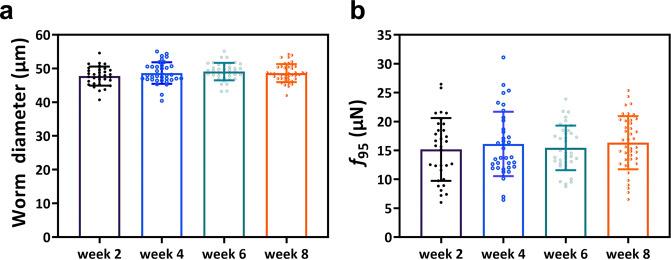
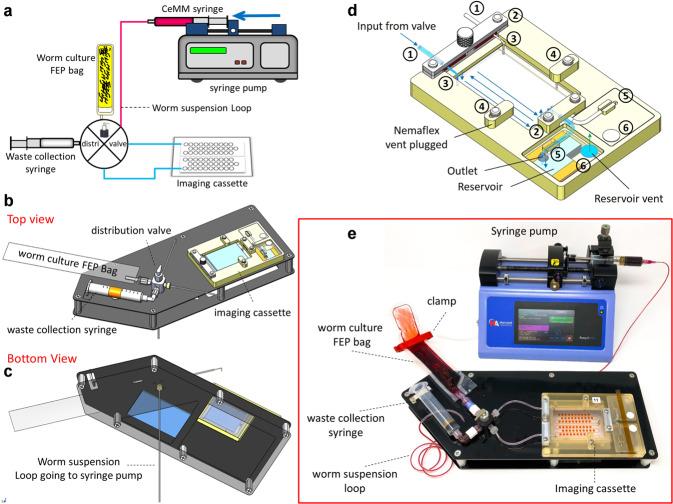
Caenorhabditis elegans is a low-cost genetic model that has been flown to the International Space Station to investigate the influence of microgravity on changes in the expression of genes involved in muscle maintenance. These studies showed that genes that encode muscle attachment complexes have decreased expression under microgravity. However, it remains to be answered whether the decreased expression leads to concomitant changes in animal muscle strength, specifically across multiple generations. We recently reported the NemaFlex microfluidic device for the measurement of muscle strength of C. elegans (Rahman et al., Lab Chip, 2018). In this study, we redesign our original NemaFlex device and integrate it with flow control hardware for spaceflight investigations considering mixed animal culture, constraints on astronaut time, crew safety, and on-orbit operations. The technical advances we have made include (i) a microfluidic device design that allows animals of a given size to be sorted from unsynchronized cultures and housed in individual chambers, (ii) a fluid handling protocol for injecting the suspension of animals into the microfluidic device that prevents channel clogging, introduction of bubbles, and crowding of animals in the chambers, and (iii) a custom-built worm-loading apparatus interfaced with the microfluidic device that allows easy manipulation of the worm suspension and prevents fluid leakage into the surrounding environment. Collectively, these technical advances enabled the development of new microfluidics-integrated hardware for spaceflight studies in C. elegans. Finally, we report Earth-based validation studies to test this new hardware, which has led to it being flown to the International Space Station.
秀丽隐杆线虫是一种低成本的遗传模型,已被送往国际空间站,以研究微重力对参与肌肉维持的基因表达变化的影响。这些研究表明,在微重力条件下,编码肌肉附着复合物的基因表达会下降。然而,这种表达下降是否会导致动物肌肉力量的相应变化,尤其是在多代动物中,仍有待解答。我们最近报道了用于测量秀丽隐杆线虫肌肉力量的NemaFlex微流控装置(拉赫曼等人,《实验室芯片》,2018年)。在本研究中,我们重新设计了原有的NemaFlex装置,并将其与流量控制硬件集成,用于太空飞行研究,同时考虑到混合动物培养、宇航员时间限制、船员安全和在轨操作等因素。我们取得的技术进步包括:(i)一种微流控装置设计,可从未同步培养物中筛选出给定大小的动物,并将其安置在单独的腔室中;(ii)一种流体处理方案,用于将动物悬浮液注入微流控装置,可防止通道堵塞、气泡引入以及动物在腔室中拥挤;(iii)一种与微流控装置相连的定制蠕虫装载装置,可轻松操作蠕虫悬浮液,并防止流体泄漏到周围环境中。总的来说,这些技术进步推动了用于秀丽隐杆线虫太空飞行研究的新型微流控集成硬件的开发。最后,我们报告了基于地球的验证研究,以测试这种新硬件,该研究已使该硬件被送往国际空间站。




 Zotero 插件