Sorbonne Université, UPEC, Université Paris Cité, CNRS, IRD, INRAE, iEES-Paris, Paris, France.
Université d'Orléans, Orléans, France.
Sci Rep. 2022 Nov 7;12(1):18866. doi: 10.1038/s41598-022-21512-w.
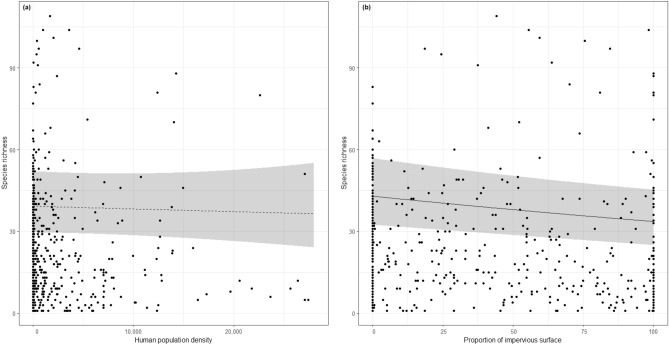
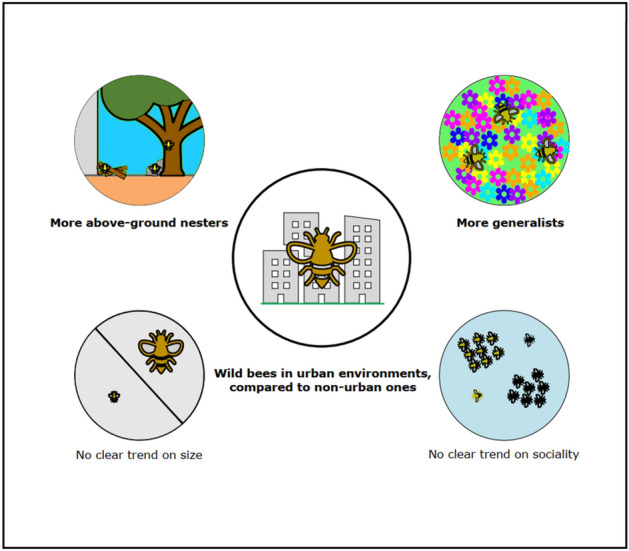
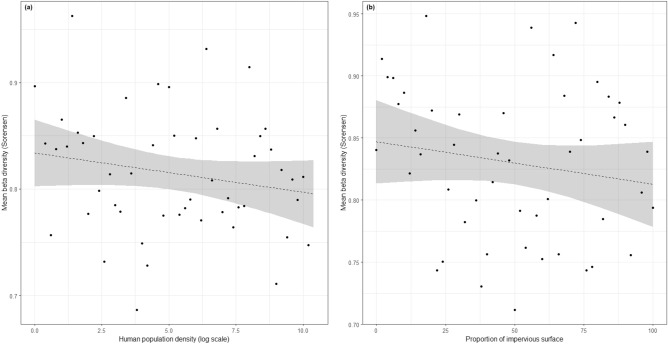
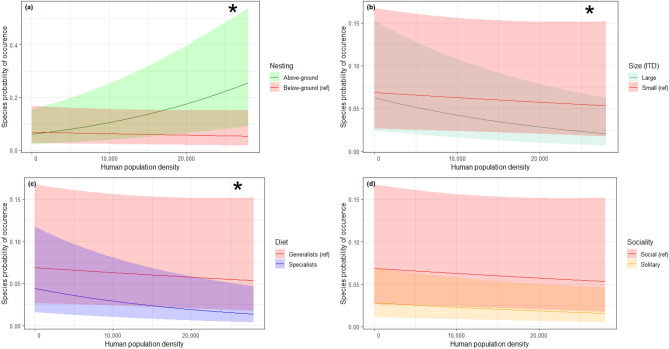
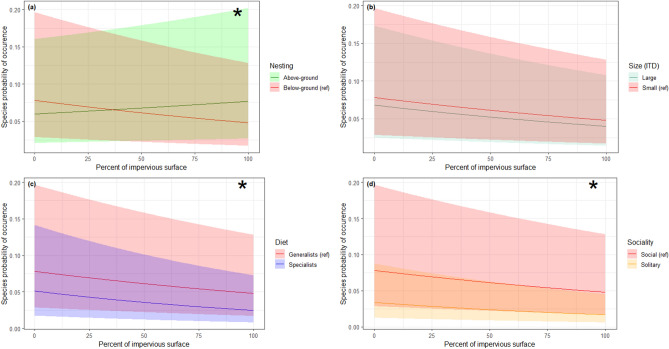
Wild bees are declining, mainly due to the expansion of urban habitats that have led to land-use changes. Effects of urbanization on wild bee communities are still unclear, as shown by contrasting reports on their species and functional diversities in urban habitats. To address this current controversy, we built a large dataset, merging 16 surveys carried out in 3 countries of Western Europe during the past decades, and tested whether urbanization influences local wild bee taxonomic and functional community composition. These surveys encompassed a range of urbanization levels, that were quantified using two complementary metrics: the proportion of impervious surfaces and the human population density. Urban expansion, when measured as a proportion of impervious surfaces, but not as human population density, was significantly and negatively correlated with wild bee community species richness. Taxonomic dissimilarity of the bee community was independent of both urbanization metrics. However, occurrence rates of functional traits revealed significant differences between lightly and highly urbanized communities, for both urbanization metrics. With higher human population density, probabilities of occurrence of above-ground nesters, generalist and small species increased. With higher soil sealing, probabilities of occurrence of above-ground nesters, generalists and social bees increased as well. Overall, these results, based on a large European dataset, suggest that urbanization can have negative impacts on wild bee diversity. They further identify some traits favored in urban environments, showing that several wild bee species can thrive in cities.
野生蜜蜂正在减少,主要是由于城市栖息地的扩张导致了土地利用的变化。城市化对野生蜜蜂群落的影响仍不清楚,因为有关其在城市栖息地的物种和功能多样性的报告相互矛盾。为了解决这一当前的争议,我们构建了一个大型数据集,合并了过去几十年在西欧 3 个国家进行的 16 项调查,并测试了城市化是否影响当地野生蜜蜂的分类和功能群落组成。这些调查涵盖了一系列的城市化水平,使用两种互补的指标来量化:不透水表面的比例和人口密度。城市扩张,以不透水表面的比例衡量,但不以人口密度衡量,与野生蜜蜂群落物种丰富度呈显著负相关。蜜蜂群落的分类差异与这两个城市化指标均无关。然而,功能特征的出现率显示了轻度和高度城市化社区之间的显著差异,这两种城市化指标都有涉及。随着人口密度的增加,地上筑巢者、广布种和小型物种的出现概率增加。随着土壤封盖率的增加,地上筑巢者、广布种和社会性蜜蜂的出现概率也增加了。总的来说,这些基于大型欧洲数据集的结果表明,城市化可能对野生蜜蜂的多样性产生负面影响。它们进一步确定了一些在城市环境中受到青睐的特征,表明一些野生蜜蜂物种可以在城市中茁壮成长。