Division of Foodborne, Waterborne and Environmental Diseases, Centers for Disease Control and Prevention, Atlanta, Georgia, USA.
General Dynamics Information Technology, Atlanta, Georgia, USA.
Zoonoses Public Health. 2022 Dec;69(8):925-937. doi: 10.1111/zph.12990. Epub 2022 Aug 10.
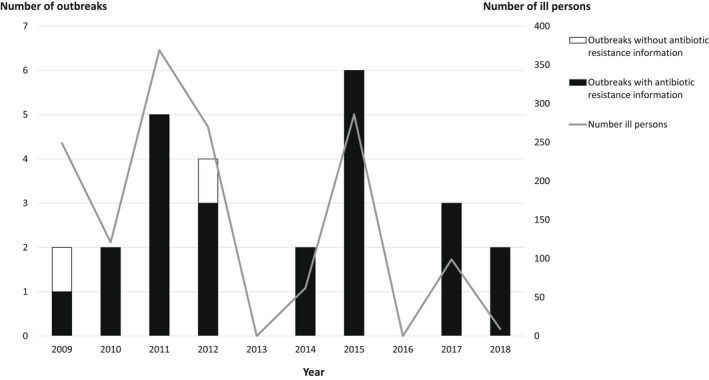
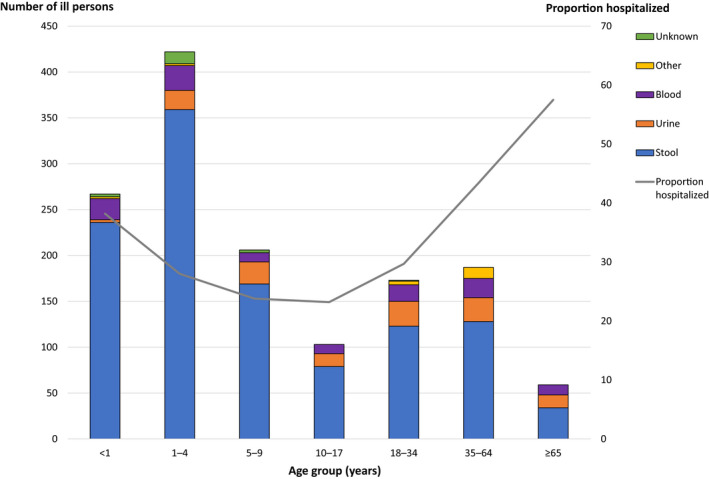
Non-typhoidal Salmonella cause an estimated 1.4 million human illnesses, 26,000 hospitalizations and 400 deaths annually in the United States. Approximately 11% of these infections are attributed to animal contact. Reptiles and amphibians are known sources of salmonellosis; young children (aged <5 years) are disproportionately affected by reptile- and amphibian-associated salmonellosis (RAAS) outbreaks. We describe multistate RAAS outbreaks to characterize illnesses and inform prevention efforts. RAAS outbreaks were defined as ≥2 culture-confirmed human Salmonella infections with similar pulsed-field gel electrophoresis patterns and epidemiologic, laboratory or traceback evidence linking them to a common reptile/amphibian exposure. Data sources included the Animal Contact Outbreak Surveillance System; CDC Outbreak Response and Prevention Branch's outbreak management database; PulseNet, the national molecular subtyping network for foodborne disease surveillance in the United States; and the National Antimicrobial Resistance Monitoring System. Twenty-six RAAS outbreaks were reported during 2009-2018, resulting in 1465 illnesses and 306 hospitalizations. The outbreaks were associated with turtles (19), lizards (5), snakes (1) and frogs (1). Sixteen (61.5%) outbreaks were linked to small turtles (<4 inches), resulting in 914 illnesses. Forty-nine percent of outbreak-associated patients were aged <5 years. Of 362 patients/caregivers interviewed, 111 (30.7%) were aware that reptiles/amphibians can carry Salmonella. Among 267 patient isolates with antimicrobial susceptibility information, 20 (7.5%) were non-susceptible to ≥1 antibiotic used to treat human salmonellosis. RAAS outbreaks result in considerable morbidity, particularly among young children. Illnesses linked to small turtles are preventable through education, targeted outreach to caregivers and paediatricians, and when appropriate, enforcement. Historically, individual states and jurisdictions have enforced existing or promulgated new authorities to address outbreaks. Preventing future RAAS outbreaks requires addressing challenges related to the illegal sale/distribution of small turtles; and for legal reptile sales, providing information on RAAS risk to consumers at point of sale to support informed pet ownership decisions.
非伤寒沙门氏菌在美国每年估计导致 140 万人患病、2.6 万人住院和 400 人死亡。这些感染中约有 11%归因于动物接触。爬行动物和两栖动物是沙门氏菌病的已知来源;幼儿(年龄<5 岁)受爬行动物和两栖动物相关沙门氏菌病(RAAS)暴发的影响不成比例。我们描述了多州 RAAS 暴发,以描述疾病并为预防工作提供信息。RAAS 暴发被定义为≥2 例经培养确认的人类沙门氏菌感染,具有相似的脉冲场凝胶电泳模式和将它们与共同的爬行动物/两栖动物暴露联系起来的流行病学、实验室或追溯证据。数据来源包括动物接触暴发监测系统;疾病预防控制中心暴发应对和预防科的暴发管理数据库;脉冲网,美国食源性疾病监测的国家分子亚型网络;以及国家抗菌药物耐药性监测系统。2009-2018 年报告了 26 起 RAAS 暴发,导致 1465 例疾病和 306 例住院。暴发与海龟(19 例)、蜥蜴(5 例)、蛇(1 例)和青蛙(1 例)有关。16 例(61.5%)暴发与小海龟(<4 英寸)有关,导致 914 例疾病。暴发相关患者中有 49%年龄<5 岁。在接受采访的 362 名患者/照顾者中,有 111 人(30.7%)知道爬行动物/两栖动物可能携带沙门氏菌。在 267 例具有抗菌药物敏感性信息的患者分离株中,有 20 株(7.5%)对用于治疗人类沙门氏菌病的≥1 种抗生素不敏感。RAAS 暴发会导致相当大的发病率,尤其是在幼儿中。通过教育、针对照顾者和儿科医生的有针对性的外展,以及在适当的情况下,加强执法,可以预防与小海龟相关的疾病。从历史上看,个别州和司法管辖区已经执行了现有的或颁布的新权力来应对暴发。预防未来的 RAAS 暴发需要解决与小海龟的非法销售/分销有关的挑战;对于合法的爬行动物销售,在销售点向消费者提供有关 RAAS 风险的信息,以支持知情的宠物拥有决策。