Department of Epidemiology, School of Public Health, University of Michigan, Ann Arbor, MI, USA.
Department of Biostatistics, School of Public Health, University of Michigan, Ann Arbor, MI, USA.
Chemosphere. 2023 Jan;311(Pt 2):137125. doi: 10.1016/j.chemosphere.2022.137125. Epub 2022 Nov 5.
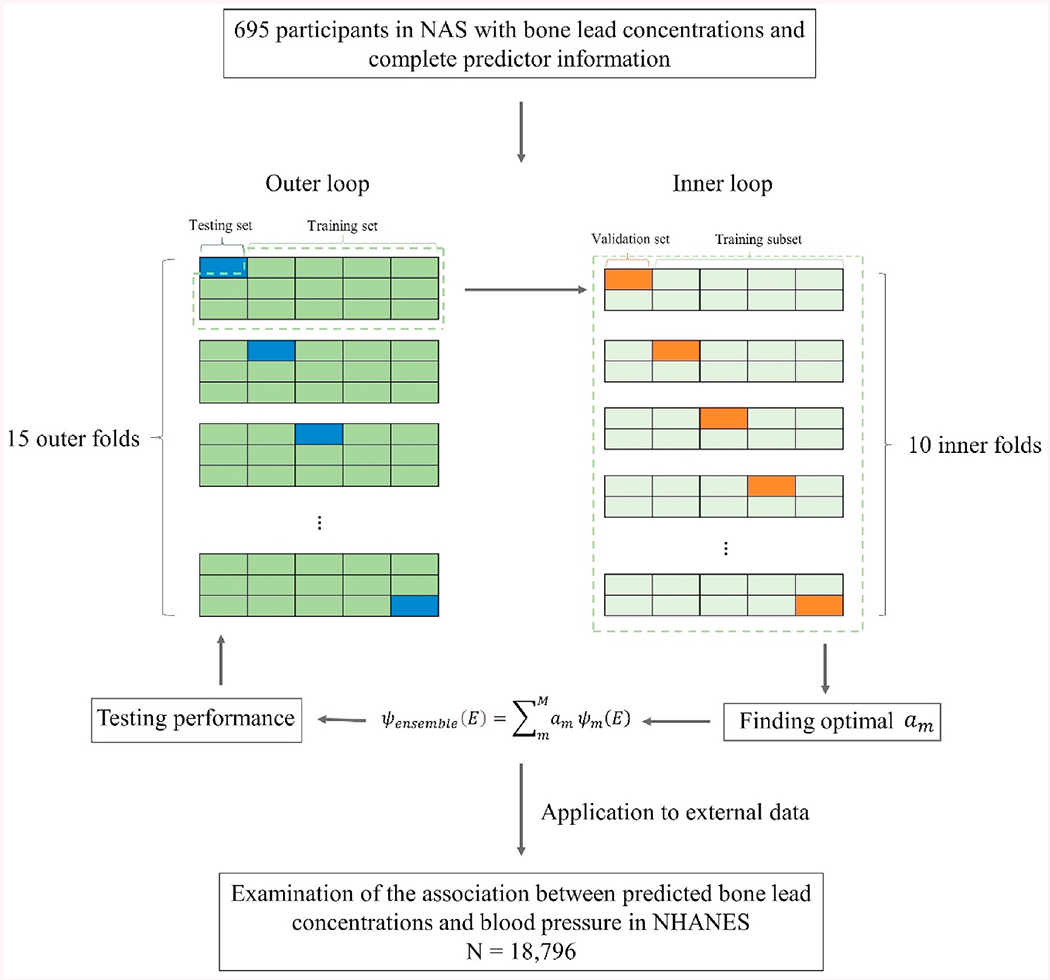
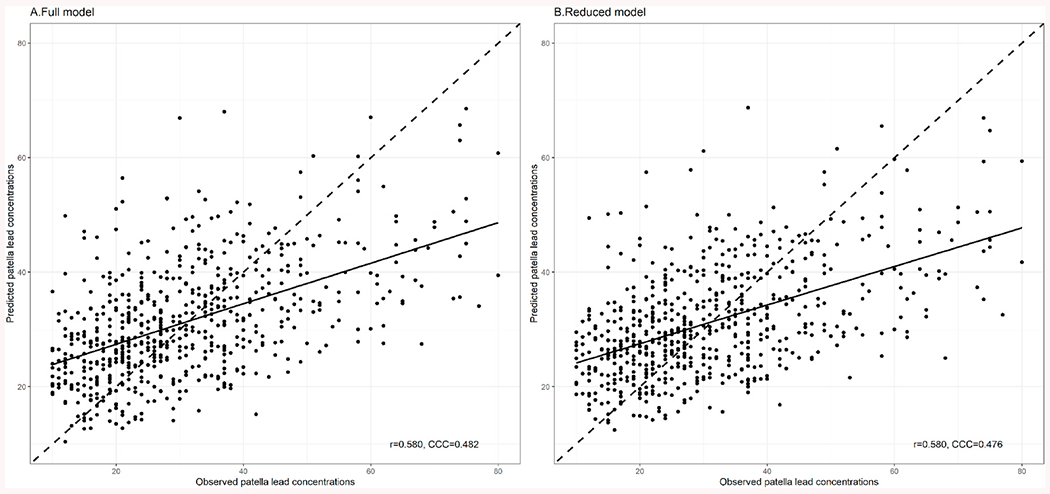
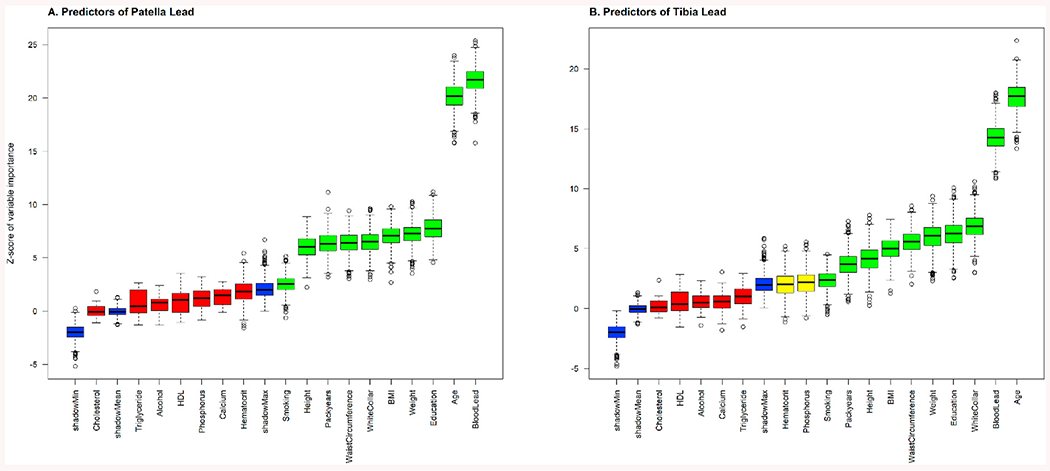
Chronic lead (Pb) exposure causes long term health effects. While recent exposure can be assessed by measuring blood lead (half-life 30 days), chronic exposures can be assessed by measuring lead in bone (half-life of many years to decades). Bone lead measurements, in turn, have been measured non-invasively in large population-based studies using x-ray fluorescence techniques, but the method remains limited due to technical availability, expense, and the need for licensing radioactive materials used by the instruments. Thus, we developed prediction models for bone lead concentrations using a flexible machine learning approach--Super Learner, which combines the predictions from a set of machine learning algorithms for better prediction performance. The study population included 695 men in the Normative Aging Study, aged 48 years and older, whose bone (patella and tibia) lead concentrations were directly measured using K-shell-X-ray fluorescence. Ten predictors (blood lead, age, education, job type, weight, height, body mass index, waist circumference, cumulative cigarette smoking (pack-year), and smoking status) were selected for patella lead and 11 (the same 10 predictors plus serum phosphorus) for tibia lead using the Boruta algorithm. We implemented Super Learner to predict bone lead concentrations by calculating a weighted combination of predictions from 8 algorithms. In the nested cross-validation, the correlation coefficients between measured and predicted bone lead concentrations were 0.58 for patella lead and 0.52 for tibia lead, which has improved the correlations obtained in previously-published linear regression-based prediction models. We evaluated the applicability of these prediction models to the National Health and Nutrition Examination Survey for the associations between predicted bone lead concentrations and blood pressure, and positive associations were observed. These bone lead prediction models provide reasonable accuracy and can be used to evaluate health effects of cumulative lead exposure in studies where bone lead is not measured.
慢性铅(Pb)暴露会造成长期的健康影响。虽然近期暴露可以通过测量血铅(半衰期 30 天)来评估,但慢性暴露可以通过测量骨骼中的铅(半衰期为数年至数十年)来评估。骨骼中的铅含量,反过来,已经通过使用 X 射线荧光技术的大型基于人群的研究进行了非侵入性测量,但该方法仍然受到技术可用性、费用和仪器使用放射性材料所需的许可的限制。因此,我们使用灵活的机器学习方法——超级学习者开发了骨骼中铅浓度的预测模型,该模型结合了一组机器学习算法的预测结果,以提高预测性能。研究人群包括年龄在 48 岁及以上的 695 名男性,他们的骨骼(髌骨和胫骨)中的铅含量使用 K 壳层 X 射线荧光直接测量。使用 Boruta 算法选择了 10 个预测因子(血铅、年龄、教育程度、工作类型、体重、身高、体重指数、腰围、累计吸烟量(包年)和吸烟状况)来预测髌骨铅,11 个(相同的 10 个预测因子加上血清磷)来预测胫骨铅。我们通过计算来自 8 个算法的预测结果的加权组合,实现了超级学习者来预测骨骼中的铅浓度。在嵌套交叉验证中,测量值与预测值之间的骨铅浓度相关系数分别为髌骨铅的 0.58 和胫骨铅的 0.52,这提高了以前发表的基于线性回归的预测模型所获得的相关性。我们评估了这些预测模型在全国健康和营养调查中的适用性,以研究预测骨铅浓度与血压之间的关系,观察到了阳性关联。这些骨铅预测模型具有合理的准确性,可用于评估未测量骨铅的研究中累积铅暴露的健康影响。