Information Center, West China Hospital, Sichuan University, Chengdu, China.
Department of Clinical Laboratory Medicine, Jinniu Maternity and Child Health Hospital of Chengdu, Chengdu, China.
BMC Bioinformatics. 2022 Nov 8;23(1):471. doi: 10.1186/s12859-022-05004-2.
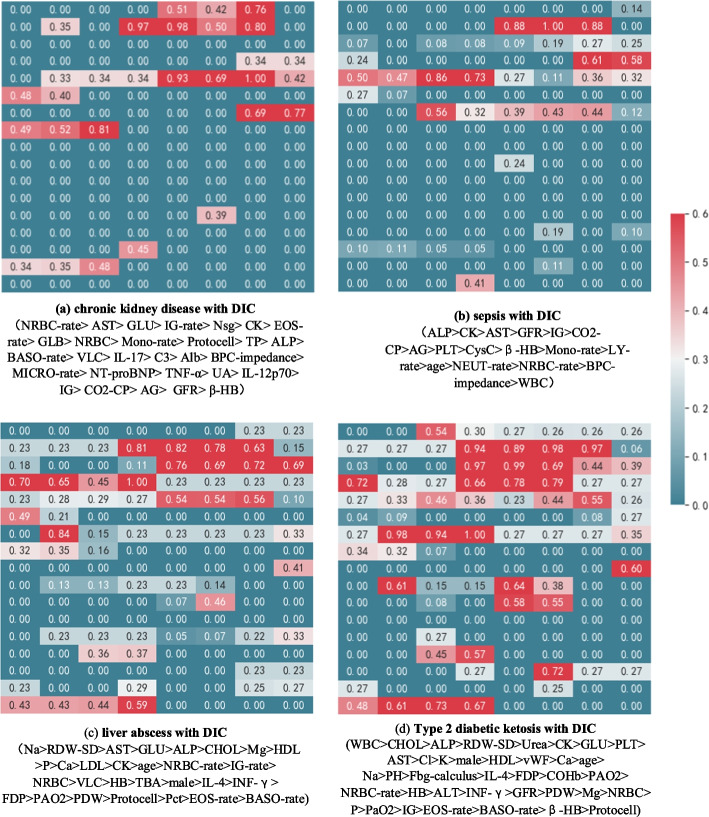
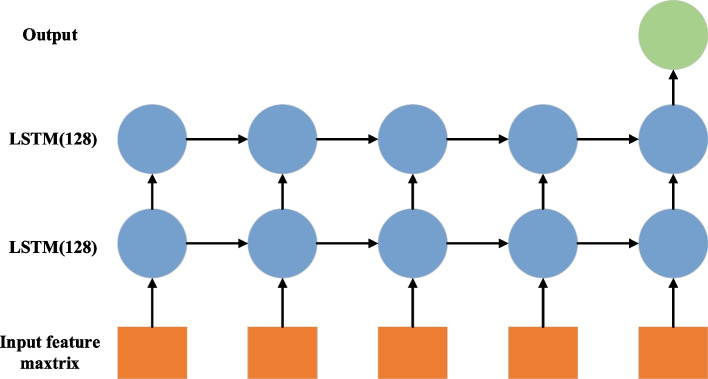
Disseminated intravascular coagulation (DIC) is a complex, life-threatening syndrome associated with the end-stage of different coagulation disorders. Early prediction of the risk of DIC development is an urgent clinical need to reduce adverse outcomes. However, effective approaches and models to identify early DIC are still lacking. In this study, a novel interpretable deep learning based time series is used to predict the risk of DIC. The study cohort included ICU patients from a 4300-bed academic hospital between January 1, 2019, and January 1, 2022. Experimental results show that our model achieves excellent performance (AUC: 0.986, Accuracy: 95.7%, and F1:0.935). Gradient-weighted Class Activation Mapping (Grad-CAM) was used to explain how predictive models identified patients with DIC. The decision basis of the model was displayed in the form of a heat map. The model can be used to identify high-risk patients with DIC early, which will help in the early intervention of DIC patients and improve the treatment effect.
弥散性血管内凝血(DIC)是一种与不同凝血障碍终末期相关的复杂的、危及生命的综合征。早期预测 DIC 发展的风险是减少不良结局的迫切临床需要。然而,识别早期 DIC 的有效方法和模型仍然缺乏。在这项研究中,一种新的基于可解释的深度学习的时间序列被用于预测 DIC 的风险。研究队列包括 2019 年 1 月 1 日至 2022 年 1 月 1 日期间来自一家 4300 张床位的学术医院的 ICU 患者。实验结果表明,我们的模型表现出色(AUC:0.986、准确率:95.7%和 F1:0.935)。梯度加权类激活映射(Grad-CAM)用于解释预测模型如何识别 DIC 患者。模型的决策依据以热图的形式显示。该模型可用于早期识别 DIC 高危患者,有助于对 DIC 患者进行早期干预,提高治疗效果。