Information Center, West China Hospital, Sichuan University, Chengdu, Sichuan Province, China.
Department of Medical Informatics, West China Medical School, Chengdu, Sichuan Province, China.
PLoS One. 2021 Feb 4;16(2):e0246306. doi: 10.1371/journal.pone.0246306. eCollection 2021.
The goal of this study is to construct a mortality prediction model using the XGBoot (eXtreme Gradient Boosting) decision tree model for AKI (acute kidney injury) patients in the ICU (intensive care unit), and to compare its performance with that of three other machine learning models.
We used the eICU Collaborative Research Database (eICU-CRD) for model development and performance comparison. The prediction performance of the XGBoot model was compared with the other three machine learning models. These models included LR (logistic regression), SVM (support vector machines), and RF (random forest). In the model comparison, the AUROC (area under receiver operating curve), accuracy, precision, recall, and F1 score were used to evaluate the predictive performance of each model.
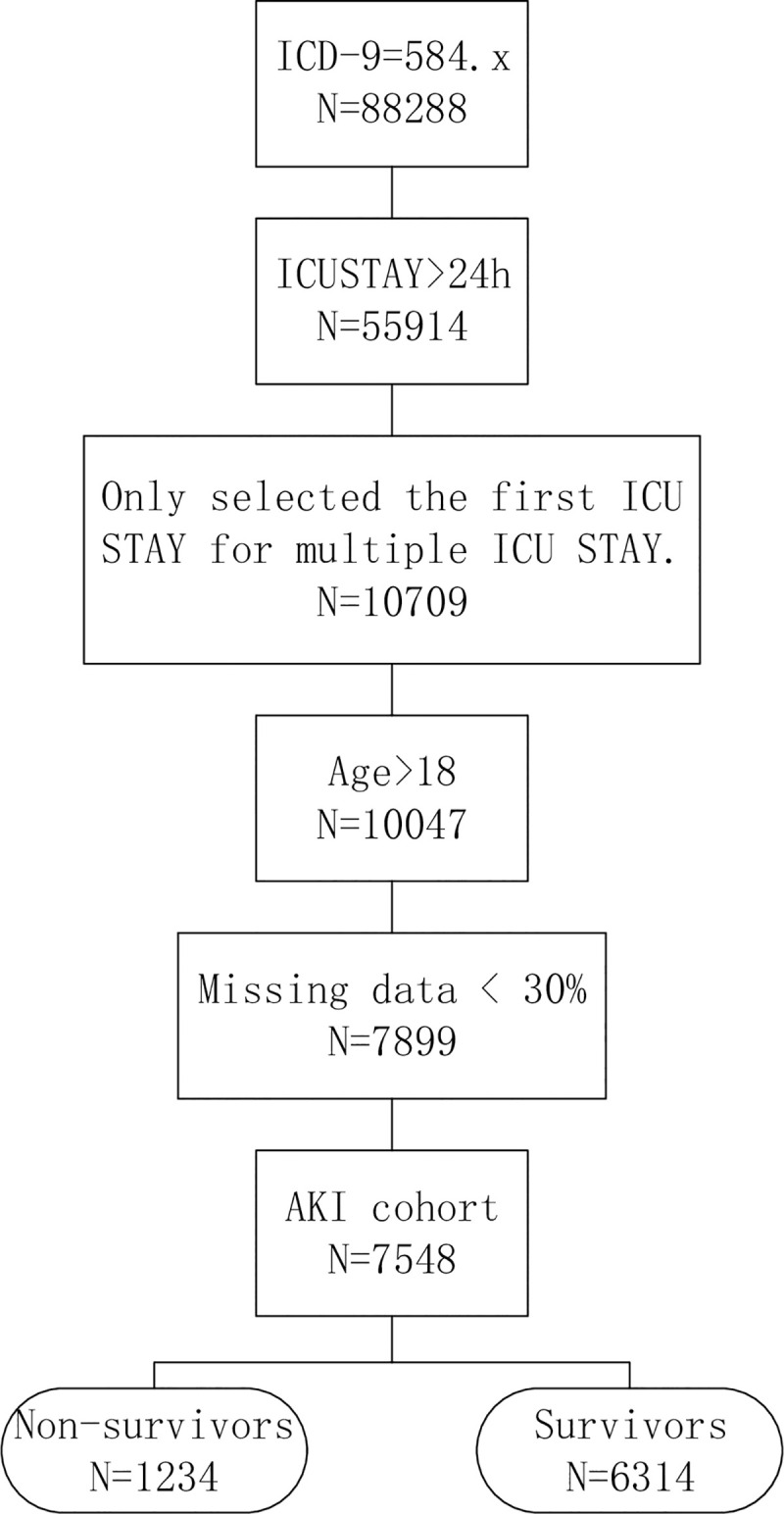
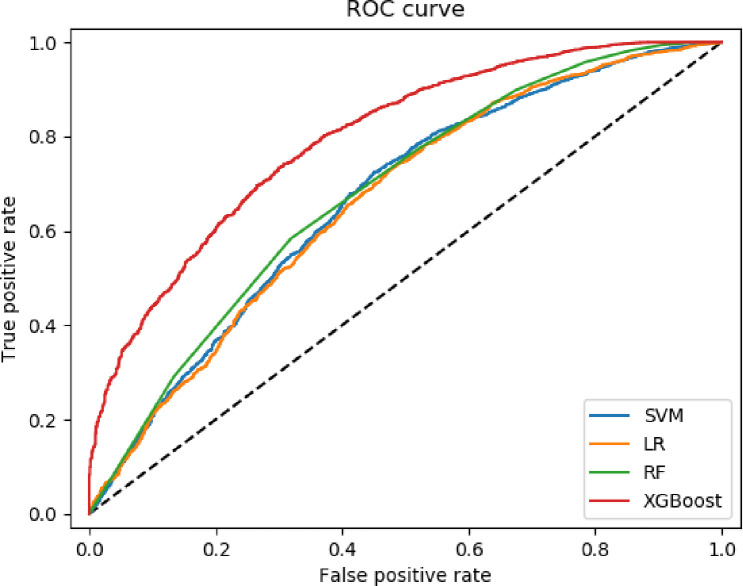
A total of 7548 AKI patients were analyzed in this study. The overall in-hospital mortality of AKI patients was 16.35%. The best performing algorithm in this study was XGBoost with the highest AUROC (0.796, p < 0.01), F1(0.922, p < 0.01) and accuracy (0.860). The precision (0.860) and recall (0.994) of the XGBoost model rank second among the four models.
XGBoot model had obvious advantages of performance compared to the other machine learning models. This will be helpful for risk identification and early intervention for AKI patients at risk of death.
本研究旨在构建一个使用 XGBoot(极端梯度提升)决策树模型对 ICU(重症监护病房)中 AKI(急性肾损伤)患者进行死亡率预测的模型,并与其他三种机器学习模型进行性能比较。
我们使用 eICU 协作研究数据库(eICU-CRD)进行模型开发和性能比较。比较了 XGBoot 模型与其他三种机器学习模型的预测性能。这些模型包括 LR(逻辑回归)、SVM(支持向量机)和 RF(随机森林)。在模型比较中,使用 AUROC(接收者操作特征曲线下面积)、准确性、精度、召回率和 F1 分数来评估每个模型的预测性能。
本研究共分析了 7548 例 AKI 患者。AKI 患者的院内总体死亡率为 16.35%。在这项研究中表现最好的算法是 XGBoost,其 AUROC(0.796,p < 0.01)、F1(0.922,p < 0.01)和准确性(0.860)最高。XGBoost 模型的精度(0.860)和召回率(0.994)在四个模型中排名第二。
与其他机器学习模型相比,XGBoot 模型在性能方面具有明显优势。这将有助于识别 AKI 患者死亡风险,并进行早期干预。