Wu Mo, Huang Wei, Yang Nan, Liu Yanyong
Department of Pharmacology, Institute of Basic Medical Sciences, Chinese Academy of Medical Sciences & School of Basic Medicine, Peking Union Medical College, Beijing, 100005, China.
Medical College, Tibet University, Lhasa, 850000, Tibet Autonomous Region, China.
Exp Hematol Oncol. 2022 Nov 8;11(1):93. doi: 10.1186/s40164-022-00347-1.
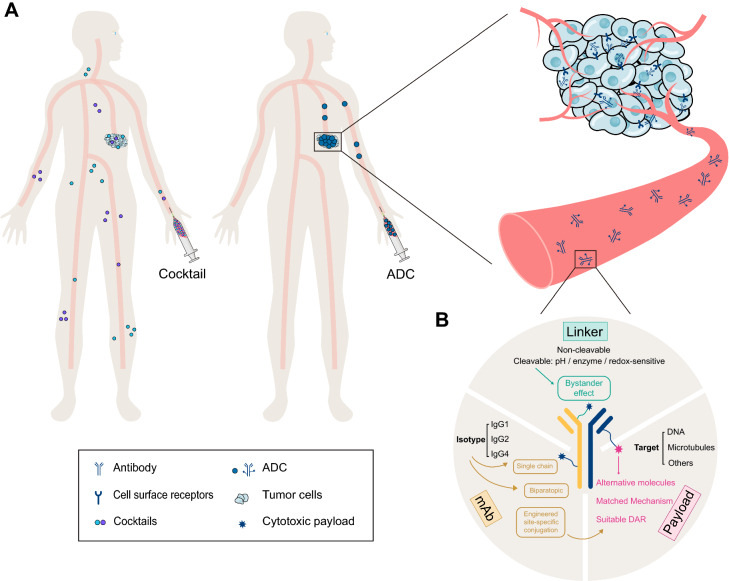
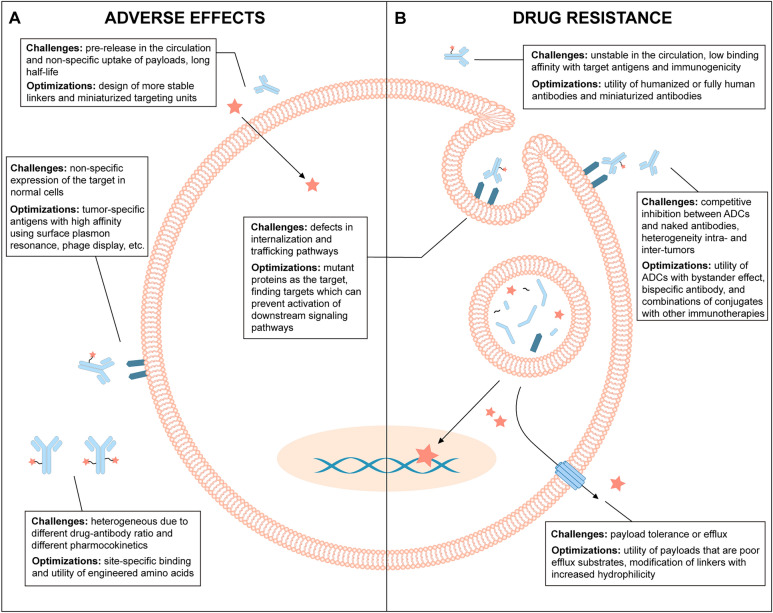
Cancer is one of the leading causes of death worldwide due to high heterogeneity. Although chemotherapy remains the mainstay of cancer therapy, non-selective toxicity and drug resistance of mono-chemotherapy incur broad criticisms. Subsequently, various combination strategies have been developed to improve clinical efficacy, also known as cocktail therapy. However, conventional "cocktail administration" is just passable, due to the potential toxicities to normal tissues and unsatisfactory synergistic effects, especially for the combined drugs with different pharmacokinetic properties. The drug conjugates through coupling the conventional chemotherapeutics to a carrier (such as antibody and peptide) provide an alternative strategy to improve therapeutic efficacy and simultaneously reduce the unspecific toxicities, by virtue of the advantages of highly specific targeting ability and potent killing effect. Although 14 antibody-drug conjugates (ADCs) have been approved worldwide and more are being investigated in clinical trials so far, several limitations have been disclosed during clinical application. Compared with ADCs, peptide-drug conjugates (PDCs) possess several advantages, including easy industrial synthesis, low cost, high tissue penetration and fast clearance. So far, only a handful of PDCs have been approved, highlighting tremendous development potential. Herein, we discuss the progress and pitfalls in the development of ADCs and underline what can learn from ADCs for the better construction of PDCs in the future.
由于高度异质性,癌症是全球主要死因之一。尽管化疗仍然是癌症治疗的主要手段,但单药化疗的非选择性毒性和耐药性受到广泛批评。随后,人们开发了各种联合策略来提高临床疗效,也就是所谓的鸡尾酒疗法。然而,传统的“鸡尾酒给药”效果一般,因为它对正常组织有潜在毒性,且协同效应不尽人意,尤其是对于具有不同药代动力学特性的联合药物。通过将传统化疗药物与载体(如抗体和肽)偶联而成的药物偶联物,凭借其高度特异性靶向能力和强大杀伤效果的优势,为提高治疗效果并同时降低非特异性毒性提供了一种替代策略。尽管目前全球已有14种抗体药物偶联物(ADC)获批,且更多产品正在临床试验中接受研究,但在临床应用过程中也暴露出一些局限性。与ADC相比,肽-药物偶联物(PDC)具有几个优点,包括易于工业合成、成本低、组织穿透力强和清除速度快。到目前为止,只有少数几种PDC获批,这凸显了其巨大的发展潜力。在此,我们讨论ADC开发的进展与困境,并强调未来在更好地构建PDC方面可以从ADC中学到什么。