Department of Cellular and Molecular Medicine, University of California at San Diego, La Jolla, CA 92093, USA; Genome Institute of Singapore, Agency for Science, Technology and Research (A∗STAR), Singapore 138672, Singapore.
Bioinformatics and System Biology Graduate Program, University of California at San Diego, La Jolla, CA 92093, USA.
Cell Rep. 2022 Nov 8;41(6):111630. doi: 10.1016/j.celrep.2022.111630.
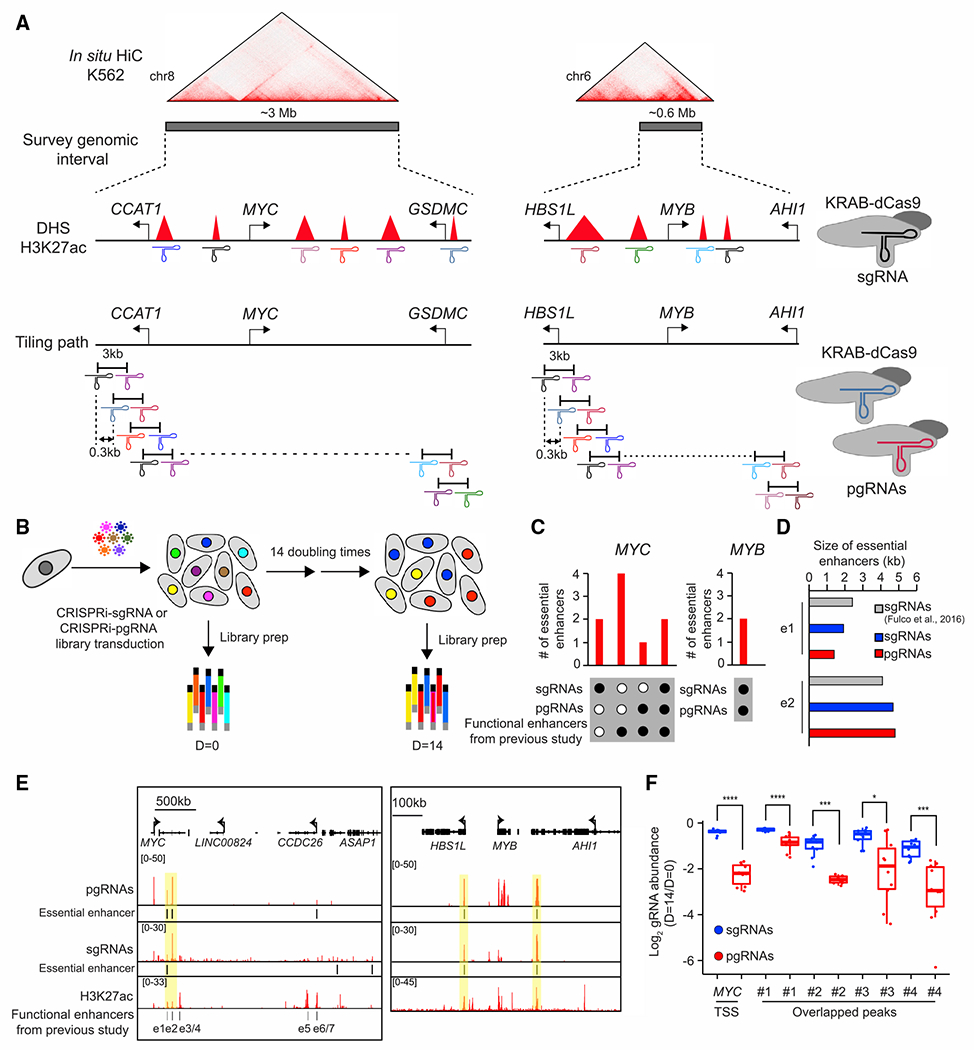
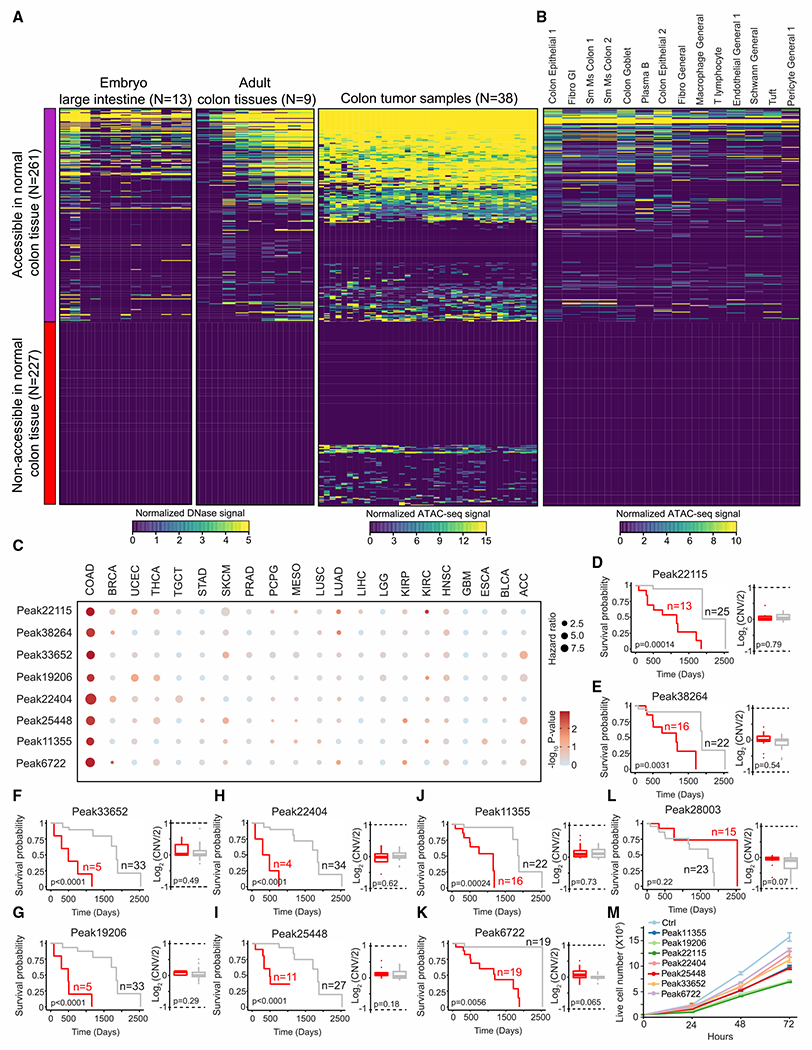
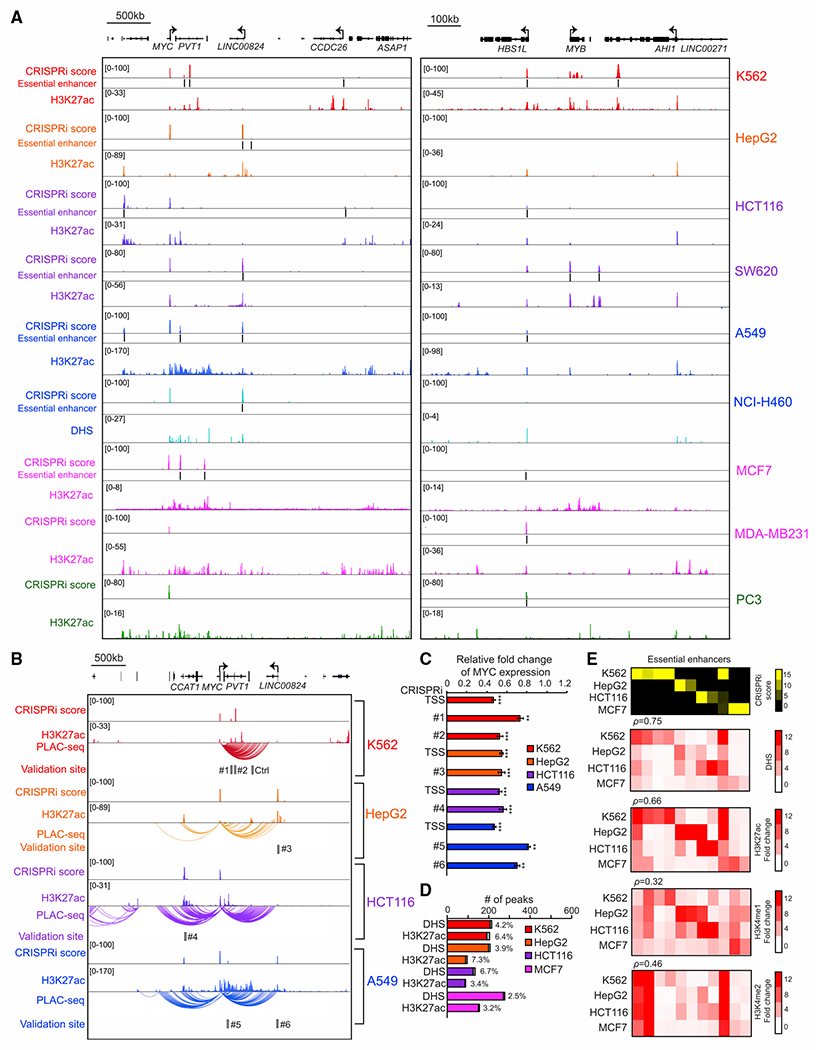
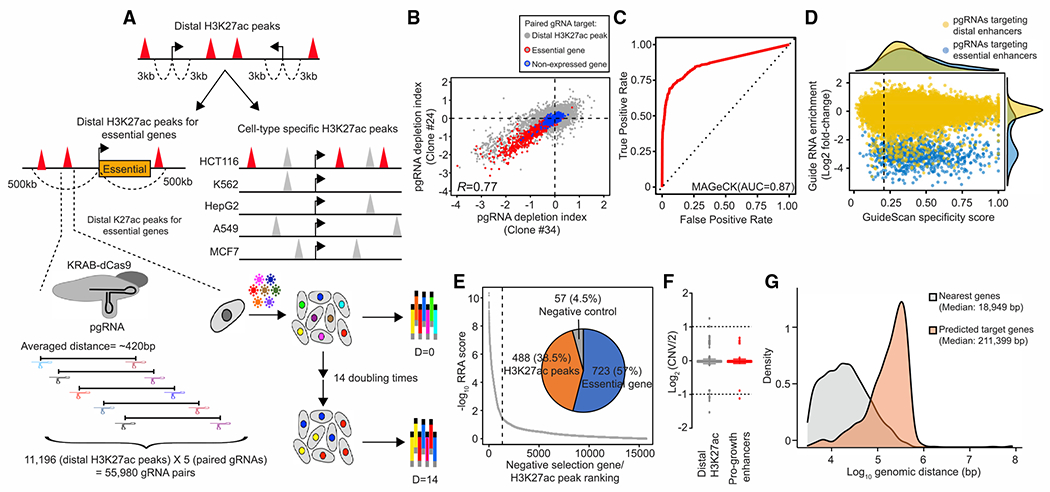
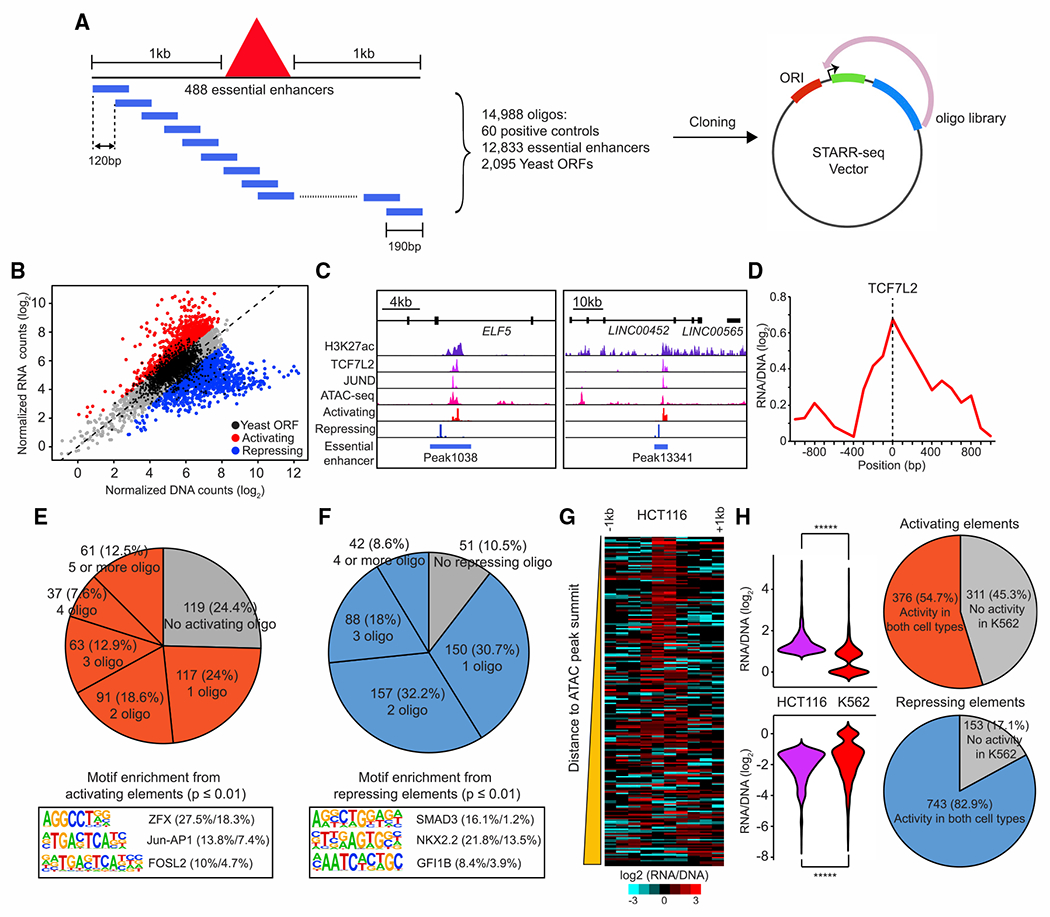
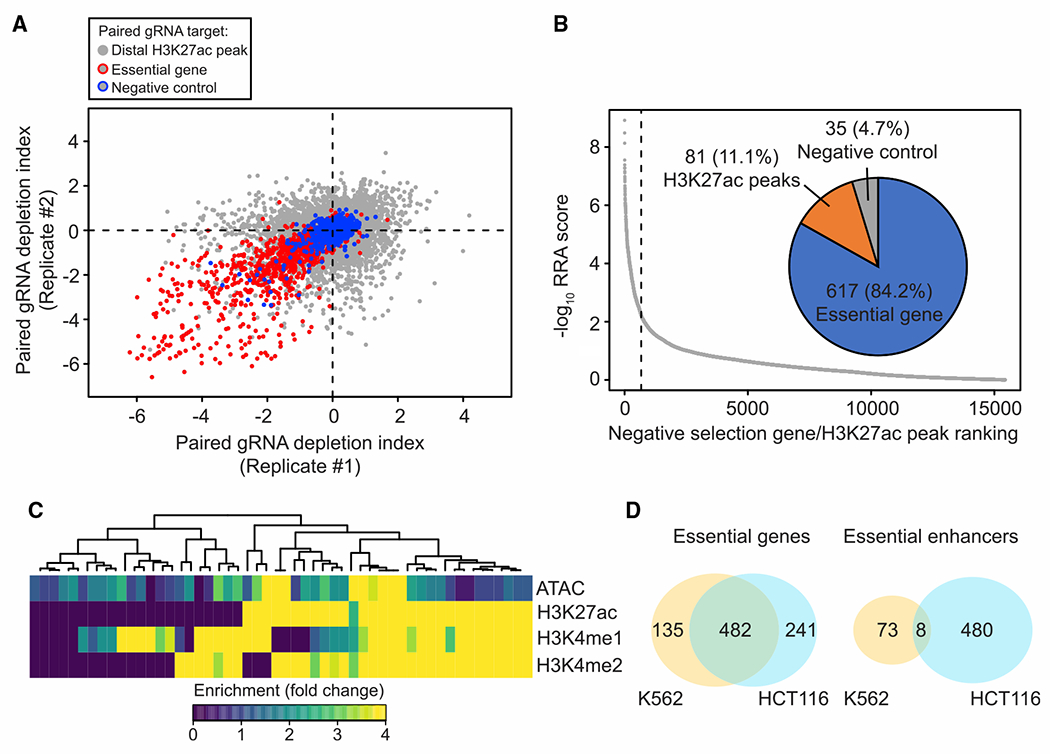
A scarcity of functionally validated enhancers in the human genome presents a significant hurdle to understanding how these cis-regulatory elements contribute to human diseases. We carry out highly multiplexed CRISPR-based perturbation and sequencing to identify enhancers required for cell proliferation and fitness in 10 human cancer cell lines. Our results suggest that the cell fitness enhancers, unlike their target genes, display high cell-type specificity of chromatin features. They typically adopt a modular structure, comprised of activating elements enriched for motifs of oncogenic transcription factors, surrounded by repressive elements enriched for motifs recognized by transcription factors with tumor suppressor functions. We further identify cell fitness enhancers that are selectively accessible in clinical tumor samples, and the levels of chromatin accessibility are associated with patient survival. These results reveal functional enhancers across multiple cancer cell lines, characterize their context-dependent chromatin organization, and yield insights into altered transcription programs in cancer cells.
人类基因组中功能验证的增强子稀缺,这给理解这些顺式调控元件如何导致人类疾病带来了重大障碍。我们进行了高度多重化的基于 CRISPR 的扰动和测序,以鉴定在 10 个人类癌细胞系中增殖和适应性所必需的增强子。我们的结果表明,细胞适应性增强子与它们的靶基因不同,其染色质特征具有高度的细胞类型特异性。它们通常采用模块化结构,由富含致癌转录因子基序的激活元件组成,周围是富含具有肿瘤抑制功能的转录因子识别基序的抑制元件。我们进一步鉴定了在临床肿瘤样本中选择性可及的细胞适应性增强子,并且染色质可及性水平与患者的生存相关。这些结果揭示了多个癌细胞系中的功能增强子,描述了它们依赖于上下文的染色质组织,并深入了解了癌细胞中改变的转录程序。