Department of Pharmaceutics, School of Pharmacy, Guilan University of Medical Sciences, Rasht, Iran.
Department of Microbiology, School of Medicine, Guilan University of Medical Sciences, Rasht, Iran.
BMC Complement Med Ther. 2022 Nov 9;22(1):289. doi: 10.1186/s12906-022-03775-y.
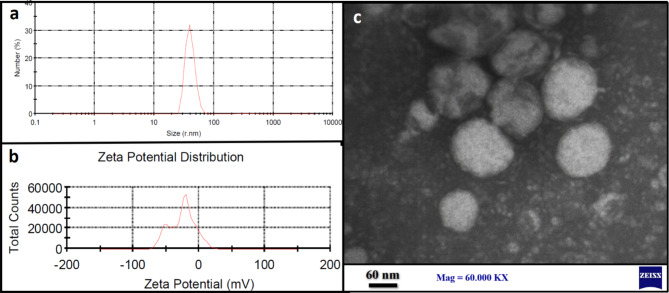
Today, the increment in microbial resistance has guided the researches focus into new antimicrobial compounds or transmission systems. Escherichia coli (E. coli) is an opportunistic pathogen, producing a biofilm responsible for a wide range of nosocomial infections which are often difficult to eradicate with available antibiotics. On the other hand, Cinnamomum verum (cinnamon oil) (CO) is widely used as a natural antibacterial agent and Solid lipid nanoparticles (SLNs) are promising carriers for antibacterial compounds due to their lipophilic nature and ease of transmission through the bacterial cell wall. In this study, nanoparticles containing cinnamon oil (CO-SLN) were prepared by dual emulsion method and evaluated in terms of particle size, shape, entrapment efficiency (EE), transmission electron microscopy (TEM), oil release kinetics, and cell compatibility. The antibacterial activity of CO-SLN and CO against 10 drug-resistant E. coli strains was investigated. The anti-biofilm activity of CO-SLN on the selected pathogen was also investigated. Nanoparticles with an average size of 337.6 nm, and zeta potential of -26.6 mV were fabricated and their round shape was confirmed by TEM images. The antibacterial effects of CO-SLN and CO were reported with MIC Value of 60-75 µg/mL and 155-165 µg/mL and MBC value of 220-235 µg/ml and 540-560 µg/ml, respectively. On the other hand, CO-SLN with 1/2 MIC concentration had the greatest inhibition of biofilm formation in 24 h of incubation (55.25%). The data presented indicate that the MIC of CO-SLN has significantly reduced and it seems that SLN has facilitated and promoted CO transmission through the cell membrane.
今天,微生物耐药性的增加促使研究人员将注意力集中在新的抗菌化合物或传输系统上。大肠杆菌(E. coli)是一种机会性病原体,它产生的生物膜导致了广泛的医院感染,而这些感染通常很难用现有的抗生素来消除。另一方面,肉桂(肉桂油)(CO)被广泛用作天然抗菌剂,而固体脂质纳米粒(SLN)由于其亲脂性和易于穿过细菌细胞壁传递的特性,是有前途的抗菌化合物载体。在本研究中,采用双乳液法制备了含肉桂油的纳米粒(CO-SLN),并对其粒径、形态、包封效率(EE)、透射电镜(TEM)、油释放动力学和细胞相容性进行了评价。研究了 CO-SLN 和 CO 对 10 株耐药性大肠杆菌的抗菌活性,还研究了 CO-SLN 对选定病原体的抗生物膜活性。制备了平均粒径为 337.6nm,zeta 电位为-26.6mV 的纳米粒,并通过 TEM 图像证实其为圆形。报道了 CO-SLN 和 CO 的抗菌作用,其 MIC 值分别为 60-75μg/mL 和 155-165μg/mL,MBC 值分别为 220-235μg/ml 和 540-560μg/ml。另一方面,在孵育 24 小时时,浓度为 1/2 MIC 的 CO-SLN 对生物膜形成的抑制作用最大(55.25%)。所提供的数据表明,CO-SLN 的 MIC 值显著降低,似乎 SLN 促进了 CO 通过细胞膜的传递。