Kumar Suresh, Kumar Santosh, Krishnan Gopala S, Mohapatra Trilochan
Division of Biochemistry, ICAR-Indian Agricultural Research Institute, New Delhi, India.
Decode Genomics Private Limited, New Delhi, India.
Front Plant Sci. 2022 Oct 24;13:1013207. doi: 10.3389/fpls.2022.1013207. eCollection 2022.
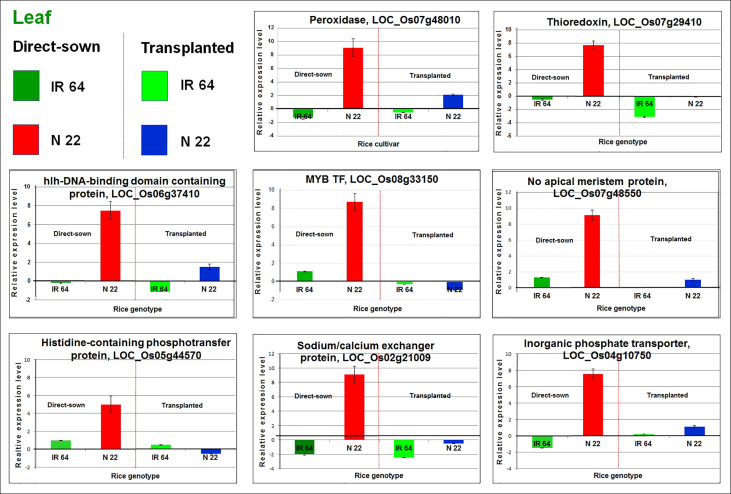
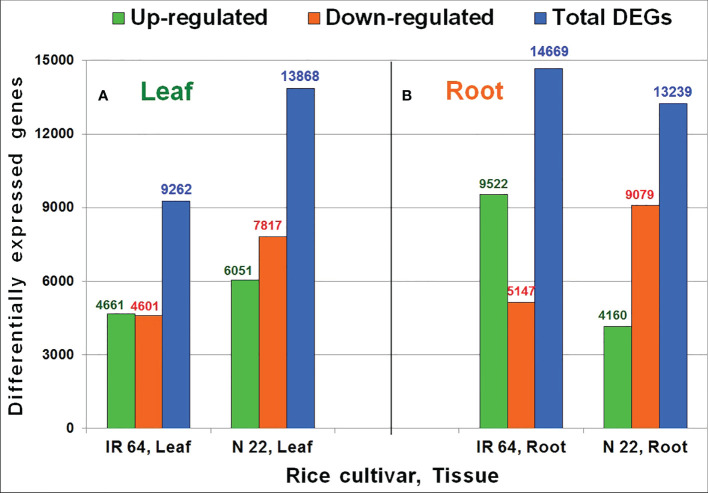
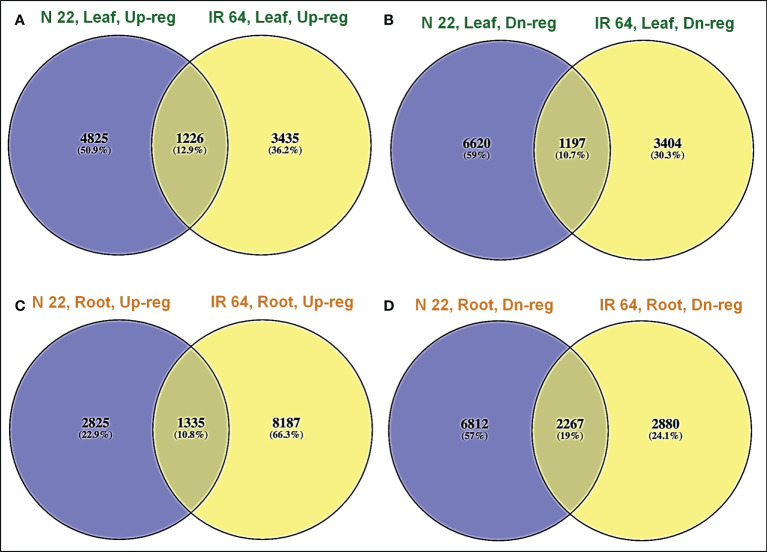
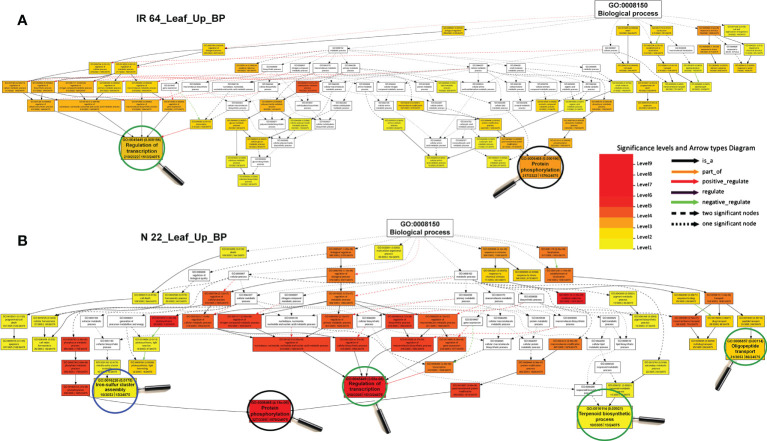
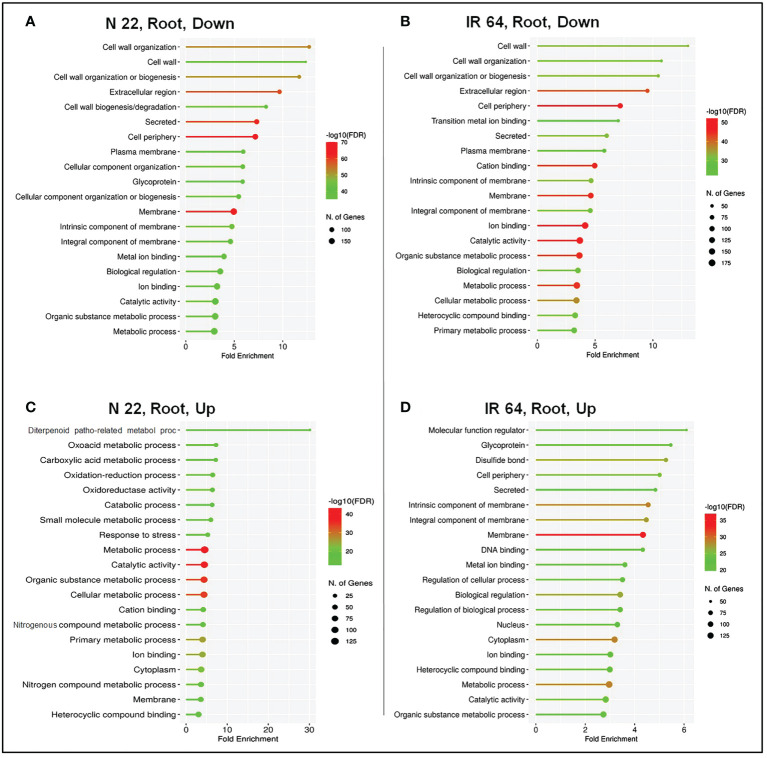
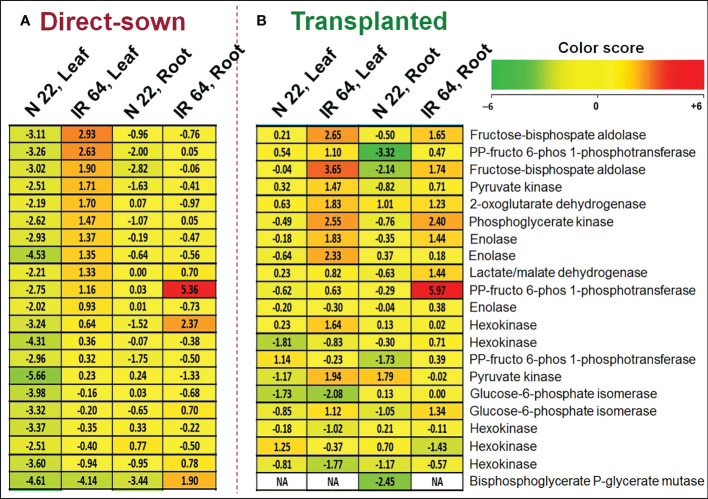
Rice requires plenty of water for its cultivation by transplanting. This poses several challenges to its cultivation due to erratic rainfall resulting in drought, flood, and other abiotic stresses of varying intensity. Dry/direct-sown rice (DSR) has emerged as a water-saving/climate-smart alternative to transplanted rice (TPR). The performance of a rice cultivar on growing by different methods of planting under varying environmental conditions varies considerably. However, the molecular basis of the observed phenotypic plasticity of rice to varying environmental conditions is still elusive. Resilience to various environmental fluctuations is important to ensure sustainable rice production in the present era of global climate change. Our observations on exclusively up-regulated genes in leaf of Nagina 22 (N 22) grown by dry/direct-sowing and subjected to drought stress at panicle initiation stage (compared to that in leaf of IR 64), and another set of genes exclusively down-regulated in leaf of N 22 (compared to that in leaf of IR 64) indicate important roles of leaf in stress resilience. A large number of genes down-regulated exclusively in root of N 22 on dry/direct-sowing subjected to drought stress indicates a major contribution of roots in stress tolerance. The genes for redox-homeostasis, transcription factors, stress signaling, carbohydrate metabolism, and epigenetic modifications play important roles in making N 22 better adapted to DSR conditions. More importantly, the involvement of genes in rendering genetic plasticity to N 22 under changing environmental conditions was confirmed by reversal of the method of planting. To the best of our knowledge, this is the first report on decoding the molecular basis of genetic plasticity of rice grown by two different methods of planting subjected to drought stress at the reproductive stage of plant growth. This might help in DSR varietal development program to enhance water-productivity, conserve natural resources, and minimize the emission of greenhouse gases, thus achieving the objectives of negative-emission agriculture.
水稻通过移栽种植需要大量的水。由于降雨不稳定导致干旱、洪水以及其他不同强度的非生物胁迫,这给水稻种植带来了诸多挑战。旱直播水稻已成为移栽水稻的一种节水/气候智能型替代方案。在不同环境条件下,水稻品种采用不同种植方式生长的表现差异很大。然而,水稻在不同环境条件下表现出的表型可塑性的分子基础仍然难以捉摸。在当前全球气候变化时代,对各种环境波动的适应能力对于确保水稻可持续生产至关重要。我们观察到,在孕穗期遭受干旱胁迫的旱直播种植的纳吉纳22(N22)叶片中专门上调的基因(与IR64叶片相比),以及在N22叶片中专门下调的另一组基因(与IR64叶片相比),表明叶片在胁迫适应能力中发挥着重要作用。在遭受干旱胁迫的旱直播条件下,大量在N22根系中专门下调的基因表明根系在胁迫耐受性中起主要作用。氧化还原稳态、转录因子、胁迫信号传导、碳水化合物代谢和表观遗传修饰相关基因在使N22更好地适应旱直播条件方面发挥着重要作用。更重要的是,通过改变种植方式证实了基因在使N22在变化的环境条件下具有遗传可塑性方面的作用。据我们所知,这是第一份关于解析在植物生长生殖阶段遭受干旱胁迫时,通过两种不同种植方式种植的水稻遗传可塑性分子基础的报告。这可能有助于旱直播品种开发计划提高水分利用效率、保护自然资源并减少温室气体排放,从而实现负排放农业的目标。