Feng Lijie, Zhao Weiyu, Wang Jinfeng, Lin Kuo-Yi, Guo Yanan, Zhang Luyao
Logistics Engineering College, Shanghai Maritime University, 1550 Haigang Avenue, Pudong District, Shanghai 201306, China.
Institute of Logistics Science and Engineering, Shanghai Maritime University, 1550 Haigang Avenue, Pudong District, Shanghai 201306, China.
Pharmaceuticals (Basel). 2022 Nov 3;15(11):1357. doi: 10.3390/ph15111357.
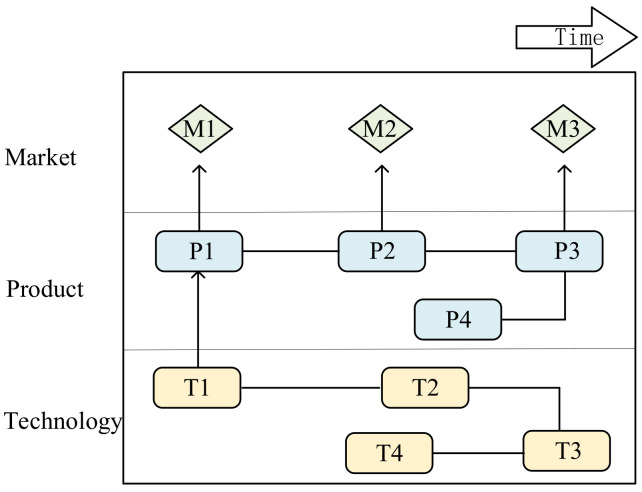
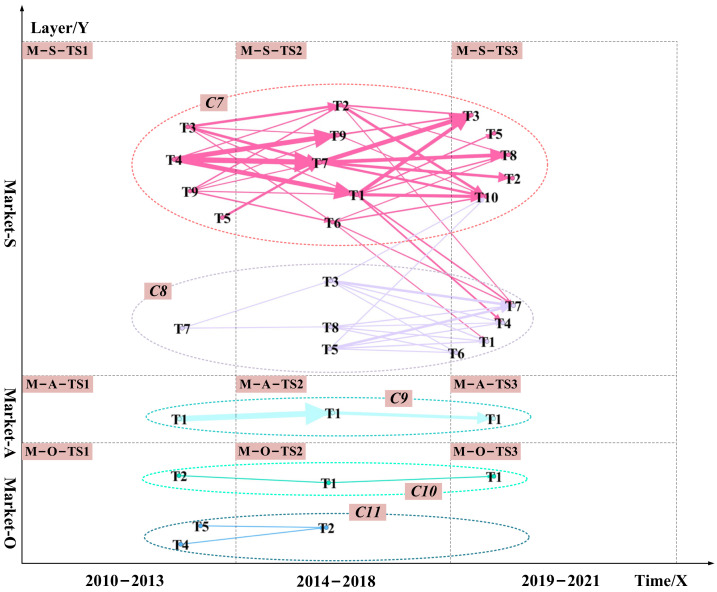
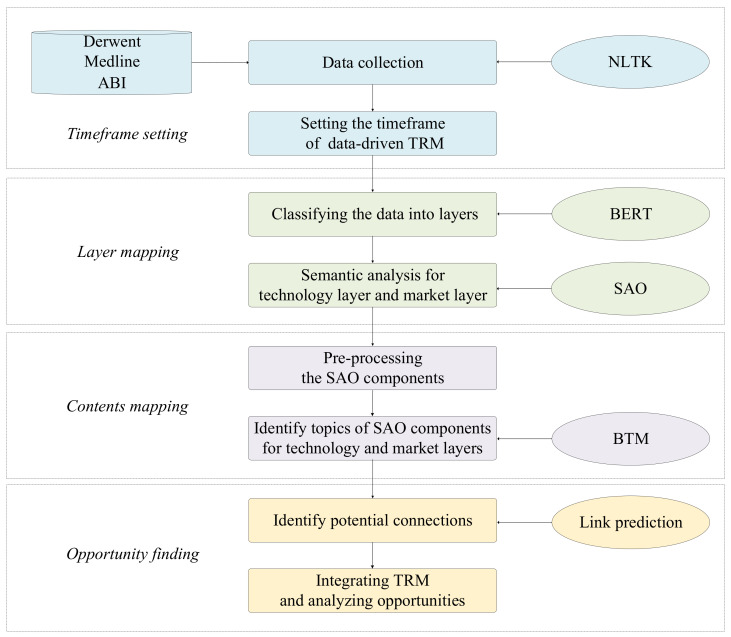
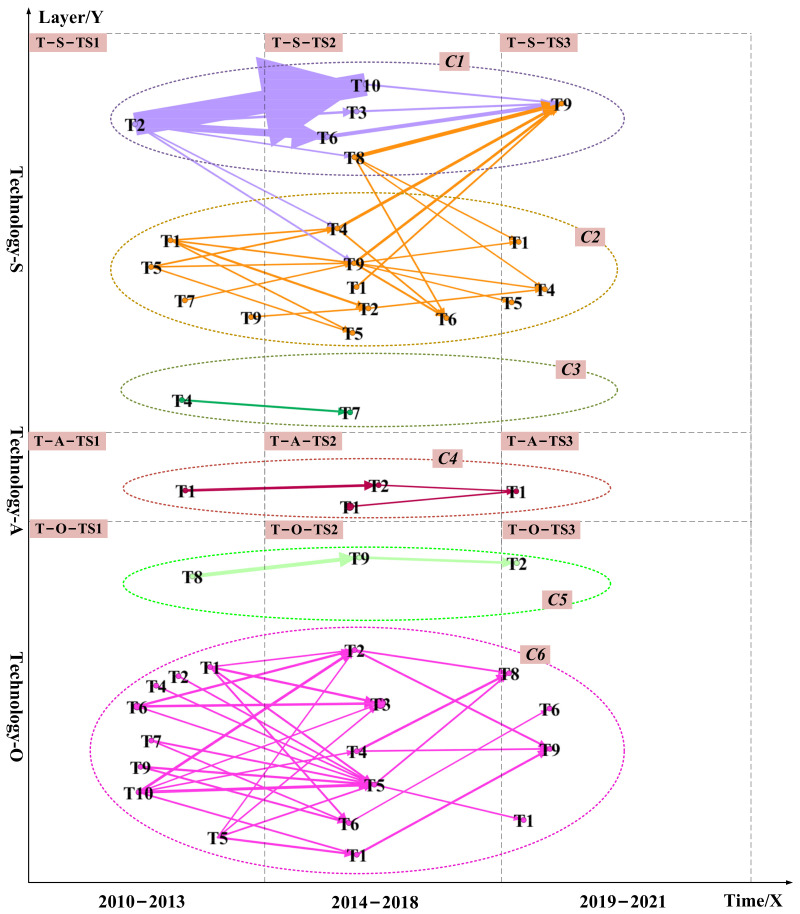
Hyperuricemia is a metabolic disease with an increasing incidence in recent years. It is critical to identify potential technology opportunities for hyperuricemia drugs to assist drug innovation. A technology roadmap (TRM) can efficiently integrate data analysis tools to track recent technology trends and identify potential technology opportunities. Therefore, this paper proposes a systematic data-driven TRM approach to identify potential technology opportunities for hyperuricemia drugs. This data-driven TRM includes the following three aspects: layer mapping, content mapping and opportunity finding. First we deal with layer mapping.. The BERT model is used to map the collected literature, patents and commercial hyperuricemia drugs data into the technology layer and market layer in TRM. The SAO model is then used to analyze the semantics of technology and market layer for hyperuricemia drugs. We then deal with content mapping. The BTM model is used to identify the core SAO component topics of hyperuricemia in technology and market dimensions. Finally, we consider opportunity finding. The link prediction model is used to identify potential technological opportunities for hyperuricemia drugs. This data-driven TRM effectively identifies potential technology opportunities for hyperuricemia drugs and suggests pathways to realize these opportunities. The results indicate that resurrecting the pseudogene of human uric acid oxidase and reducing the toxicity of small molecule drugs will be potential opportunities for hyperuricemia drugs. Based on the identified potential opportunities, comparing the DNA sequences from different sources and discovering the critical amino acid site that affects enzyme activity will be helpful in realizing these opportunities. Therefore, this research provides an attractive option analysis technology opportunity for hyperuricemia drugs.
高尿酸血症是一种近年来发病率不断上升的代谢性疾病。识别高尿酸血症药物的潜在技术机会以助力药物创新至关重要。技术路线图(TRM)能够有效整合数据分析工具,以追踪近期技术趋势并识别潜在技术机会。因此,本文提出一种基于数据驱动的系统性TRM方法,以识别高尿酸血症药物的潜在技术机会。这种数据驱动的TRM包括以下三个方面:层次映射、内容映射和机会发现。首先我们处理层次映射。使用BERT模型将收集到的文献、专利和商业高尿酸血症药物数据映射到TRM的技术层和市场层。然后使用SAO模型分析高尿酸血症药物技术层和市场层的语义。接着我们处理内容映射。使用BTM模型在技术和市场维度识别高尿酸血症的核心SAO组件主题。最后,我们考虑机会发现。使用链接预测模型识别高尿酸血症药物的潜在技术机会。这种数据驱动的TRM有效识别了高尿酸血症药物的潜在技术机会,并提出了实现这些机会的途径。结果表明,复活人尿酸氧化酶的假基因和降低小分子药物的毒性将是高尿酸血症药物的潜在机会。基于识别出的潜在机会,比较不同来源的DNA序列并发现影响酶活性的关键氨基酸位点将有助于实现这些机会。因此,本研究为高尿酸血症药物提供了一种有吸引力的技术机会分析选项。