Lyros Ioannis, Perrea Despoina, Tosios Konstantinos, Nikitakis Nikolaos, Tsolakis Ioannis A, Ferdianakis Efstratios, Fora Eleni, Lykogeorgos Theodoros, Maroulakos Michael P, Vardas Emmanouil, Georgaki Maria, Papadopoulou Erofili, Tsolakis Apostolos I
Department of Orthodontics, School of Dentistry, National and Kapodistrian University of Athens, 11527 Athens, Greece.
Laboratory of Experimental Surgery and Surgical Research "N.S. Christeas", Medical School, National and Kapodistrian University of Athens, 11527 Athens, Greece.
Vet Sci. 2022 Nov 10;9(11):625. doi: 10.3390/vetsci9110625.
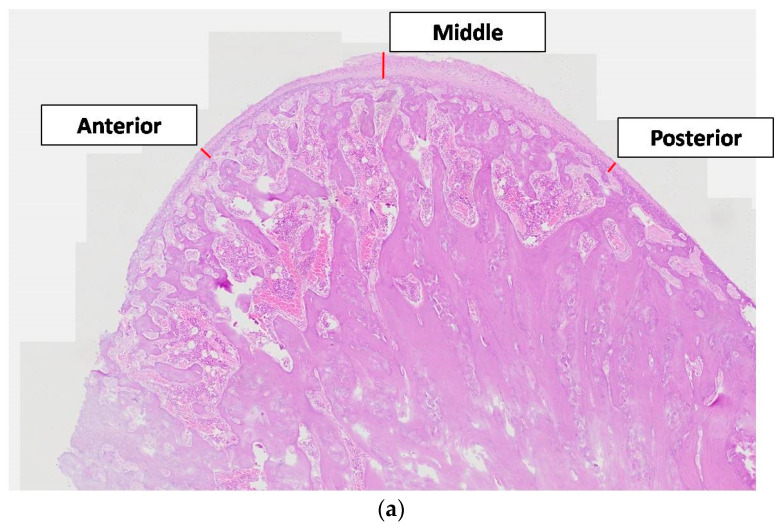
The present study aimed to investigate any biochemical and histological changes of the rat condyle and mandible in animals that had sustained mandibular growth restriction. Seventy-two male Wistar rats were divided into two equal groups, experimental and control. Each group consisted of three equal subgroups. The animals were sacrificed 30, 60, and 90 days after the start of the experiment. Blood samples were collected from the eye, and the osteoprotegerin (OPG), Receptor Activator of Nuclear Factor Kappa B Ligand (RANKL), and Macrophage Colony-Stimulating factor (MCSF)concentrations were measured by using enzyme-linked immunosorbent assay (ELISA) kits. A histological analysis was performed on the mandibular condyles. The blood serum values of OPG, RANKL, and MCSF did not exhibit any statistically significant difference between groups or subgroups. However, significant histological changes became evident after a histomorphometric condylar examination was performed. The Bone Surface/Total Surface ratio appeared reduced in the anterior and posterior regions of the condyle. In addition, the Posterior Condylar Cartilage Thickness was measured and determined to be significantly diminished. The present intervention that employed orthodontic/orthopedic devices did not prove to have any significant effect on the circulating proteins under study. Posterior displacement of the mandible may culminate only in local histological alterations in condylar cartilage thickness and its osseous microarchitecture.
本研究旨在调查下颌生长受限动物的大鼠髁突和下颌骨的任何生化和组织学变化。72只雄性Wistar大鼠被分为两组,即实验组和对照组,每组又分为三个相等的亚组。在实验开始后的30天、60天和90天处死动物。从眼眶采集血样,使用酶联免疫吸附测定(ELISA)试剂盒测量骨保护素(OPG)、核因子κB受体活化因子配体(RANKL)和巨噬细胞集落刺激因子(MCSF)的浓度。对下颌髁突进行组织学分析。OPG、RANKL和MCSF的血清值在组间或亚组间未显示出任何统计学上的显著差异。然而,在进行髁突组织形态计量学检查后,明显的组织学变化变得明显。髁突前后区域的骨表面积/总表面积比值似乎降低。此外,测量了髁突后软骨厚度,发现其显著减小。采用正畸/矫形装置的当前干预措施并未证明对所研究的循环蛋白有任何显著影响。下颌后移可能仅导致髁突软骨厚度及其骨微结构的局部组织学改变。