Department of Biology, MIT, Cambridge, MA 02139, USA; Koch Institute for Integrative Cancer Research, MIT, Cambridge, MA 02139, USA.
Department of Biology, MIT, Cambridge, MA 02139, USA; Koch Institute for Integrative Cancer Research, MIT, Cambridge, MA 02139, USA; Ludwig Center at MIT's Koch Institute for Integrative Cancer Research, Cambridge, MA 02139, USA; Ragon Institute of MGH, MIT and Harvard, Cambridge, MA 02139, USA.
Trends Cancer. 2023 Feb;9(2):172-184. doi: 10.1016/j.trecan.2022.10.006. Epub 2022 Nov 7.
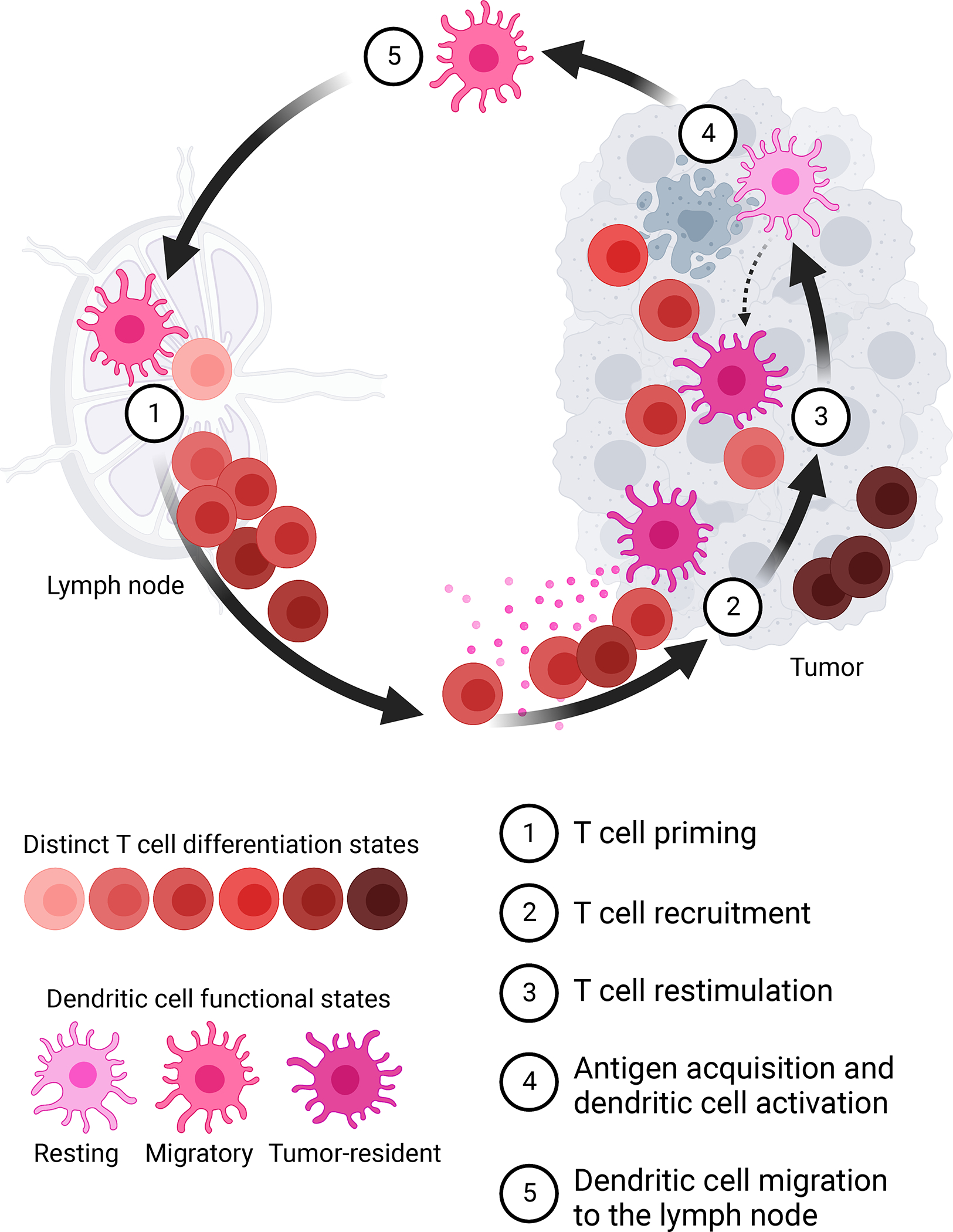
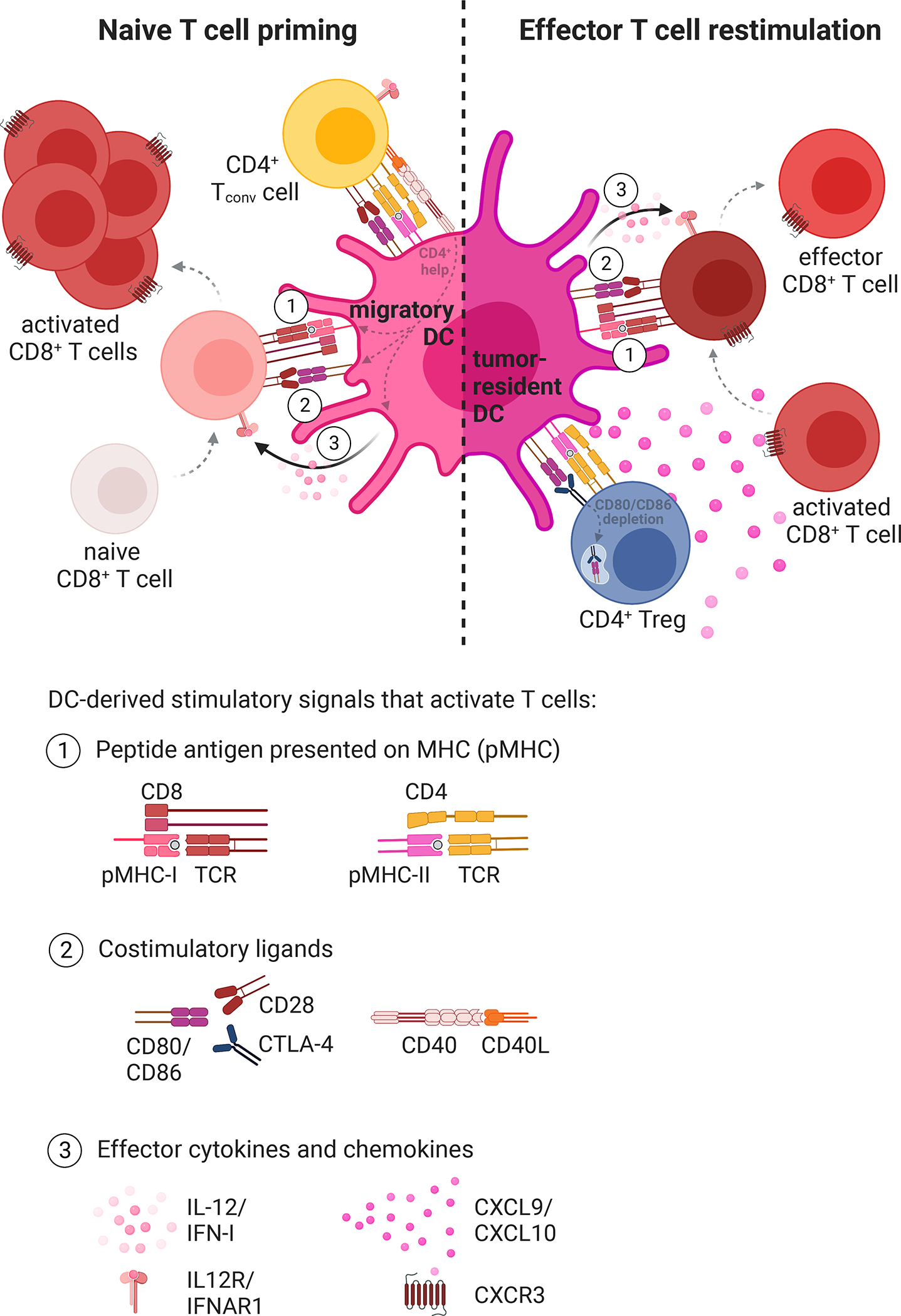
Cytotoxic CD8 T cells are potent killers of diseased cells, but their functional capacity is often compromised in cancer. The quality of antitumor T cell immunity is determined during T cell priming in the lymph node and further influenced by the local microenvironment of the tumor. Increasing evidence indicates that dendritic cells (DCs) have the capacity to precisely regulate the functional quality of antitumor T cell responses in both locations. In this review, we discuss recent advances in our understanding of how distinct DC-derived signals influence CD8 T cell differentiation and antitumor functions. Insight into the mechanisms of DC-mediated regulation of antitumor immunity could inspire the development of improved approaches to prevent and reverse T cell dysfunction in cancer.
细胞毒性 CD8 T 细胞是疾病细胞的强大杀手,但它们的功能能力在癌症中常常受到损害。抗肿瘤 T 细胞免疫的质量在淋巴结中的 T 细胞启动时确定,并进一步受到肿瘤局部微环境的影响。越来越多的证据表明,树突状细胞 (DC) 有能力在这两个位置精确调节抗肿瘤 T 细胞反应的功能质量。在这篇综述中,我们讨论了我们对不同 DC 衍生信号如何影响 CD8 T 细胞分化和抗肿瘤功能的理解的最新进展。深入了解 DC 介导的抗肿瘤免疫调节的机制可以启发开发改进的方法来预防和逆转癌症中的 T 细胞功能障碍。