Palacios Luz Maria, Peyret Victoria, Viano María Estefania, Geysels Romina Celeste, Chocobar Yair Aron, Volpini Ximena, Pellizas Claudia Gabriela, Nicola Juan Pablo, Motran Claudia Cristina, Rodriguez-Galan María Cecilia, Fozzatti Laura
Departamento de Bioquímica Clínica, Facultad de Ciencias Químicas, Universidad Nacional de Córdoba, Córdoba 5000, Argentina.
Centro de Investigaciones en Bioquímica Clínica e Inmunología, Consejo Nacional de Investigaciones Científicas y Técnicas (CIBICI-CONICET), Córdoba 5000, Argentina.
Biology (Basel). 2022 Nov 3;11(11):1609. doi: 10.3390/biology11111609.
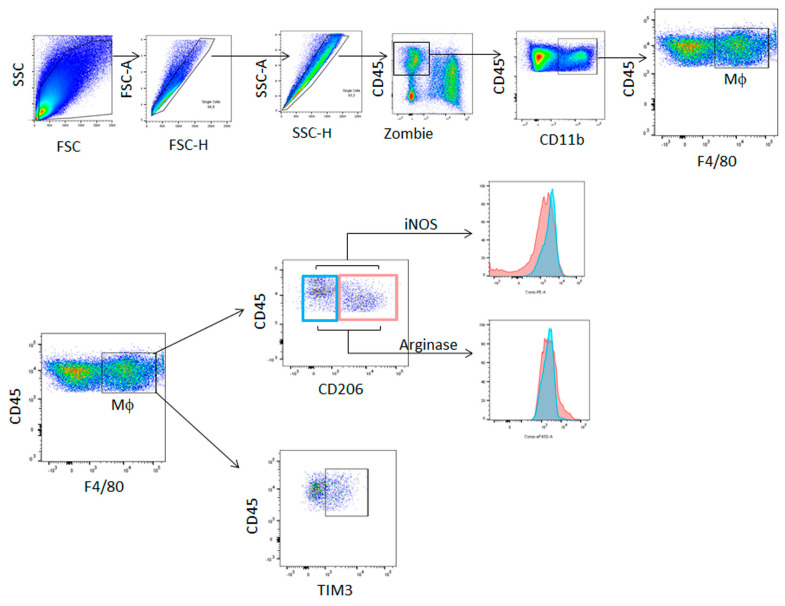
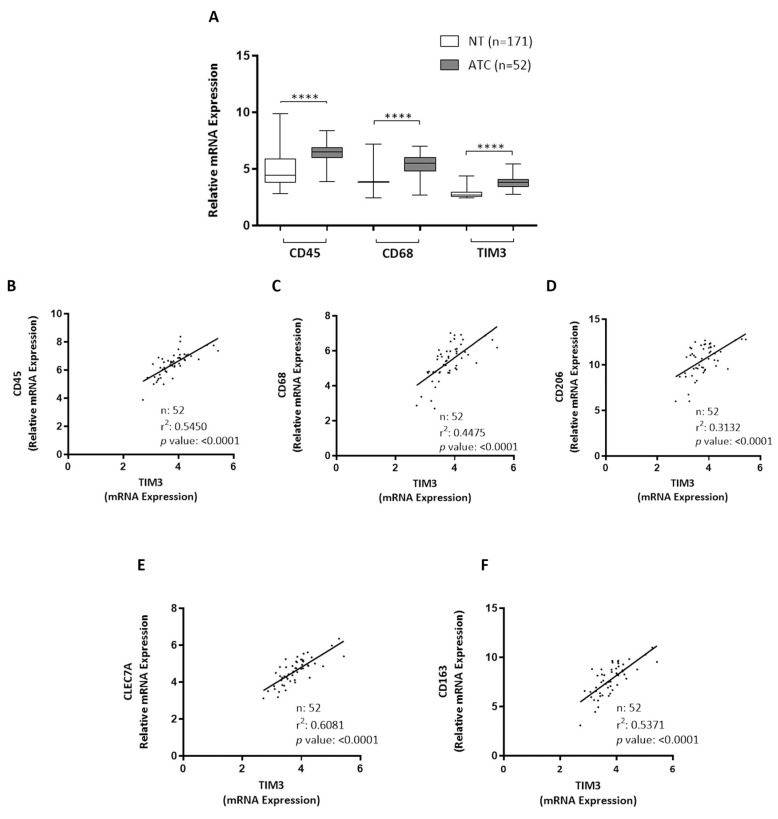
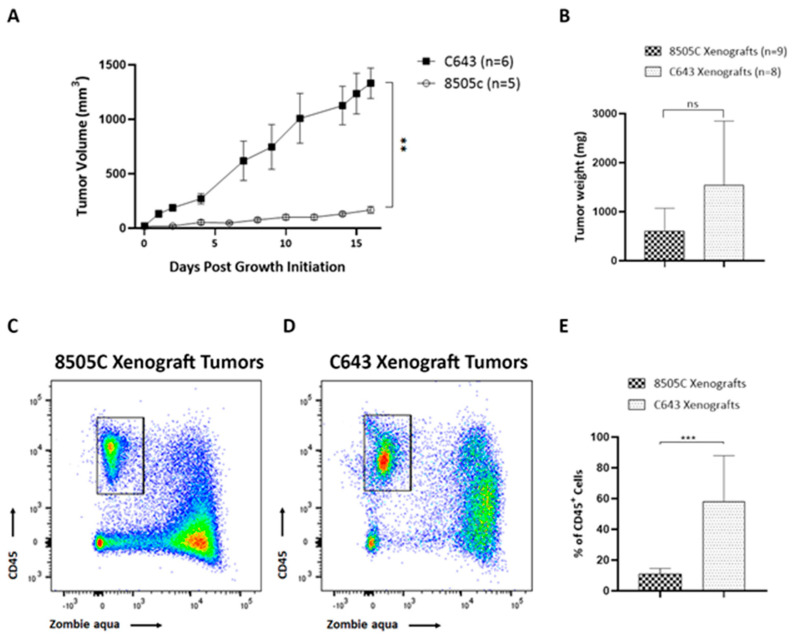
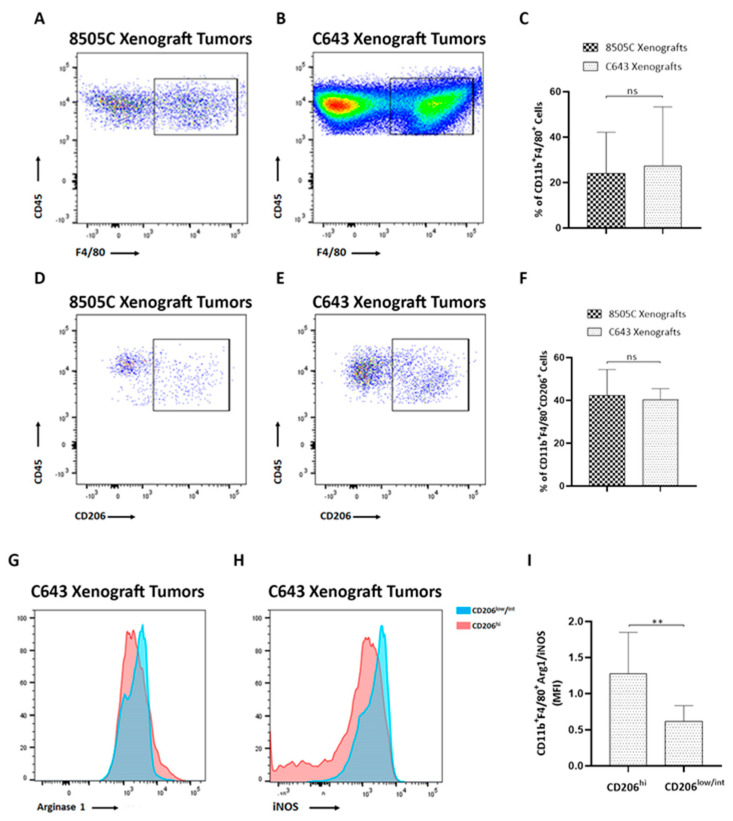
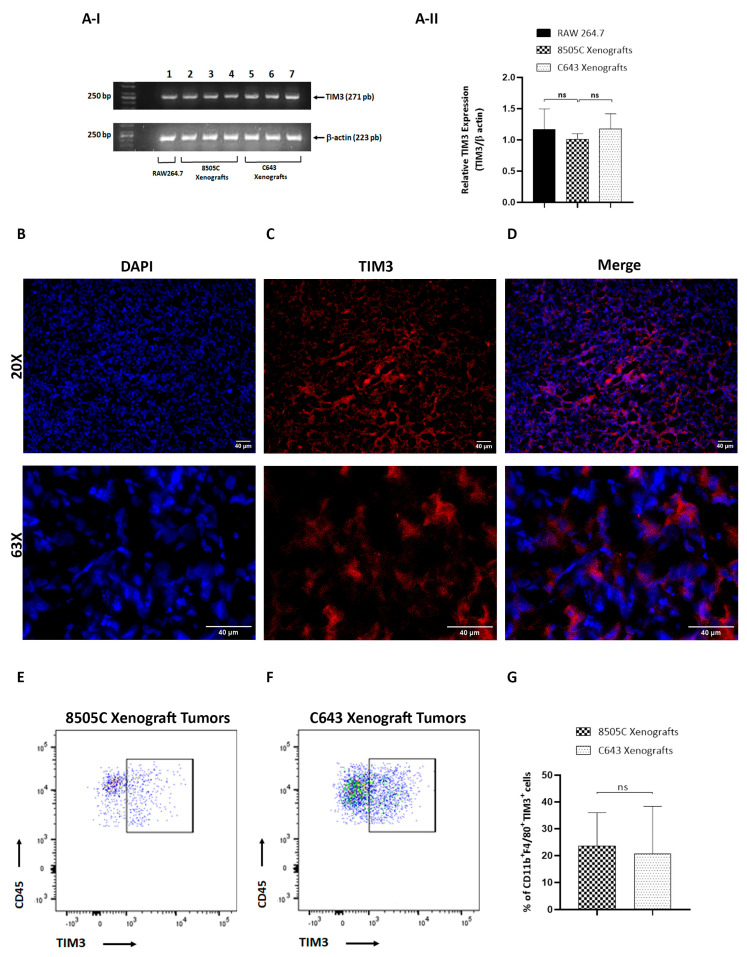
Anaplastic thyroid cancer (ATC) is a clinically aggressive form of undifferentiated thyroid cancer with limited treatment options. Immunotherapy for patients with ATC remains challenging. Tumor-associated macrophages (TAMs) constitute over 50% of ATC-infiltrating cells, and their presence is associated with a poor prognosis. Consequently, the development of new therapies targeting immune checkpoints in TAMs is considered a promising therapeutic approach for ATC. We have previously shown that soluble factors secreted by ATC cells induced pro-tumor M2-like polarization of human monocytes by upregulating the levels of the inhibitory receptor TIM3. Here, we extended our observations on ATC-cell-induced xenograft tumors. We observed a large number of immune cells infiltrating the ATC xenograft tumors. Significantly, 24-28% of CD45 immune cells were macrophages (CD11b F4/80). We further showed that 40% of macrophages were polarized toward a M2-like phenotype, as assessed by CD206 expression and by a significant increase in the Arg1/iNOS (M2/M1) ratio. Additionally, we found that ATC xenograft tumors had levels of TIM3 expression when determined by RT-PCR and immunofluorescence assays. Interestingly, we detected the expression of TIM3 in macrophages in ATC tumors by flow cytometry assays. Furthermore, TIM3 expression correlated with macrophage marker expression in human ATC. Our studies show that TIM3 is a newly identified immune checkpoint in macrophages. Since TIM3 is known as a negative immune regulator, it should be considered as a promising immunotherapeutic target for ATC.
间变性甲状腺癌(ATC)是一种临床侵袭性的未分化甲状腺癌,治疗选择有限。对ATC患者进行免疫治疗仍然具有挑战性。肿瘤相关巨噬细胞(TAM)占ATC浸润细胞的50%以上,它们的存在与预后不良相关。因此,开发针对TAM中免疫检查点的新疗法被认为是ATC一种有前景的治疗方法。我们之前已经表明,ATC细胞分泌的可溶性因子通过上调抑制性受体TIM3的水平诱导人单核细胞向促肿瘤的M2样极化。在此,我们扩展了对ATC细胞诱导的异种移植肿瘤的观察。我们观察到大量免疫细胞浸润ATC异种移植肿瘤。值得注意的是,24% - 28%的CD45免疫细胞是巨噬细胞(CD11b F4/80)。我们进一步表明,通过CD206表达以及Arg1/iNOS(M2/M1)比值的显著增加评估,40%的巨噬细胞向M2样表型极化。此外,通过RT-PCR和免疫荧光测定法确定,我们发现ATC异种移植肿瘤有TIM3表达水平。有趣的是,通过流式细胞术测定法我们在ATC肿瘤的巨噬细胞中检测到TIM3的表达。此外,TIM3表达与人类ATC中的巨噬细胞标志物表达相关。我们的研究表明,TIM3是巨噬细胞中新发现的免疫检查点。由于TIM3是已知的负性免疫调节因子,它应被视为ATC有前景的免疫治疗靶点。