Muzzi João C D, Magno Jéssica M, Souza Jean S, Alvarenga Larissa M, de Moura Juliana F, Figueiredo Bonald C, Castro Mauro A A
Laboratório de Imunoquímica (LIMQ), Pós-Graduação em Microbiologia, Parasitologia e Patologia, Departamento de Patologia Básica, Universidade Federal do Paraná (UFPR), Curitiba 81530-990, Brazil.
Laboratório de Bioinformática e Biologia de Sistemas, Pós-Graduação em Bioinformática, Universidade Federal do Paraná (UFPR), Curitiba 81520-260, Brazil.
Cancers (Basel). 2022 Oct 27;14(21):5279. doi: 10.3390/cancers14215279.
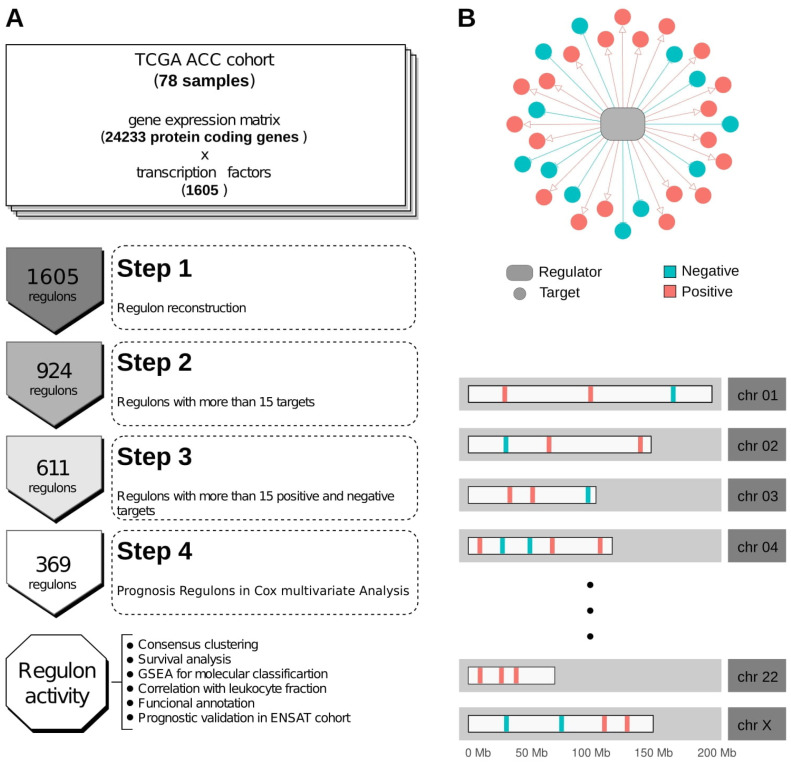
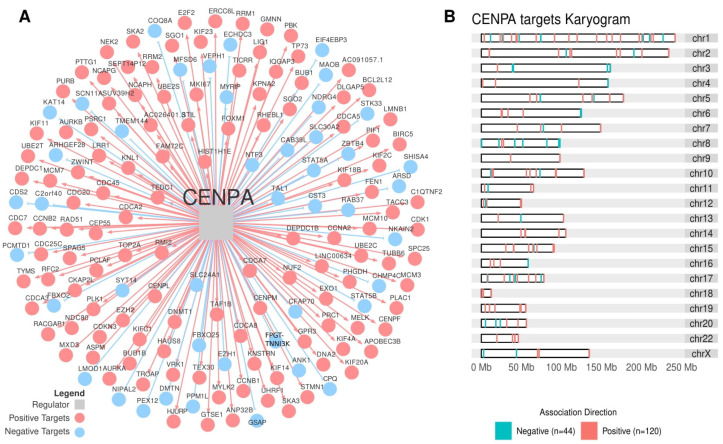
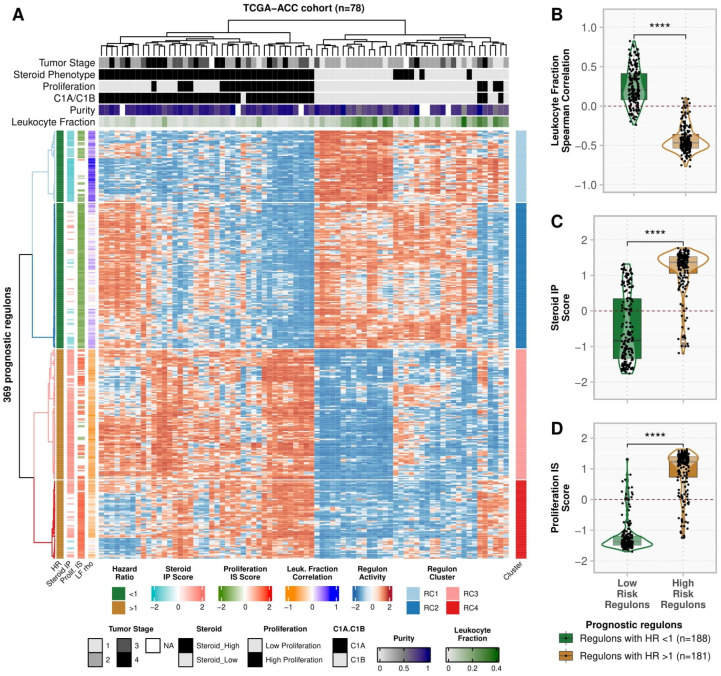
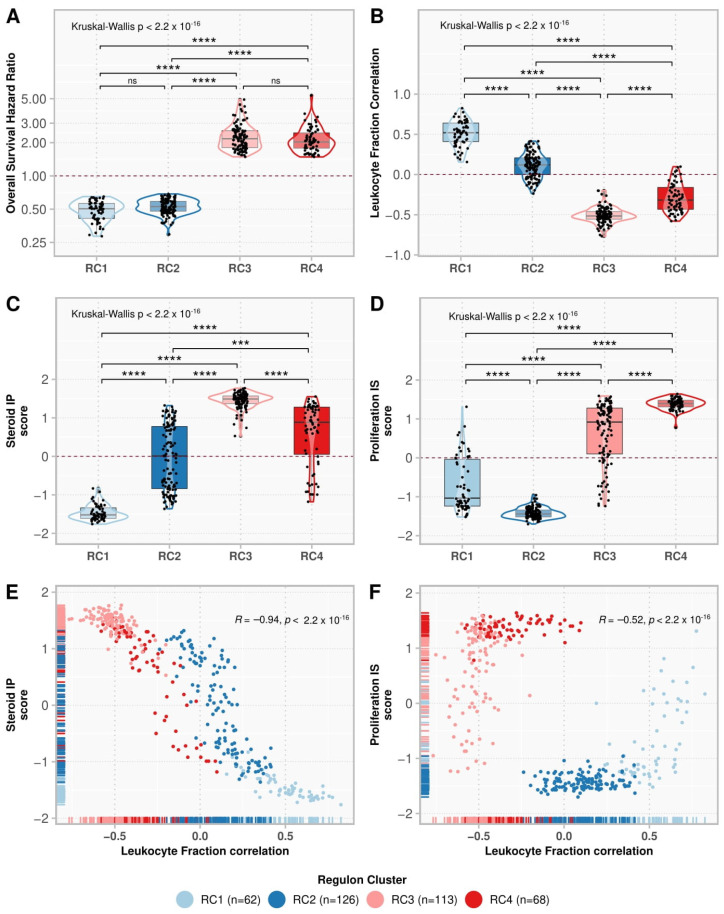
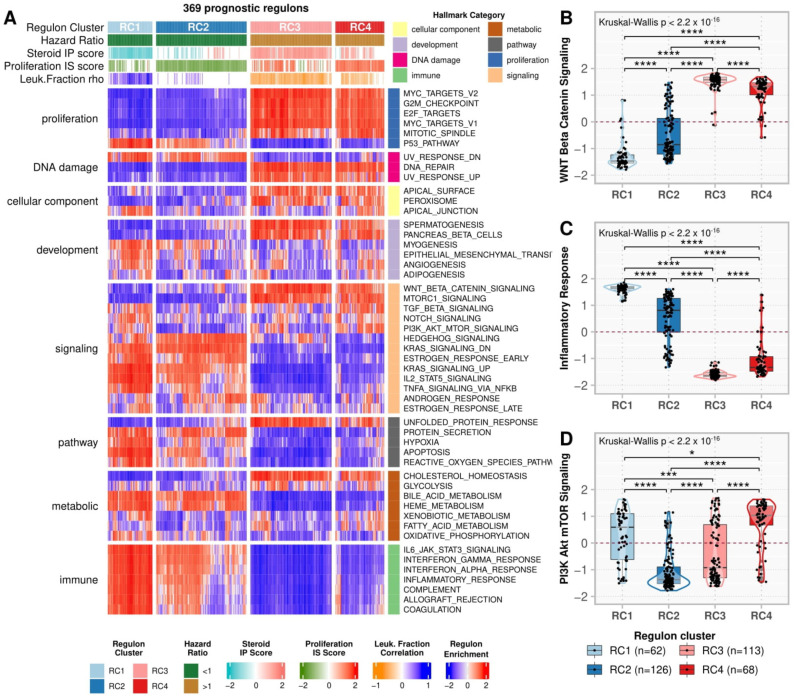
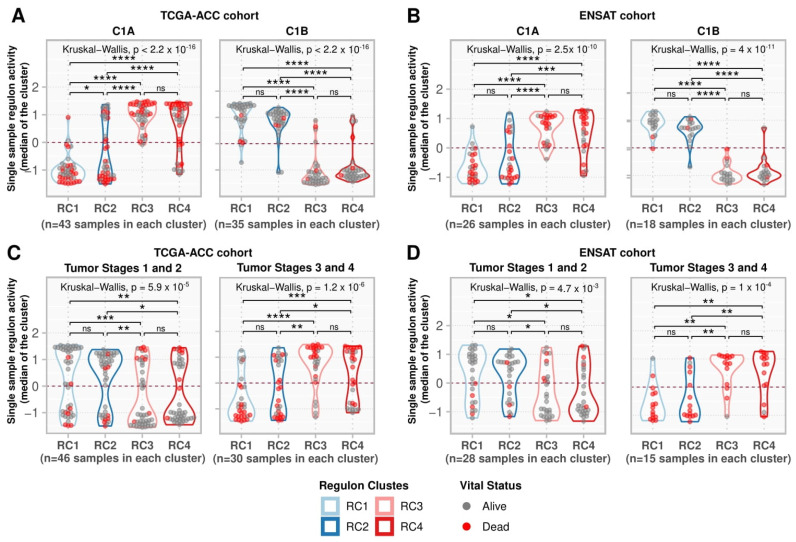
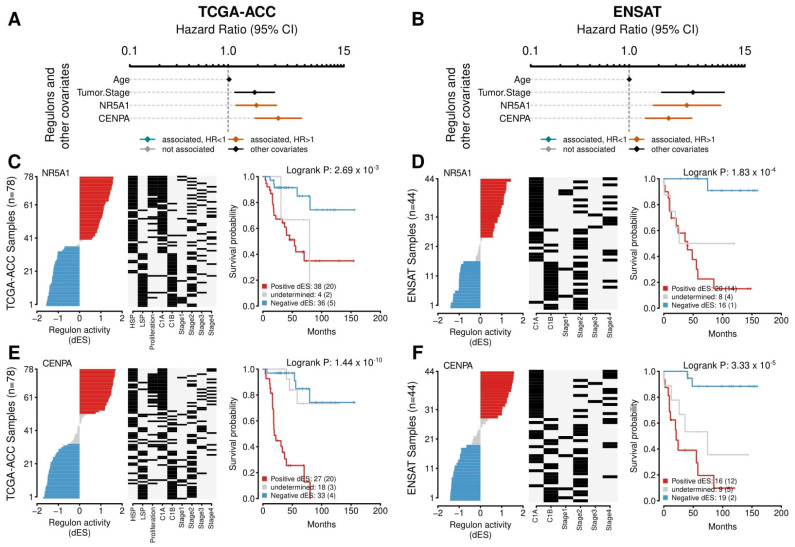
We reconstructed a transcriptional regulatory network for adrenocortical carcinoma (ACC) using transcriptomic and clinical data from The Cancer Genome Atlas (TCGA)-ACC cohort. We investigated the association of transcriptional regulatory units (regulons) with overall survival, molecular phenotypes, and immune signatures. We annotated the ACC regulons with cancer hallmarks and assessed single sample regulon activities in the European Network for the Study of Adrenal Tumors (ENSAT) cohort. We found 369 regulons associated with overall survival and subdivided them into four clusters: RC1 and RC2, associated with good prognosis, and RC3 and RC4, associated with worse outcomes. The RC1 and RC3 regulons were highly correlated with the 'Steroid Phenotype,' while the RC2 and RC4 regulons were highly correlated with a molecular proliferation signature. We selected two regulons, (steroidogenic factor 1, SF-1) and (Centromeric Protein A), that were consistently associated with overall survival for further downstream analyses. The regulon was the primary regulator of (a marker of proliferation KI-67), while the regulon is a well-described transcription factor (TF) in ACC tumorigenesis. We also found that the (Zinc finger and BTB domain-containing protein 4) regulon, which is negatively associated with in our transcriptional regulatory network, is also a druggable anti-tumorigenic TF. We anticipate that the ACC regulons may be used as a reference for further investigations concerning the complex molecular interactions in ACC tumors.
我们利用来自癌症基因组图谱(TCGA)-肾上腺皮质癌(ACC)队列的转录组和临床数据,重建了肾上腺皮质癌的转录调控网络。我们研究了转录调控单元(调控子)与总生存期、分子表型和免疫特征之间的关联。我们用癌症特征对ACC调控子进行注释,并评估了欧洲肾上腺肿瘤研究网络(ENSAT)队列中单个样本的调控子活性。我们发现369个调控子与总生存期相关,并将它们分为四个簇:与良好预后相关的RC1和RC2,以及与较差预后相关的RC3和RC4。RC1和RC3调控子与“类固醇表型”高度相关,而RC2和RC4调控子与分子增殖特征高度相关。我们选择了两个始终与总生存期相关的调控子,即(类固醇生成因子1,SF-1)和(着丝粒蛋白A),用于进一步的下游分析。调控子是(增殖标志物KI-67)的主要调节因子,而调控子是ACC肿瘤发生中一个广为人知的转录因子(TF)。我们还发现,在我们的转录调控网络中与呈负相关的(含锌指和BTB结构域蛋白4)调控子,也是一种可成药的抗肿瘤转录因子。我们预计,ACC调控子可作为进一步研究ACC肿瘤中复杂分子相互作用的参考。