Department of Neurosurgery, Shengjing Hospital of China Medical University, Shenyang, China.
Key Laboratory of Neuro-oncology in Liaoning Province, Shenyang, China.
Clin Transl Med. 2021 May;11(5):e411. doi: 10.1002/ctm2.411.
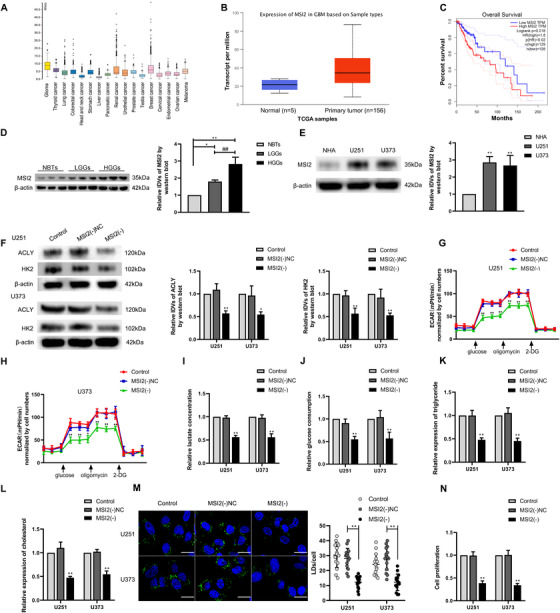
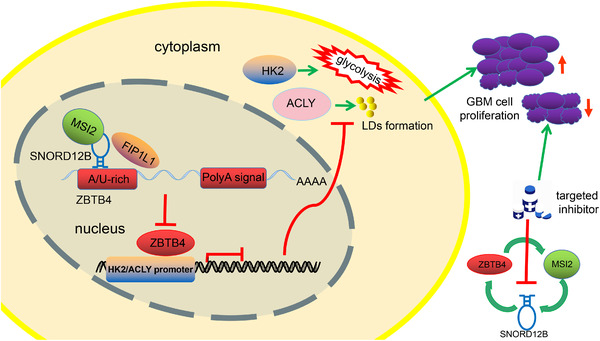
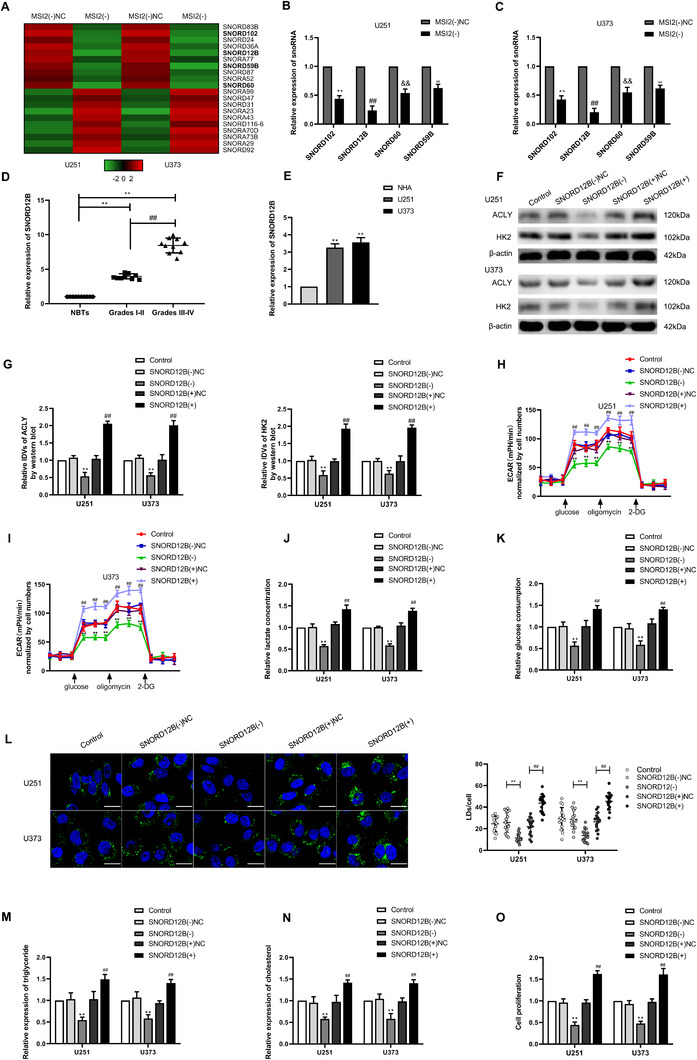
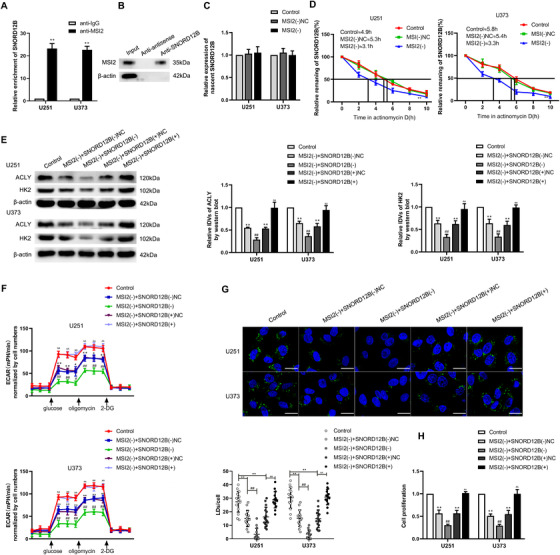
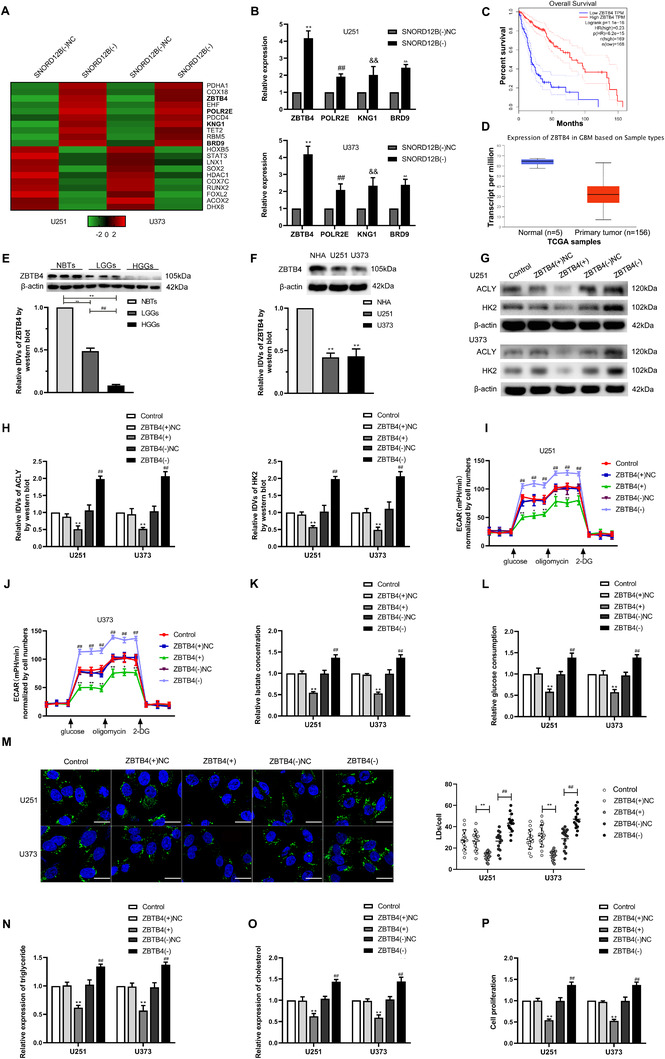
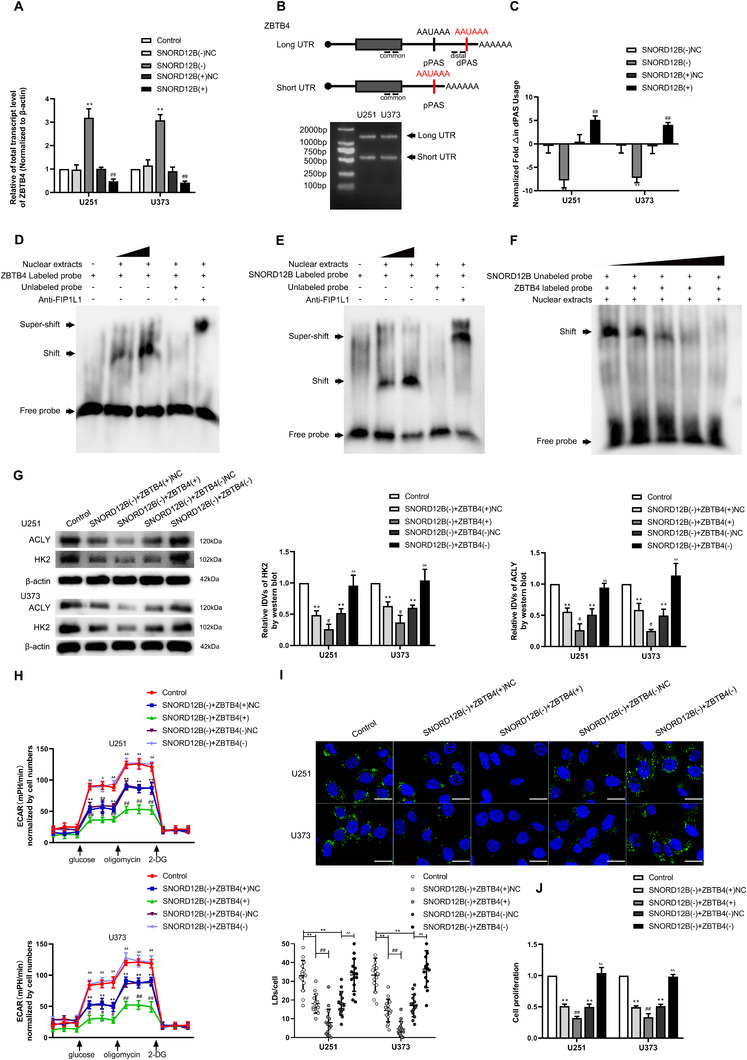
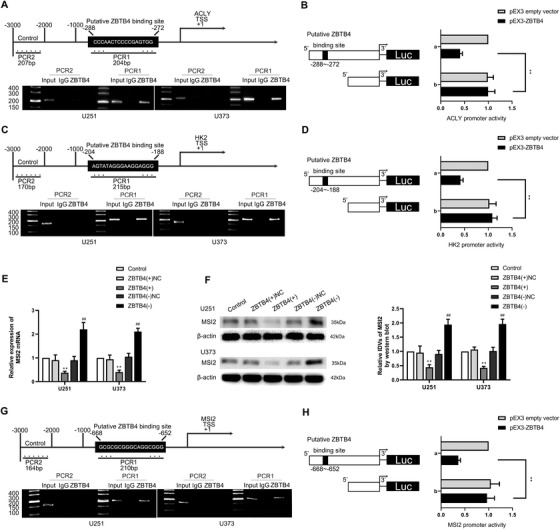
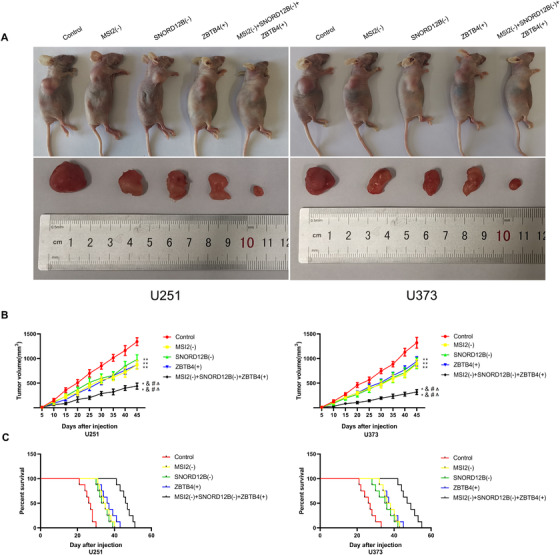
Abnormal energy metabolism, including enhanced aerobic glycolysis and lipid synthesis, is a well-established feature of glioblastoma (GBM) cells. Thus, targeting the cellular glycolipid metabolism can be a feasible therapeutic strategy for GBM. This study aimed to evaluate the roles of MSI2, SNORD12B, and ZBTB4 in regulating the glycolipid metabolism and proliferation of GBM cells. MSI2 and SNORD12B expression was significantly upregulated and ZBTB4 expression was significantly low in GBM tissues and cells. Knockdown of MSI2 or SNORD12B or overexpression of ZBTB4 inhibited GBM cell glycolipid metabolism and proliferation. MSI2 may improve SNORD12B expression by increasing its stability. Importantly, SNORD12B increased utilization of the ZBTB4 mRNA transcript distal polyadenylation signal in alternative polyadenylation processing by competitively combining with FIP1L1, which decreased ZBTB4 expression because of the increased proportion of the 3' untranslated region long transcript. ZBTB4 transcriptionally suppressed the expression of HK2 and ACLY by binding directly to the promoter regions. Additionally, ZBTB4 bound the MSI promoter region to transcriptionally suppress MSI2 expression, thereby forming an MSI2/SNORD12B/FIP1L1/ZBTB4 feedback loop to regulate the glycolipid metabolism and proliferation of GBM cells. In conclusion, MSI2 increased the stability of SNORD12B, which regulated ZBTB4 alternative polyadenylation processing by competitively binding to FIP1L1. Thus, the MSI2/SNORD12B/FIP1L1/ZBTB4 positive feedback loop plays a crucial role in regulating the glycolipid metabolism of GBM cells and provides a potential drug target for glioma treatment.
异常的能量代谢,包括增强的有氧糖酵解和脂质合成,是胶质母细胞瘤(GBM)细胞的一个明确特征。因此,靶向细胞糖脂代谢可能是 GBM 的一种可行的治疗策略。本研究旨在评估 MSI2、SNORD12B 和 ZBTB4 在调节 GBM 细胞糖脂代谢和增殖中的作用。MSI2 和 SNORD12B 的表达在 GBM 组织和细胞中显著上调,而 ZBTB4 的表达显著下调。MSI2 或 SNORD12B 的敲低或 ZBTB4 的过表达抑制了 GBM 细胞的糖脂代谢和增殖。MSI2 可能通过增加其稳定性来提高 SNORD12B 的表达。重要的是,SNORD12B 通过与 FIP1L1 竞争结合来增加其对 ZBTB4 mRNA 转录物远端多聚腺苷酸化信号的利用,从而改变多聚腺苷酸化加工,导致 ZBTB4 表达减少,因为 3'非翻译区长转录本的比例增加。ZBTB4 通过直接结合启动子区域转录抑制 HK2 和 ACLY 的表达。此外,ZBTB4 结合 MSI 启动子区域以转录抑制 MSI2 表达,从而形成 MSI2/SNORD12B/FIP1L1/ZBTB4 正反馈环来调节 GBM 细胞的糖脂代谢和增殖。总之,MSI2 增加了 SNORD12B 的稳定性,SNORD12B 通过与 FIP1L1 竞争结合来调节 ZBTB4 的可变多聚腺苷酸化加工。因此,MSI2/SNORD12B/FIP1L1/ZBTB4 正反馈环在调节 GBM 细胞的糖脂代谢中起着至关重要的作用,并为神经胶质瘤的治疗提供了一个潜在的药物靶点。