Bocchetti Marco, Grisolia Piera, Melisi Federica, Ferraro Maria Grazia, De Luca Pietro, Camaioni Angelo, Falco Michela, Abate Marianna, Misso Gabriella, Alfano Roberto, Accardo Nunzio, Oliva Flavia, Cossu Alessia Maria, Caraglia Michele, Scrima Marianna, Ricciardiello Filippo
Department of Precision Medicine, University of Campania "Luigi Vanvitelli", Via L. De Crecchio, 7, 80138 Naples, Italy.
Laboratory of Precision and Molecular Oncology, Biogem Scarl, Institute of Genetic Research, Contrada Camporeale, 83031 Ariano Irpino, Italy.
Cancers (Basel). 2022 Oct 28;14(21):5304. doi: 10.3390/cancers14215304.
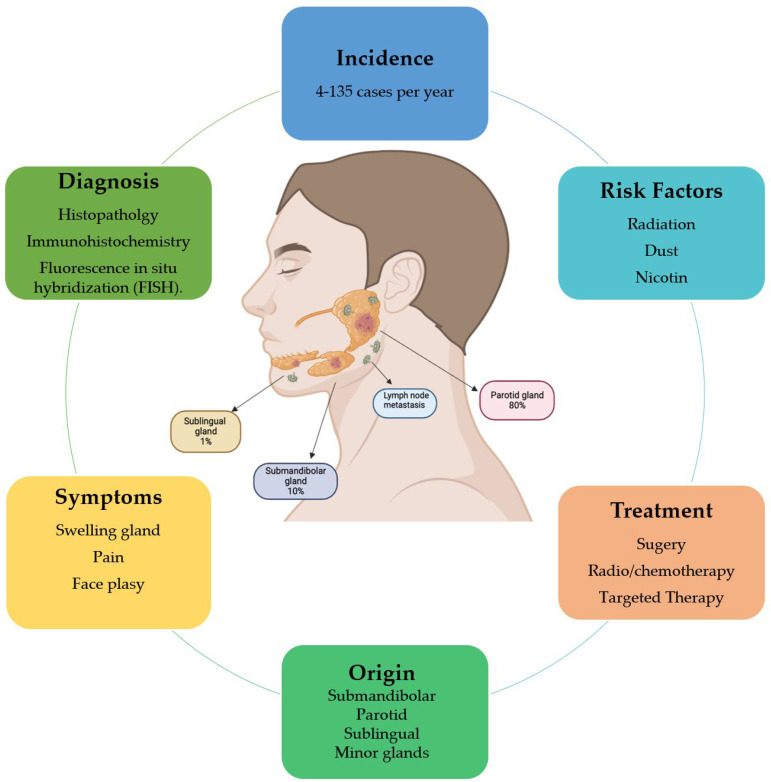
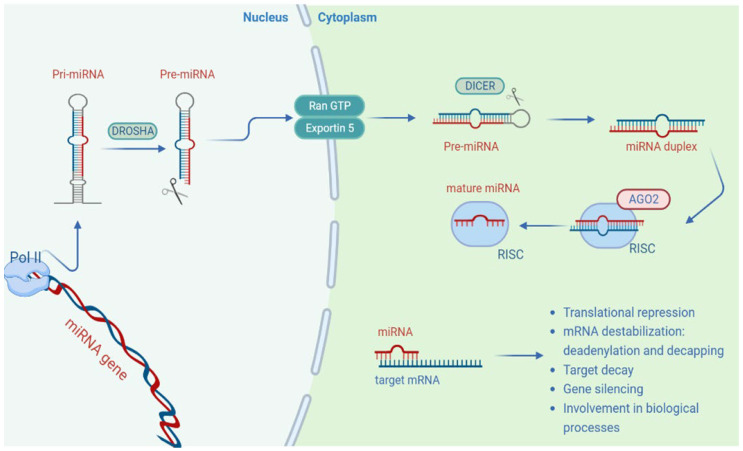
Salivary gland cancer (SGC) is an uncommon and heterogeneous disease that accounts for around 8.5% of all head and neck cancers. MicroRNAs (miRNAs) consist of a class of highly conserved, short, single-stranded segments (18-25 nucleotides) of noncoding RNA that represent key gene-transcription regulators in physiological and pathological human conditions. However, their role in SGC development and progression is not completely clear. This review aims to compile and summarize the recent findings on the topic, focusing on the prognostic and diagnostic value of the major modulated and validated microRNAs in SGC. Their differential expression could possibly aid the clinician in delivering an early diagnosis, therapeutic strategy and precision medicine.
唾液腺癌(SGC)是一种罕见的异质性疾病,约占所有头颈癌的8.5%。微小RNA(miRNA)由一类高度保守的非编码RNA短单链片段(18 - 25个核苷酸)组成,它们是人类生理和病理状态下关键的基因转录调节因子。然而,它们在唾液腺癌发生和发展中的作用尚不完全清楚。本综述旨在汇编和总结该主题的最新研究结果,重点关注唾液腺癌中主要调节和验证的微小RNA的预后和诊断价值。它们的差异表达可能有助于临床医生进行早期诊断、制定治疗策略和实施精准医学。