Soares Igor, Belote Bruna L, Santin Elizabeth, Dal Pont Gabriela C, Kogut Michael H
ISI Institute, Cambé, Parana 86187-025, Brazil.
Department of Poultry Science, Texas A&M University, College Station, TX 77843, USA.
Animals (Basel). 2022 Nov 4;12(21):3036. doi: 10.3390/ani12213036.
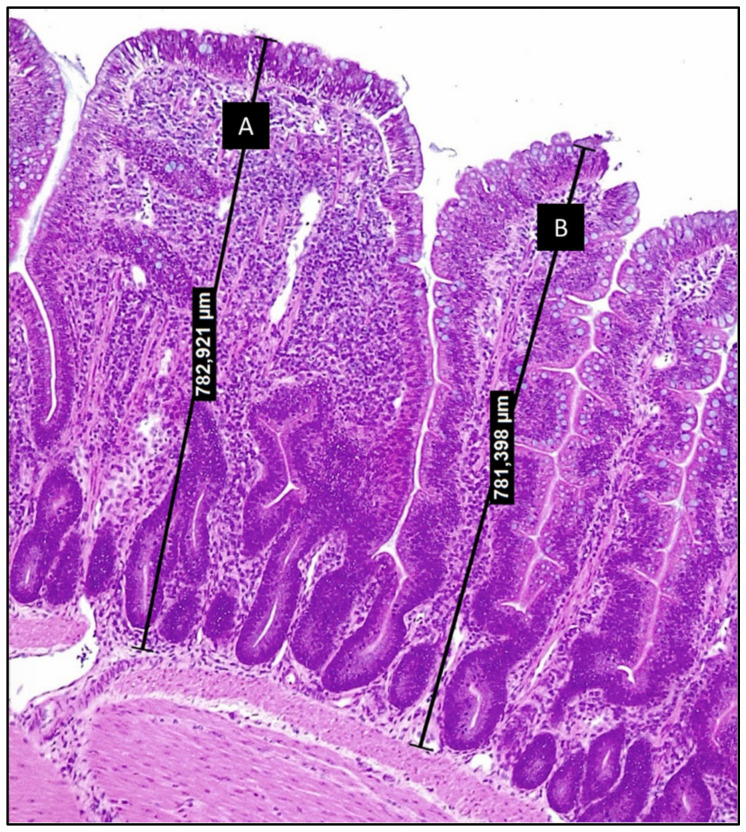
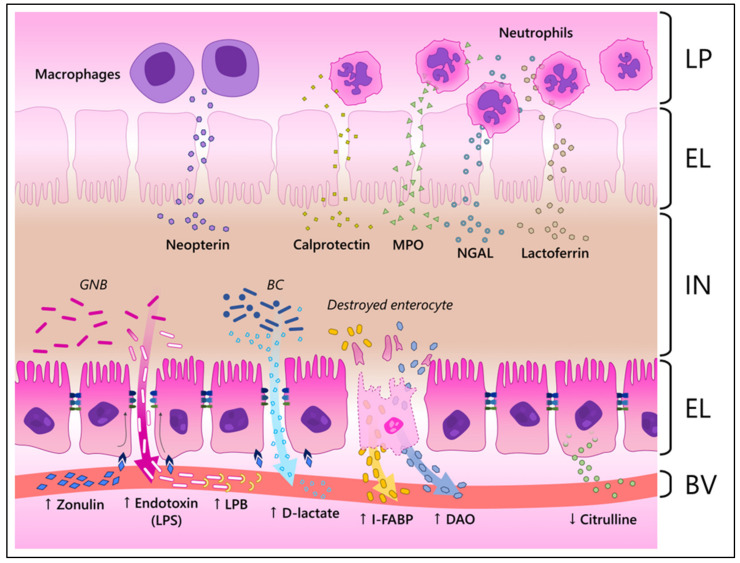
The complex interaction between the intestinal mucosa, the gut microbiota, and the diet balances the host physiological homeostasis and is fundamental for the maximal genetic potential of production animals. However, factors such as chemical and physical characteristics of the diet and/or environmental stressors can continuously affect this balance, potentially inducing a state of chronic low-grade inflammation in the gut, where inflammatory parameters are present and demanding energy, but not in enough intensity to provoke clinical manifestations. It's vital to expand the understanding of inflammation dynamics and of how they compromise the function activity and microscopic morphology of the intestinal mucosa. These morphometric alterations are associated with the release of structural and functional cellular components into the feces and the blood stream creating measurable biomarkers to track this condition. Moreover, the identification of novel, immunometabolic biomarkers can provide dynamic and predictors of low-grade chronic inflammation, but also provide indicators of successful nutritional or feed additive intervention strategies. The objective of this paper is to review the mechanisms of low-grade inflammation, its effects on animal production and sustainability, and the biomarkers that could provide early diagnosis of this process and support studies of useful interventional strategies.
肠道黏膜、肠道微生物群和饮食之间的复杂相互作用平衡了宿主的生理稳态,对于生产动物的最大遗传潜力至关重要。然而,饮食的化学和物理特性以及环境应激源等因素会持续影响这种平衡,可能在肠道中引发慢性低度炎症状态,此时炎症参数存在且消耗能量,但强度不足以引发临床表现。扩大对炎症动态以及它们如何损害肠道黏膜功能活性和微观形态的理解至关重要。这些形态计量学改变与结构和功能细胞成分释放到粪便和血流中有关,从而产生可测量的生物标志物来追踪这种状况。此外,新型免疫代谢生物标志物的识别不仅可以提供低度慢性炎症的动态变化和预测指标,还可以为成功的营养或饲料添加剂干预策略提供指标。本文的目的是综述低度炎症的机制、其对动物生产和可持续性的影响,以及能够为该过程提供早期诊断并支持有用干预策略研究的生物标志物。