Lee Woosup, Park Ju Ok, Hong Sung Ok, Kim Youngtaek
Department of Emergency Medicine, Hallym University College of Medicine Dongtan Sacred Heart Hospital, Hwaseong-si 18450, Korea.
Korean Health Information Management Association, Institute of Health and Medical Information, Seoul 05624, Korea.
Children (Basel). 2022 Oct 26;9(11):1623. doi: 10.3390/children9111623.
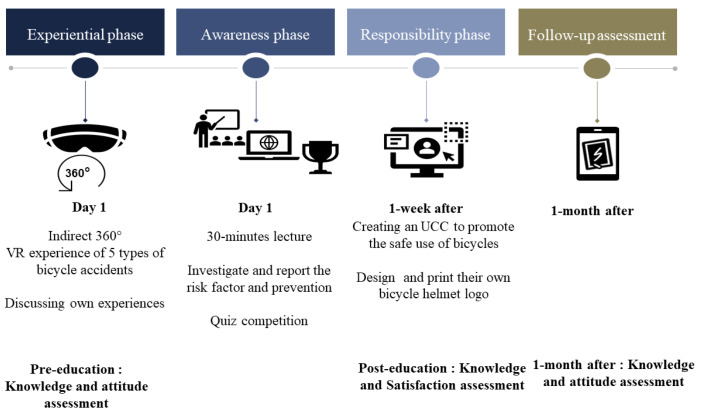
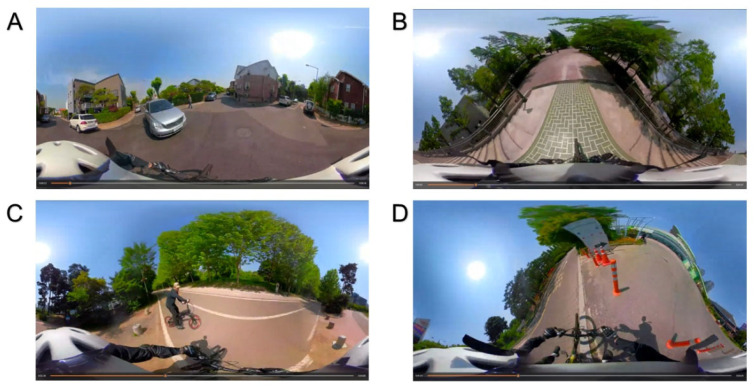
Injury prevention programs for children and adolescents need to be immersive and interactive. This study assessed a bicycle injury prevention program using technology-based education based on the Activated Health Education model and evaluated its effect on environmental factor awareness and attitude toward helmet-wearing. Using virtual reality technology, elementary and middle school students could experience simulated bicycle accidents. It was followed by an awareness phase that included a 30-min lecture where students self-learned and discussed risk-preventive factors. Students then developed user-created content and customized helmets they were given. We assessed students before the program, immediately afterward, and one month after the program. The number of respondents who said they were aware of surrounding bicycle lanes increased from 75.3% (pre-program) to 92.5% (one month after). Those who said they wore helmets often or always rose from 14.3% (pre-program) to 32.5% (one month later). The number needed to treat helmet-wearing behavior was approximately four, meaning that four people were required to participate in the program to have an impact on one person's helmet-wearing. We found that virtual reality and computer-based activities can help children and adolescents experience bicycle accidents, be aware of risk factors, and change their behaviors responsibly.
针对儿童和青少年的伤害预防项目需要具有沉浸式和互动性。本研究评估了一个基于“激活健康教育”模式、采用基于技术的教育方式的自行车伤害预防项目,并评估了其对环境因素认知以及对佩戴头盔态度的影响。利用虚拟现实技术,中小学生能够体验模拟自行车事故。随后是一个认知阶段,包括一场30分钟的讲座,学生们在讲座中自主学习并讨论风险预防因素。之后,学生们创作了用户生成内容,并定制了发给他们的头盔。我们在项目实施前、实施后立即以及实施后一个月对学生进行了评估。表示知道周围自行车道的受访者比例从项目实施前的75.3%增至项目实施后一个月的92.5%。表示经常或总是佩戴头盔的受访者比例从项目实施前的14.3%升至一个月后的32.5%。改变佩戴头盔行为所需的干预人数约为4人,这意味着需要4人参与该项目才能对一人的头盔佩戴行为产生影响。我们发现,虚拟现实和基于计算机的活动可以帮助儿童和青少年体验自行车事故、了解风险因素,并以负责的方式改变他们的行为。