NASA Jet Propulsion Laboratory, California Institute of Technology, Pasadena, California, USA.
Department of Life Sciences, The Natural History Museum, London, United Kingdom.
Astrobiology. 2023 Jan;23(1):1-23. doi: 10.1089/ast.2022.0023. Epub 2022 Nov 11.
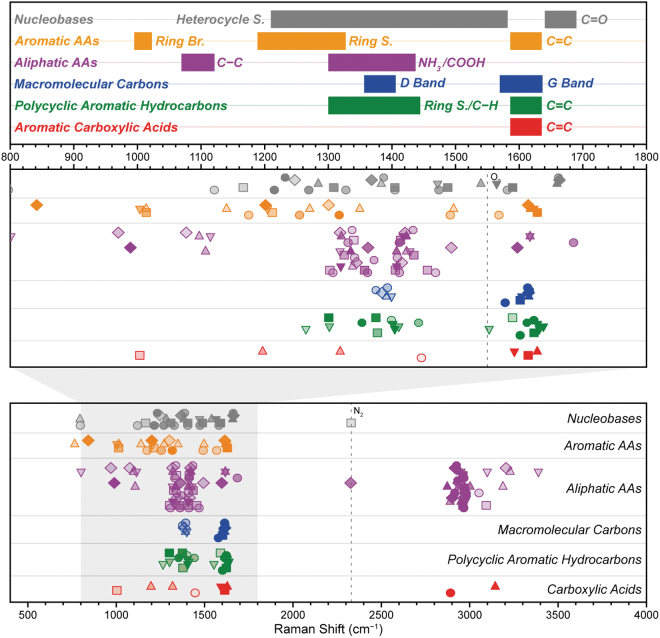
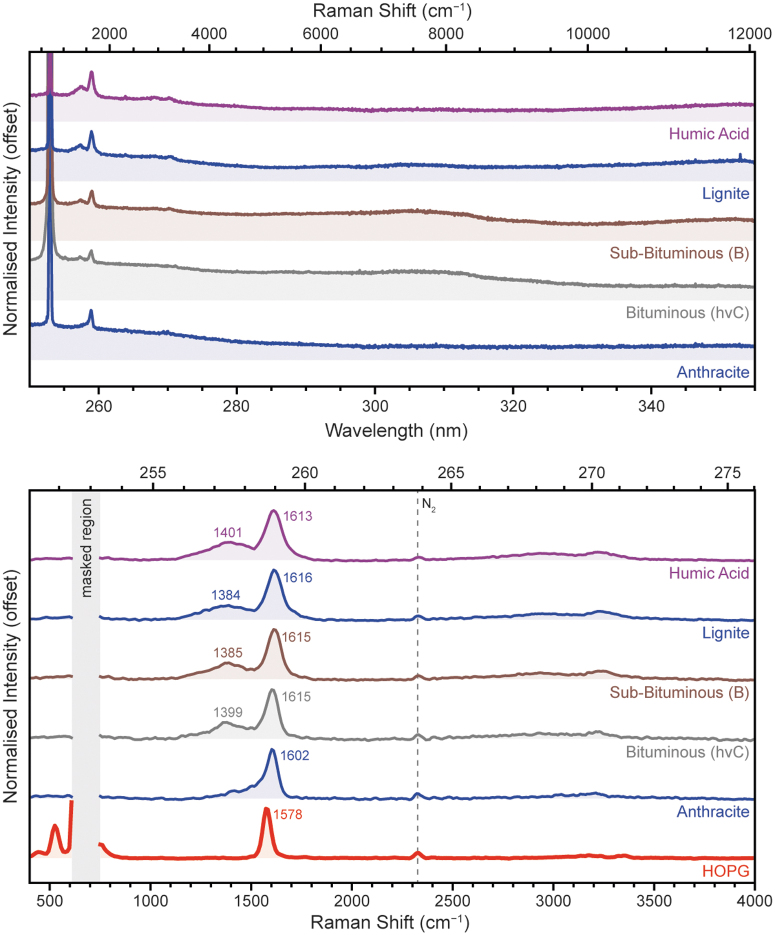
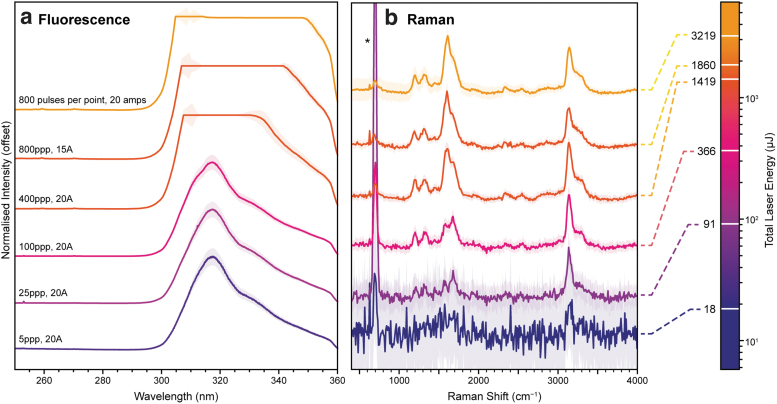
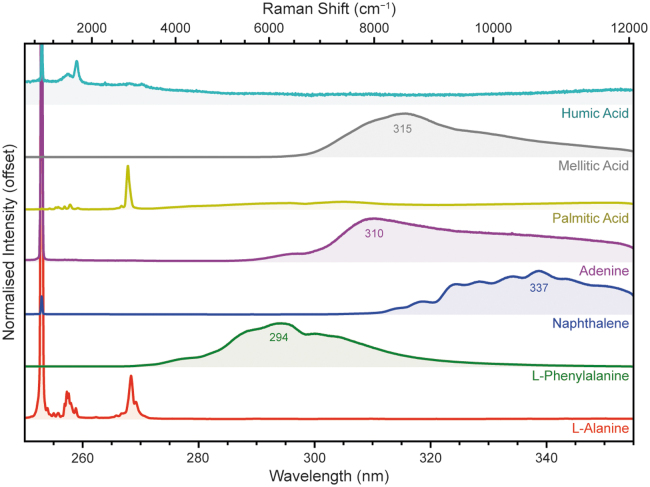
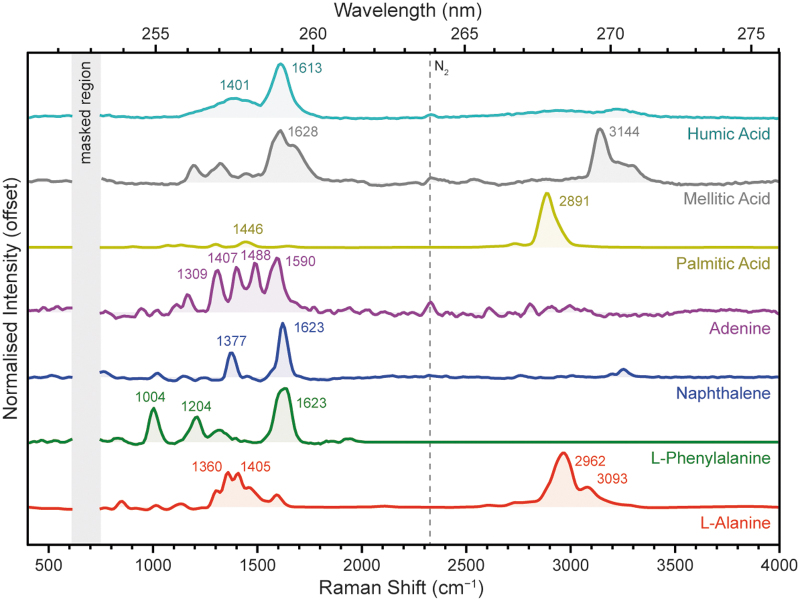
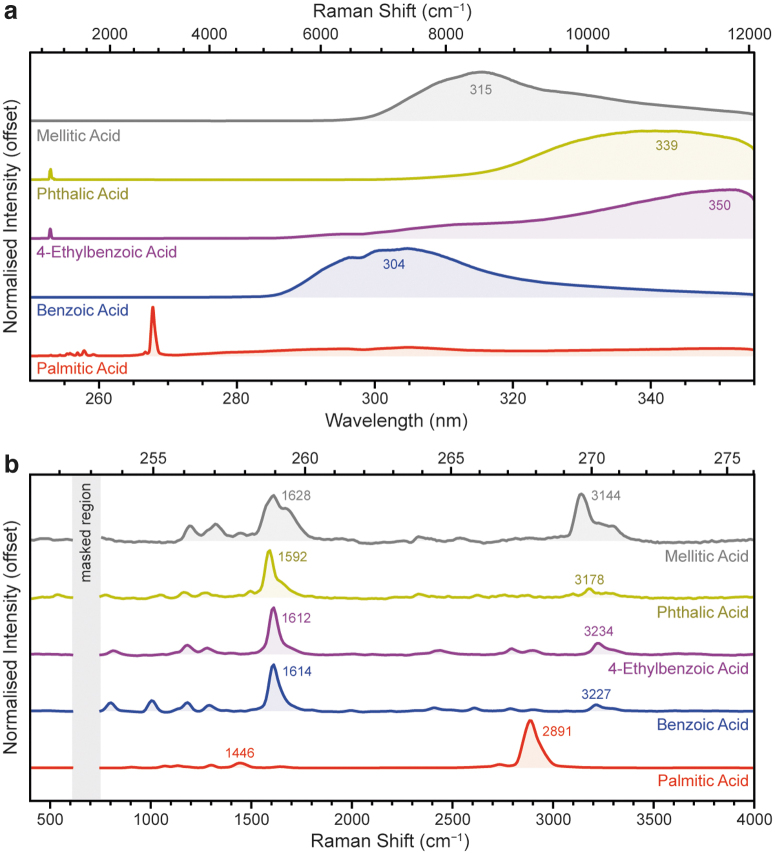
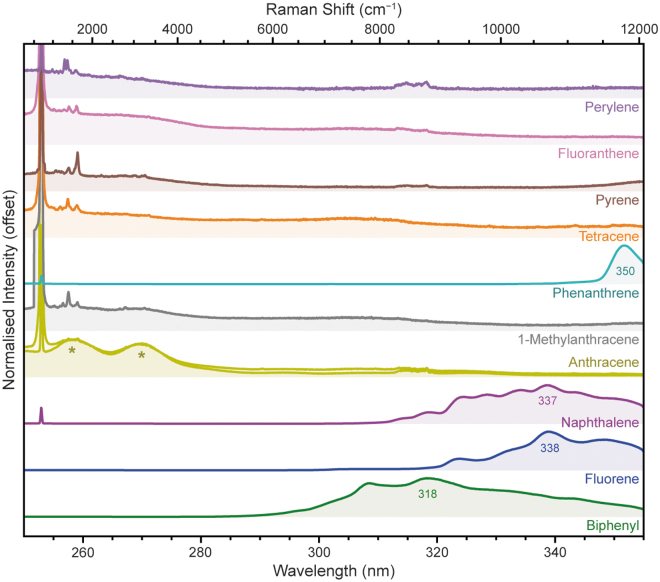
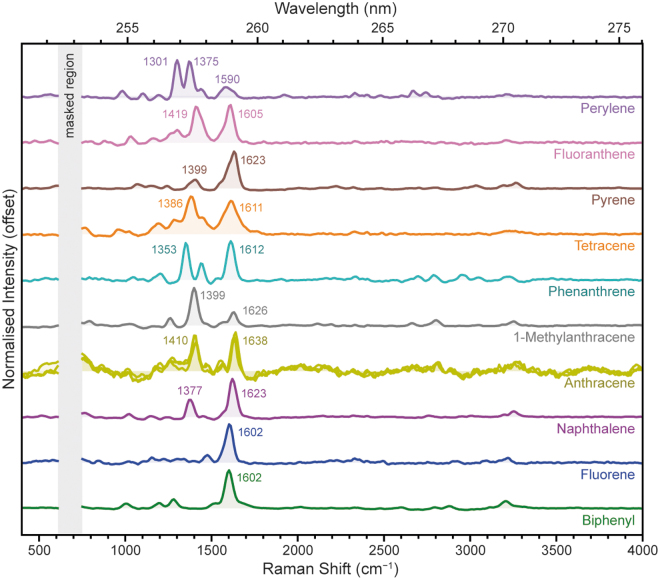
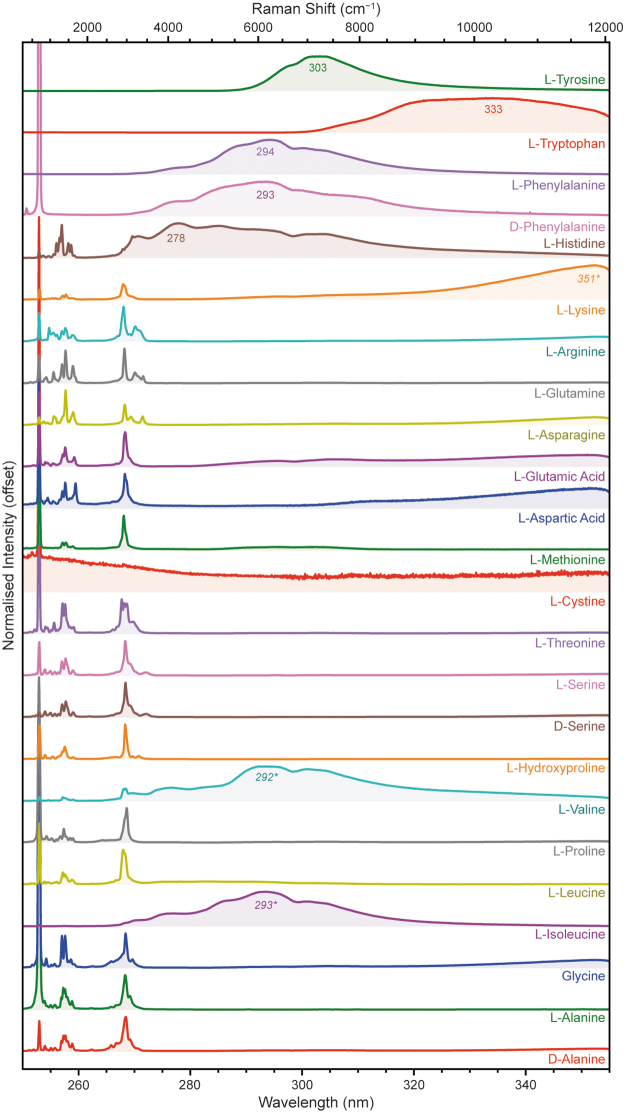
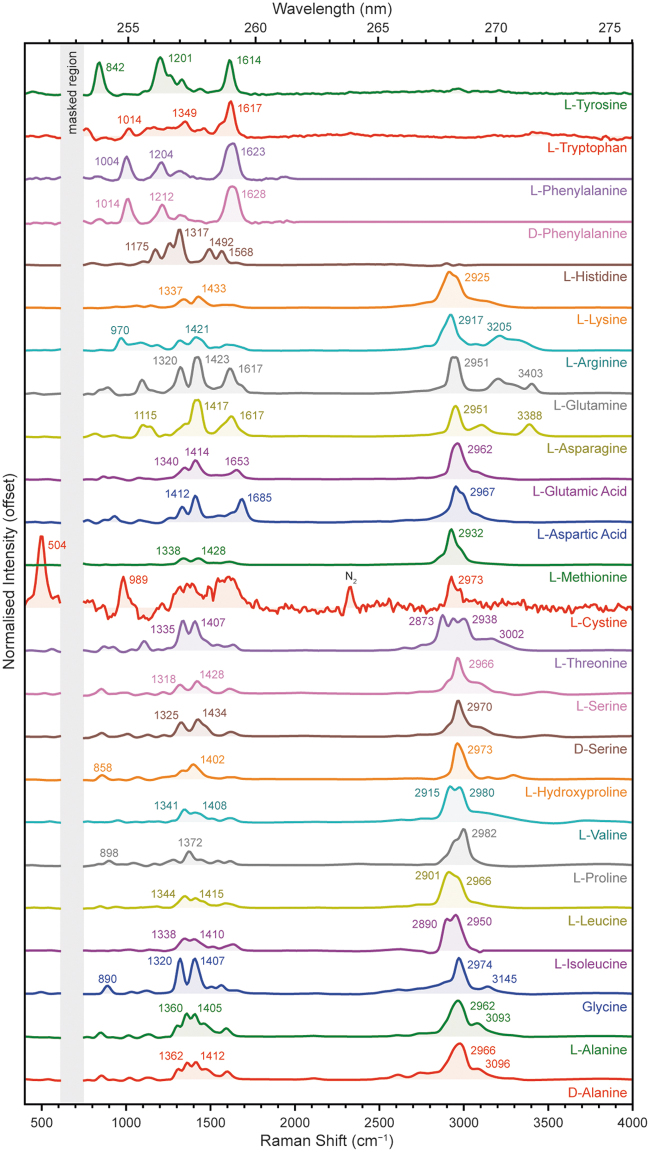
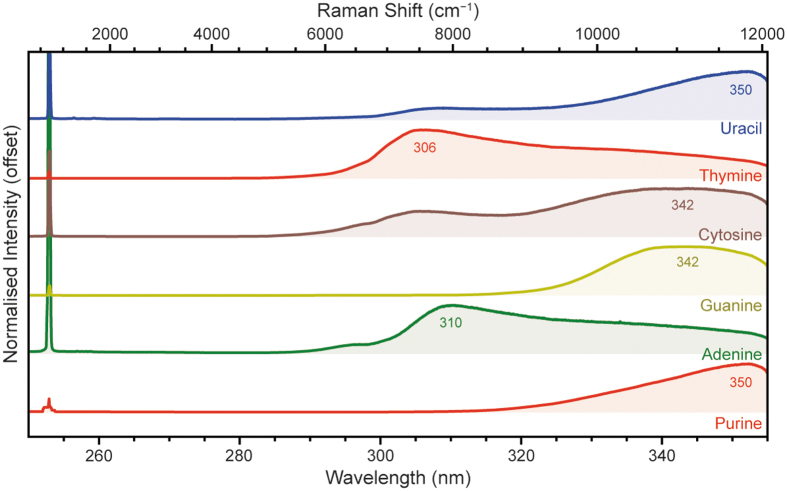
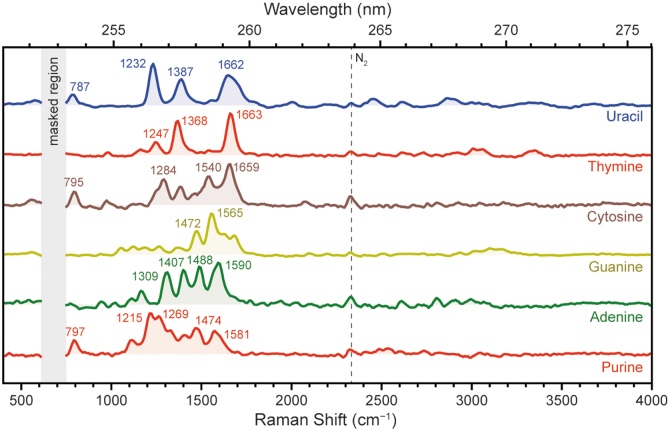
We report deep ultraviolet (DUV) Raman and Fluorescence spectra obtained on a SHERLOC (Scanning Habitable Environments with Raman and Luminescence for Organics and Chemicals) analog instrument for 51 pure organic compounds, including 5 carboxylic acids, 10 polycyclic aromatic hydrocarbons, 24 amino acids, 6 nucleobases, and 6 different grades of macromolecular carbon from humic acid to graphite. Organic mixtures were not investigated. We discuss how the DUV fluorescence and Raman spectra exhibited by different organic compounds allow for detection, classification, and identification of organics by SHERLOC. We find that 1- and 2-ring aromatic compounds produce detectable fluorescence within SHERLOC's spectral range (250-355 nm), but fluorescence spectra are not unique enough to enable easy identification of particular compounds. However, both aromatic and aliphatic compounds can be identified by their Raman spectra, with the number of Raman peaks and their positions being highly specific to chemical structure, within SHERLOC's reported spectral uncertainty of ±5 cm. For compounds that are not in the Library, classification is possible by comparing the general number and position of dominant Raman peaks with trends for different kinds of organic compounds.
我们报告了在 SHERLOC(用于有机物和化学物质的拉曼和发光扫描可居住环境)模拟仪器上获得的深紫外(DUV)拉曼和荧光光谱,这些光谱来自 51 种纯有机化合物,包括 5 种羧酸、10 种多环芳烃、24 种氨基酸、6 种核苷酸碱基和 6 种不同等级的大分子碳,从腐殖酸到石墨。未研究有机混合物。我们讨论了不同有机化合物的 DUV 荧光和拉曼光谱如何允许 SHERLOC 进行有机物的检测、分类和识别。我们发现,1-和 2-环芳烃化合物在 SHERLOC 的光谱范围内(250-355nm)产生可检测的荧光,但荧光光谱不够独特,无法轻松识别特定化合物。然而,通过它们的拉曼光谱可以识别芳香族和脂肪族化合物,拉曼光谱的峰数及其位置与化学结构高度相关,在 SHERLOC 报告的 ±5cm 的光谱不确定度内。对于不在库中的化合物,可以通过将主要拉曼峰的一般数量和位置与不同种类有机化合物的趋势进行比较来进行分类。