College of Food Science and Engineering, South China University of Technology, 510000, Guangzhou, China.
Department of Food Science and Technology, The Ohio State University, Columbus, OH, USA.
Transl Psychiatry. 2021 Feb 18;11(1):131. doi: 10.1038/s41398-021-01254-5.
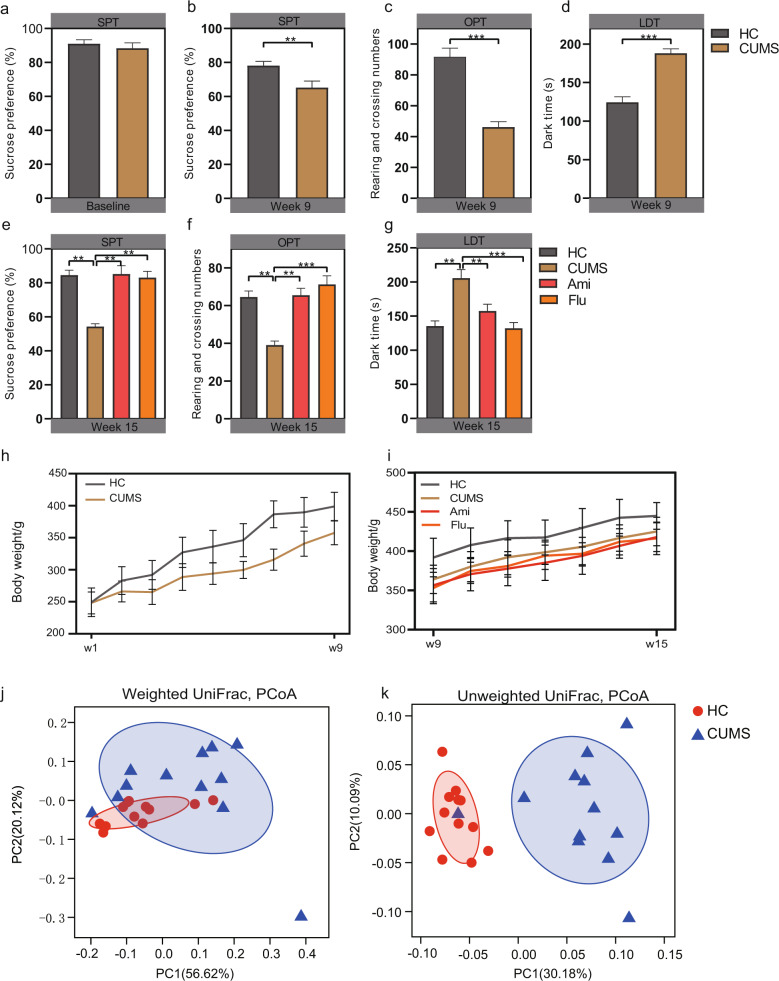
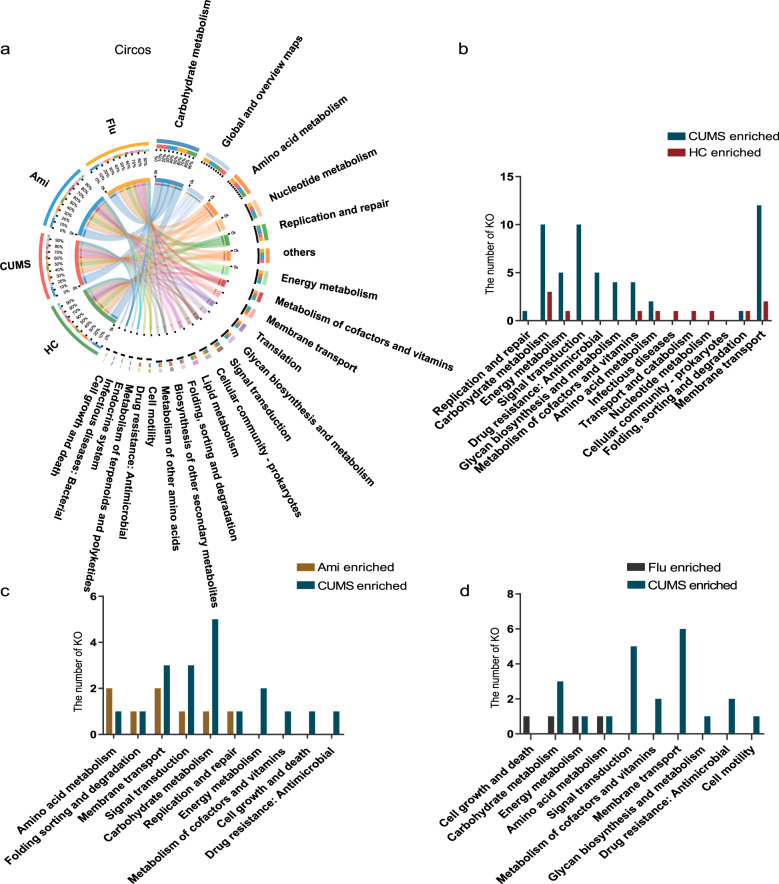
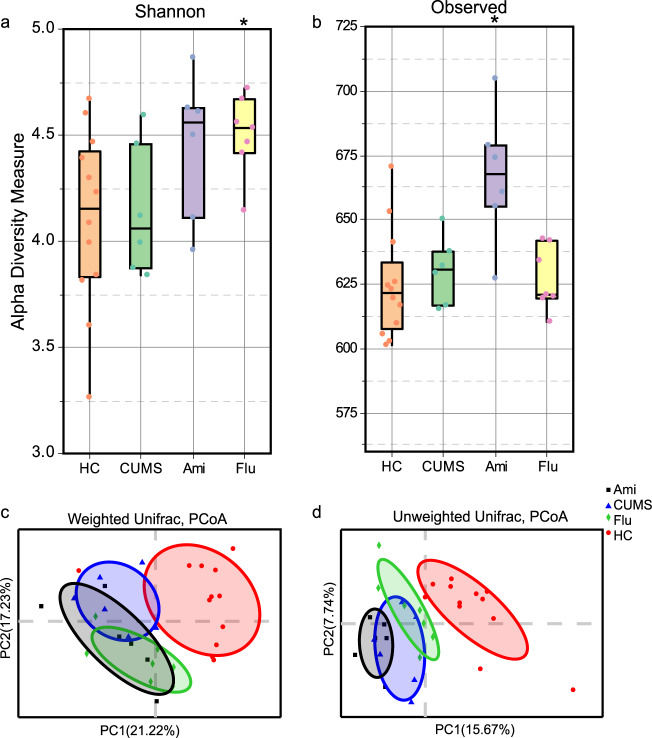
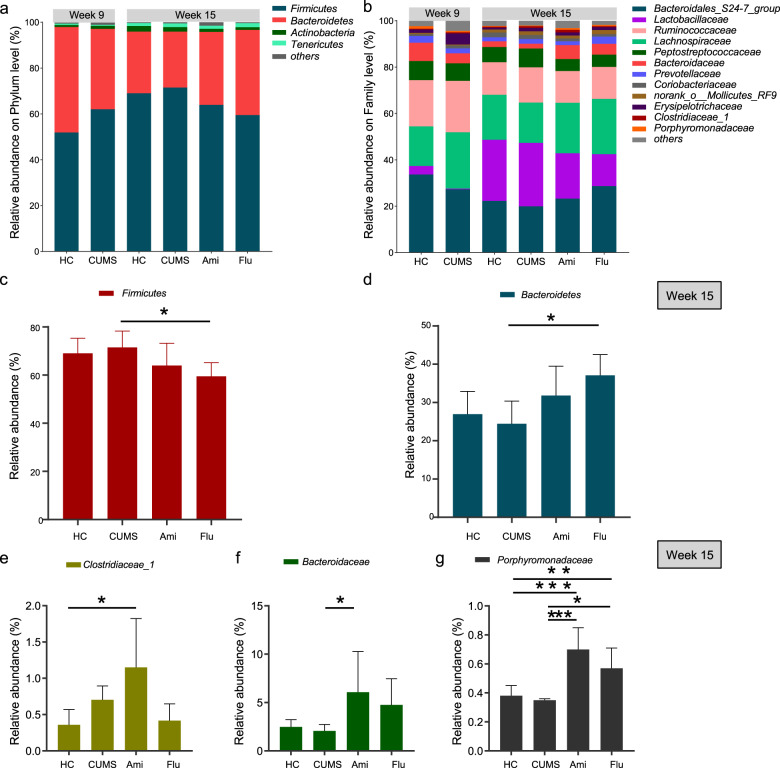
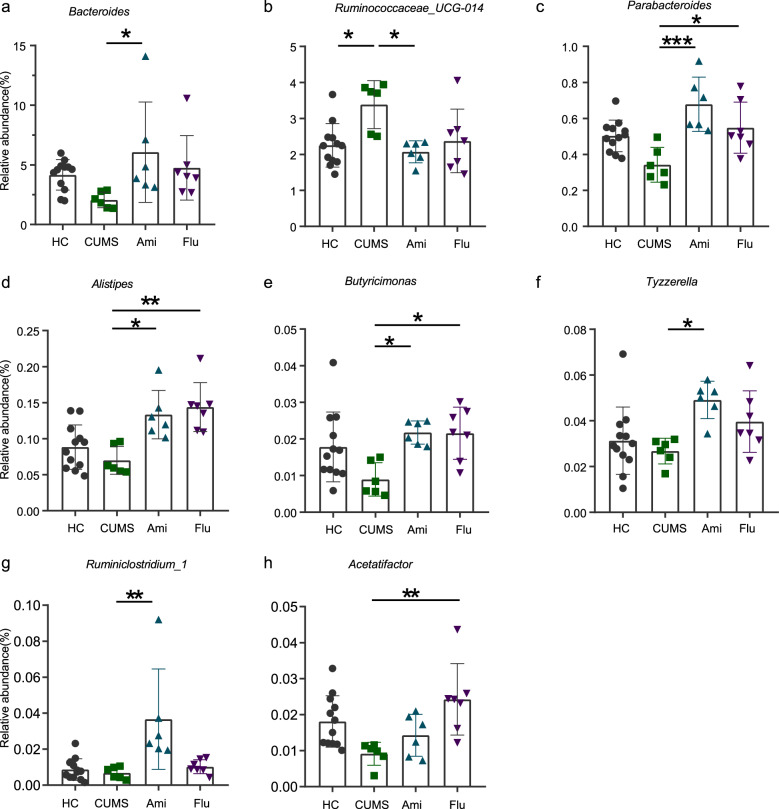
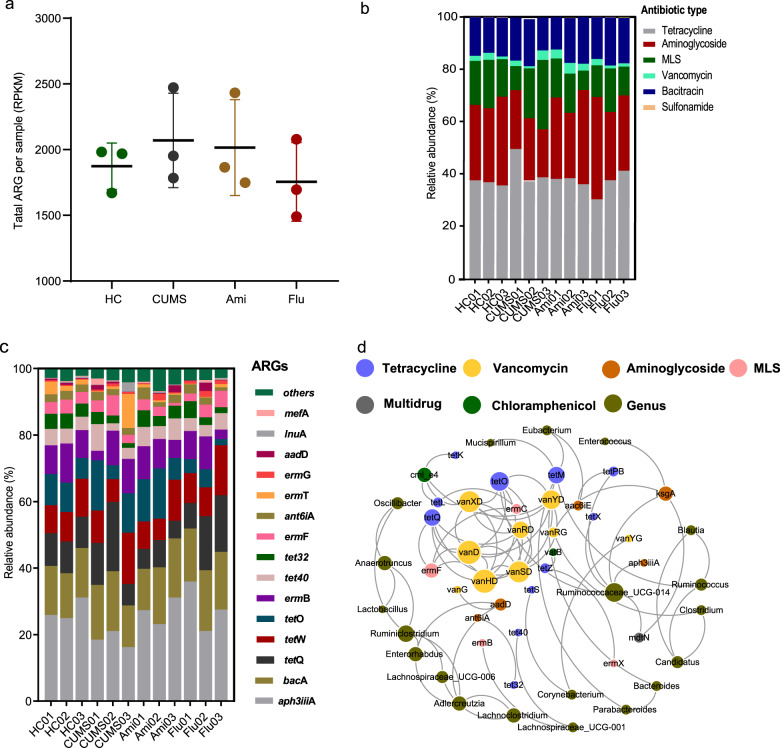
Antidepressant medications are known to modulate the central nervous system, and gut microbiota can play a role in depression via microbiota-gut-brain axis. But the impact of antidepressants on gut microbiota function and composition remains poorly understood. Thus this study assessed the effect of serotonin reuptake inhibitor antidepressant fluoxetine (Flu) and tricyclic antidepressant amitriptyline (Ami) administration on gut microbiota composition, diversity, and species abundance, along with microbial function in a chronic unpredictable mild stress (CUMS)-induced depression rat model. Oral administration of Ami and Flu significantly altered the overall gut microbiota profile of CUMS-induced rats, as assessed using the permutational multivariate analysis of variance test. At the phylum level, 6-week of antidepressant treatment led to a decreased Firmicutes/Bacteroidetes ratio due to an enhanced Bacteroidetes and reduced Firmicutes relative abundance. Flu was more potent than Ami at altering the Firmicutes and Bacteroidetes levels in the CUMS rats. At the family level, both antidepressants significantly increased the abundance of Porphyromonadaceae. However, an increased Bacteroidaceae level was significantly associated with Ami, not Flu treatment. Furthermore, at the genus level, an increase in the relative abundance of Parabacteroides, Butyricimonas, and Alistipes was observed following Ami and Flu treatment. Subsequent metagenomics and bioinformatics analysis further indicated that Ami and Flu likely also modulated metabolic pathways, such as those involved in carbohydrate metabolism, membrane transport, and signal transduction. Additionally, both antidepressants affected antibiotic resistome, such as for aminoglycoside (aph3iiiA), multidrug (mdtK, mdtP, mdtH, mdtG, acrA), and tetracycline (tetM) resistance in CUMS rats. These data clearly illustrated the direct impact of oral administration of Flu and Ami on the gut microbiome, thus set up the foundation to reveal more insights on the therapeutic function of the antidepressants and their overall contribution to host health.
抗抑郁药已知可调节中枢神经系统,而肠道微生物群可通过微生物群-肠道-大脑轴在抑郁症中发挥作用。但是,抗抑郁药对肠道微生物群功能和组成的影响仍知之甚少。因此,本研究评估了 5-羟色胺再摄取抑制剂抗抑郁药氟西汀(Flu)和三环抗抑郁药阿米替林(Ami)给药对慢性不可预测轻度应激(CUMS)诱导的抑郁大鼠模型中肠道微生物群组成、多样性和物种丰度以及微生物功能的影响。口服给予 Ami 和 Flu 显著改变了 CUMS 诱导的大鼠的整体肠道微生物群谱,如通过置换多元方差分析测试评估的那样。在门水平上,由于 Bacteroidetes 相对丰度增加和 Firmicutes 相对丰度降低,抗抑郁药治疗 6 周导致厚壁菌门/拟杆菌门比值降低。与 Ami 相比,Flu 更能改变 CUMS 大鼠的Firmicutes 和 Bacteroidetes 水平。在科水平上,两种抗抑郁药都显著增加了卟啉单胞菌科的丰度。然而,与 Flu 处理相比,Ami 处理与 Bacteroidaceae 水平的增加显著相关。此外,在属水平上,观察到 Ami 和 Flu 治疗后 Parabacteroides、Butyricimonas 和 Alistipes 的相对丰度增加。随后的宏基因组学和生物信息学分析进一步表明,Ami 和 Flu 可能还调节了代谢途径,例如参与碳水化合物代谢、膜转运和信号转导的途径。此外,两种抗抑郁药都影响了抗生素抗性组,例如氨基糖苷(aph3iiiA)、多药(mdtK、mdtP、mdtH、mdtG、acrA)和四环素(tetM)在 CUMS 大鼠中的抗性。这些数据清楚地说明了 Flu 和 Ami 的口服给药对肠道微生物组的直接影响,从而为揭示抗抑郁药的治疗功能及其对宿主健康的整体贡献提供了更多的见解奠定了基础。