IEEE Trans Biomed Eng. 2023 May;70(5):1528-1538. doi: 10.1109/TBME.2022.3221887. Epub 2023 Apr 20.
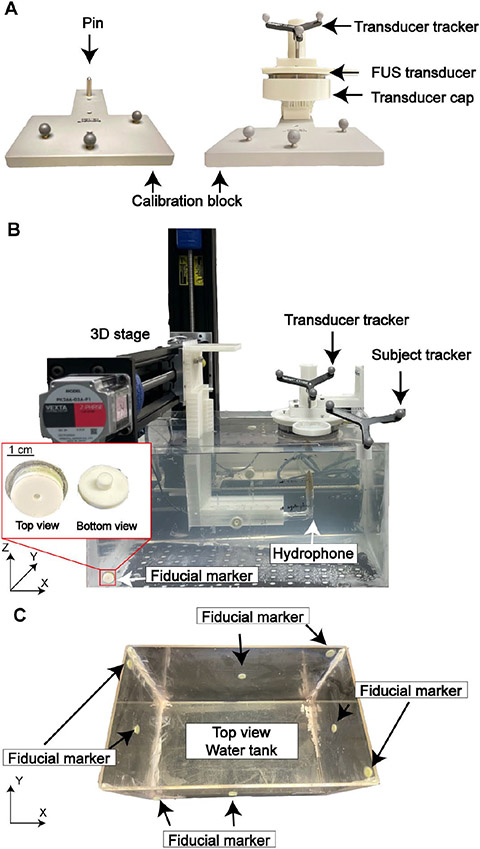
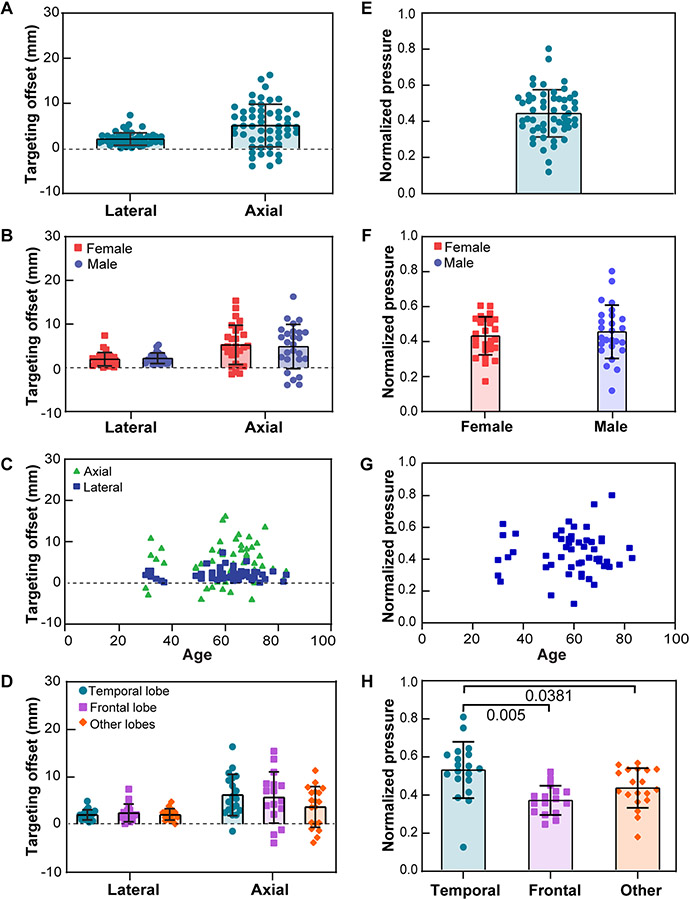
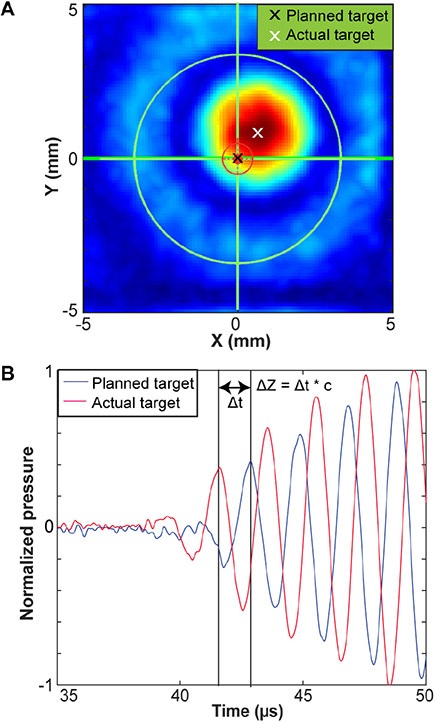
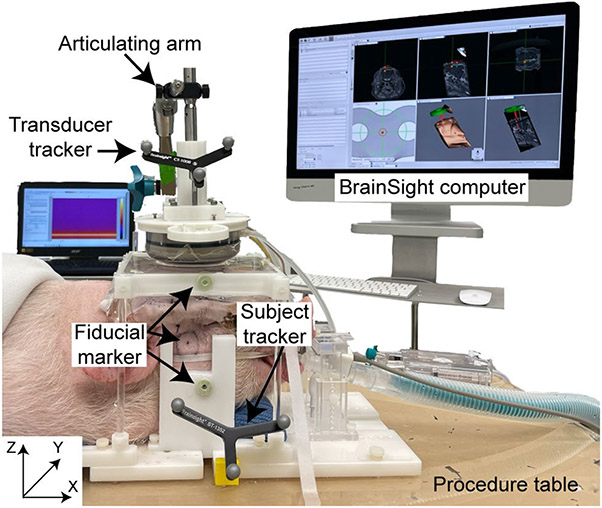
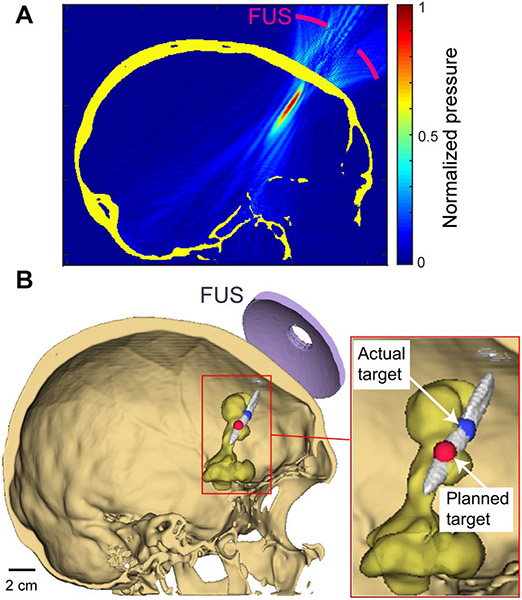
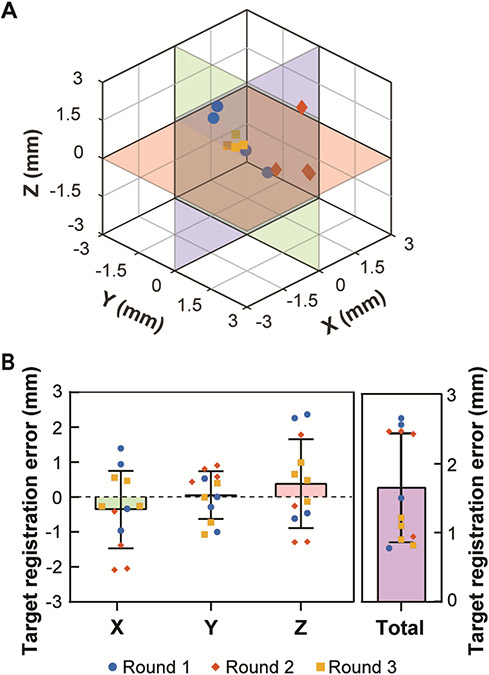
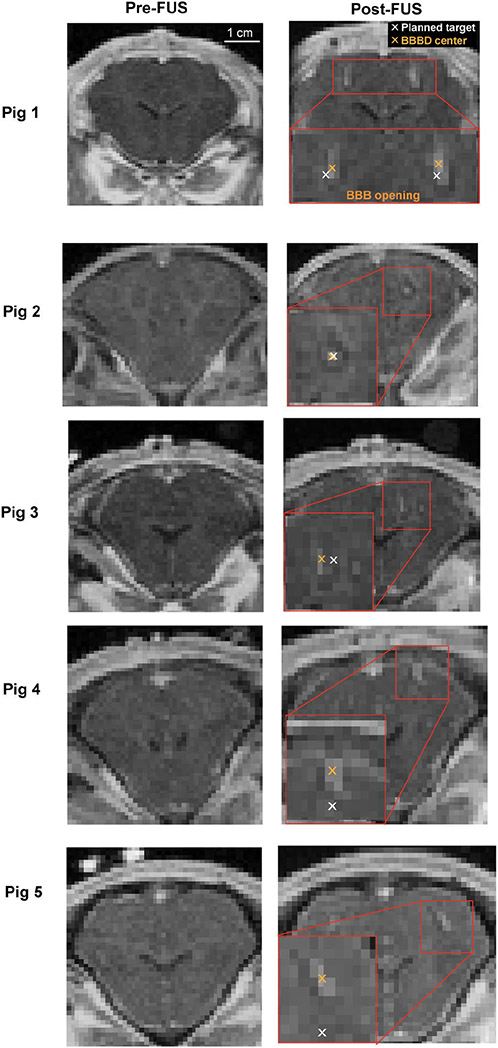
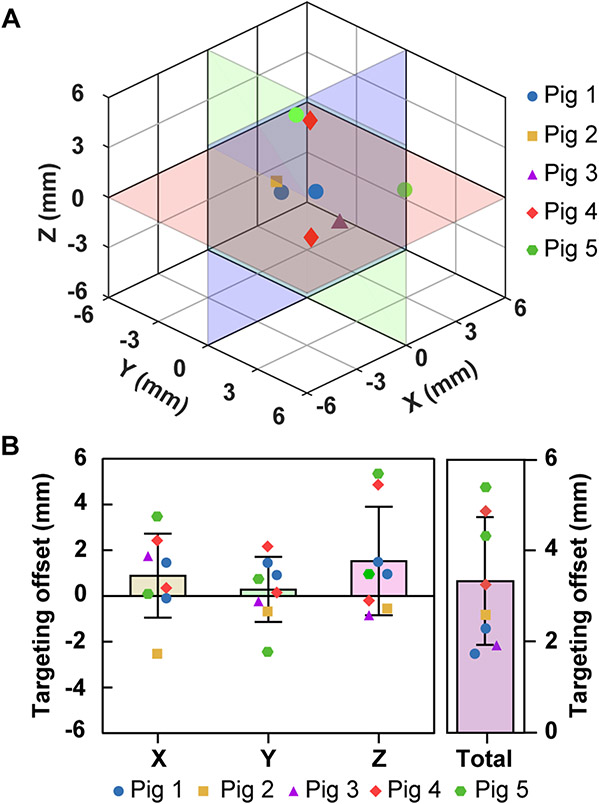
Focused ultrasound (FUS)-enabled liquid biopsy (sonobiopsy) is an emerging technique for the noninvasive and spatiotemporally controlled diagnosis of brain cancer by inducing blood-brain barrier (BBB) disruption to release brain tumor-specific biomarkers into the blood circulation. The feasibility, safety, and efficacy of sonobiopsy were demonstrated in both small and large animal models using magnetic resonance-guided FUS devices. However, the high cost and complex operation of magnetic resonance-guided FUS devices limit the future broad application of sonobiopsy in the clinic. In this study, a neuronavigation-guided sonobiopsy device is developed and its targeting accuracy is characterized in vitro, in vivo, and in silico. The sonobiopsy device integrated a commercially available neuronavigation system (BrainSight) with a nimble, lightweight FUS transducer. Its targeting accuracy was characterized in vitro in a water tank using a hydrophone. The performance of the device in BBB disruption was verified in vivo using a pig model, and the targeting accuracy was quantified by measuring the offset between the target and the actual locations of BBB opening. The feasibility of the FUS device in targeting glioblastoma (GBM) tumors was evaluated in silico using numerical simulation by the k-Wave toolbox in glioblastoma patients. It was found that the targeting accuracy of the neuronavigation-guided sonobiopsy device was 1.7 ± 0.8 mm as measured in the water tank. The neuronavigation-guided FUS device successfully induced BBB disruption in pigs with a targeting accuracy of 3.3 ± 1.4 mm. The targeting accuracy of the FUS transducer at the GBM tumor was 5.5 ± 4.9 mm. Age, sex, and incident locations were found to be not correlated with the targeting accuracy in GBM patients. This study demonstrated that the developed neuronavigation-guided FUS device could target the brain with a high spatial targeting accuracy, paving the foundation for its application in the clinic.
聚焦超声(FUS)辅助的液体活检(sonobiopsy)是一种新兴技术,通过诱导血脑屏障(BBB)破裂,将脑肿瘤特异性生物标志物释放到血液循环中,实现对脑癌的非侵入性和时空可控诊断。使用磁共振引导 FUS 设备,在小动物和大动物模型中均证明了 sonobiopsy 的可行性、安全性和有效性。然而,磁共振引导 FUS 设备的高成本和复杂操作限制了 sonobiopsy 在临床上的广泛应用。在这项研究中,开发了一种神经导航引导的 sonobiopsy 设备,并对其在体外、体内和计算机模拟中的靶向准确性进行了特征描述。sonobiopsy 设备集成了一种商用的神经导航系统(BrainSight)和一个灵活、轻便的 FUS 换能器。其靶向准确性在体外水罐中使用水听器进行了特征描述。该设备在猪模型中通过测量 BBB 开口的实际位置与目标位置之间的偏差,对体内 BBB 破裂的性能进行了验证,并对其靶向准确性进行了量化。使用 k-Wave 工具箱在脑胶质瘤患者的数值模拟中,评估了 FUS 设备在靶向脑胶质瘤(GBM)肿瘤中的可行性。研究发现,神经导航引导 sonobiopsy 设备在水罐中的靶向准确性为 1.7±0.8mm。神经导航引导 FUS 设备在猪体内成功诱导了 BBB 破裂,其靶向准确性为 3.3±1.4mm。FUS 换能器在 GBM 肿瘤的靶向准确性为 5.5±4.9mm。年龄、性别和发病位置与 GBM 患者的靶向准确性无关。这项研究表明,所开发的神经导航引导 FUS 设备可以以高精度靶向大脑,为其在临床中的应用奠定了基础。