IEEE Trans Biomed Eng. 2022 May;69(5):1776-1787. doi: 10.1109/TBME.2021.3132014. Epub 2022 Apr 21.
To develop a low-cost magnetic resonance imaging (MRI)-free transcranial focused ultrasound (FUS) system for microbubble-mediated therapy.
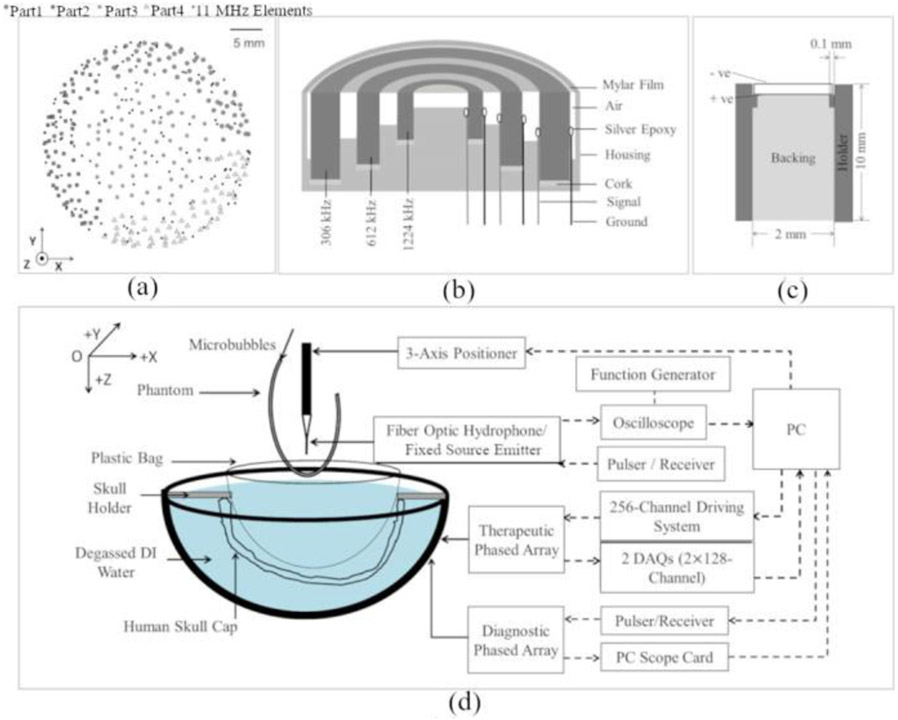
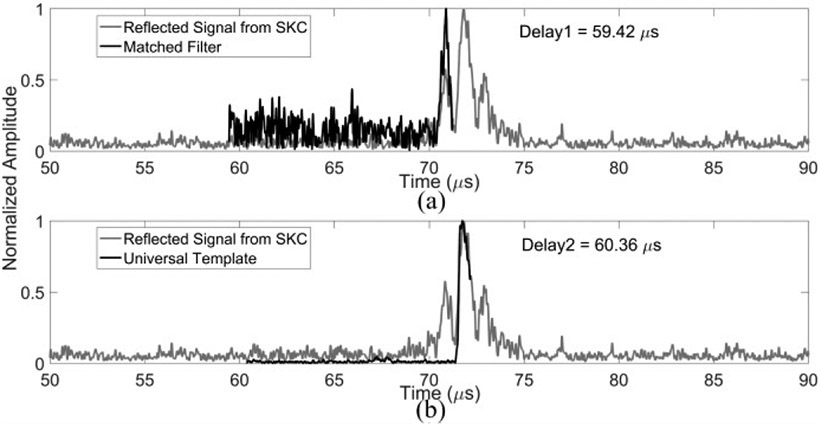
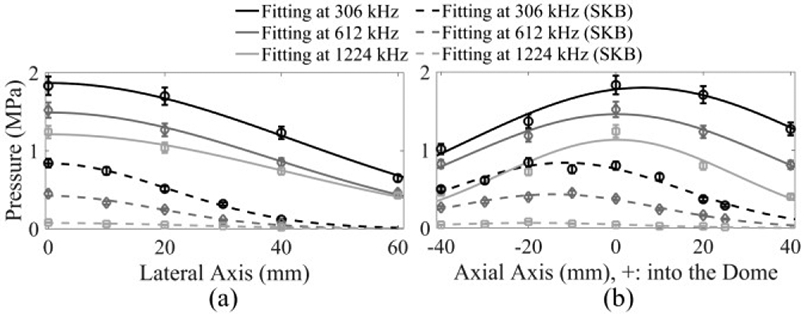
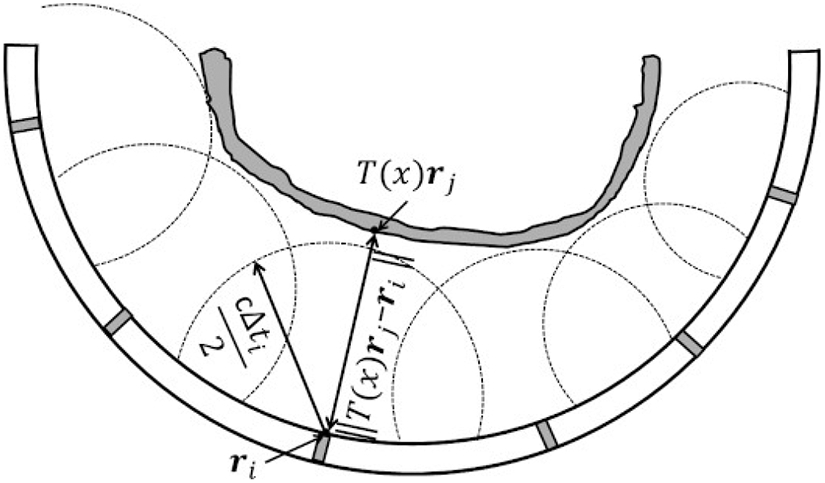
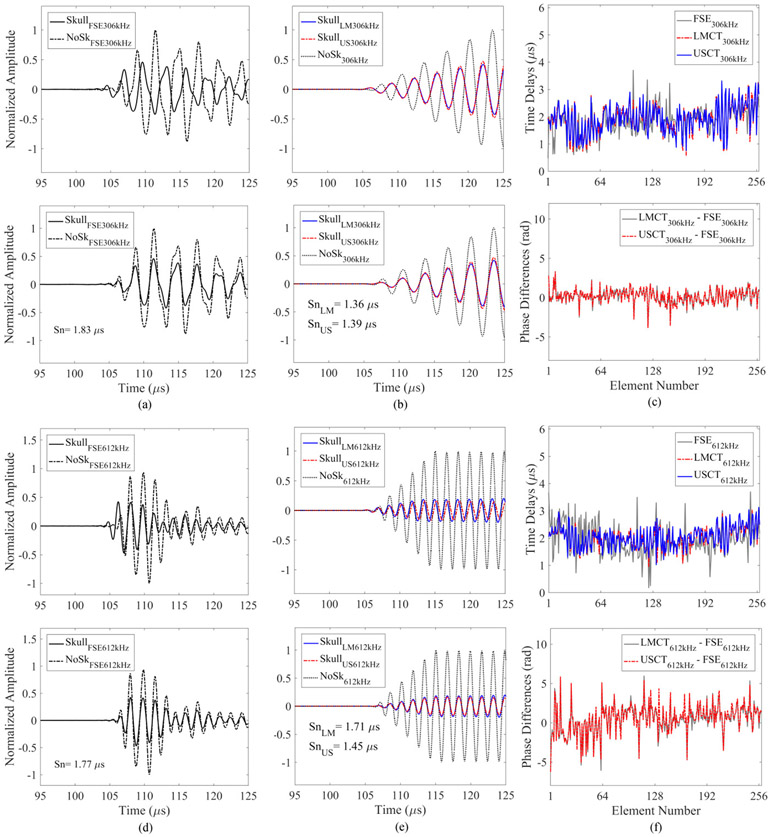
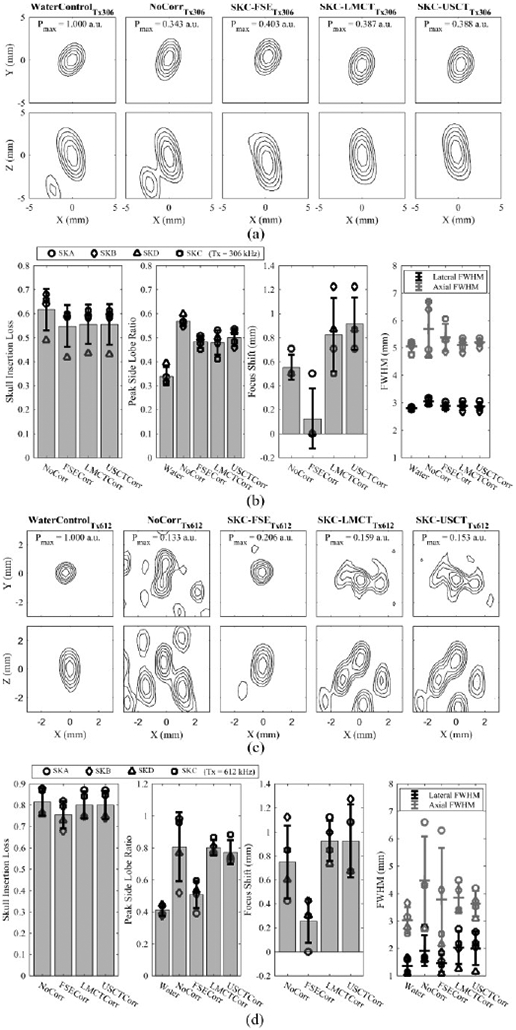
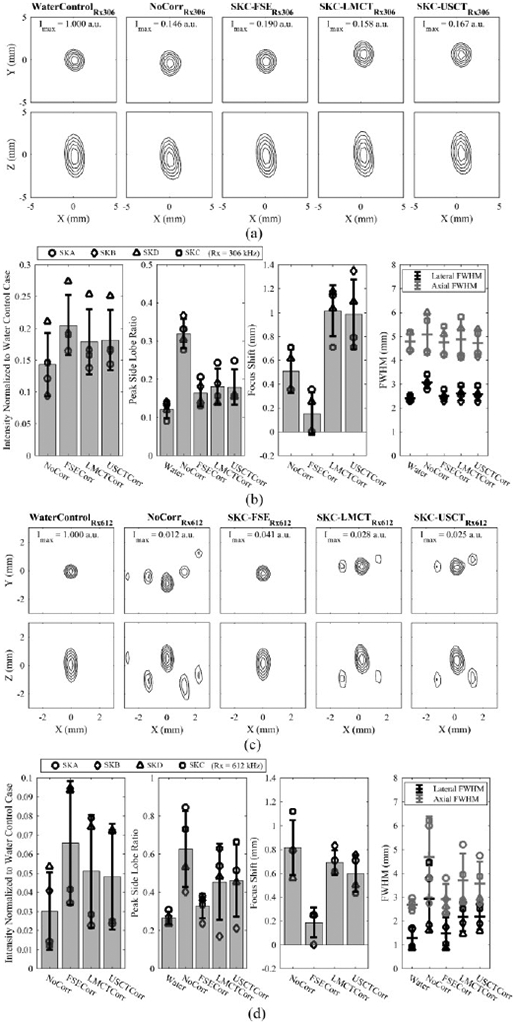
A 128-element 11 MHz array for skull localization was integrated within a 256-module multi-frequency (306/612/1224 kHz) dual-mode phased array. The system's transcranial transmit and receive performance was evaluated with ex-vivo human skullcaps using phase aberration corrections calculated from computed tomography (CT)-based simulations via ultrasound-based (USCT) and landmark-based (LMCT) registrations, and a gold-standard fixed source emitter (FSE)-based method.
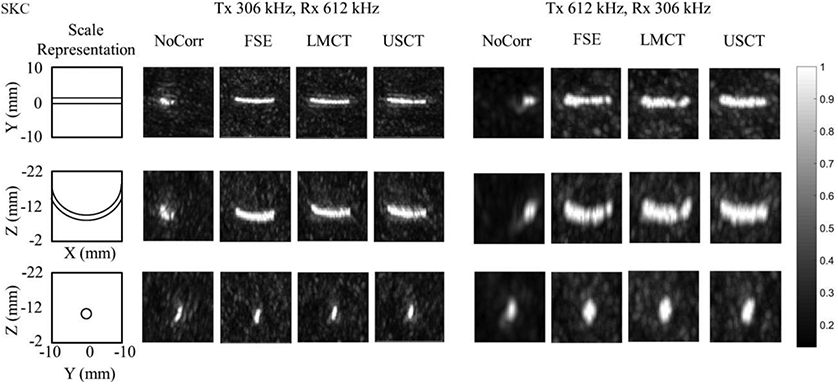
Displacement and rotation registration errors of 1.4 ± 0.4 mm and 2.1 ± 0.2 were obtained using USCT, resulting in sub-millimeter transmit targeting errors driven at 306 kHz (0.9 ± 0.2 mm) and 612 kHz (0.9 ± 0.3 mm), and source localization errors of 1.0 ± 0.3 mm and 0.6 ± 0.2 mm at receive frequencies of 306 kHz and 612 kHz, respectively (mean ± SD). Similar errors were obtained using LMCT and no significant differences between these two approaches were found on either transmit (p = 0.64/0.99) or receive (p = 0.45/0.36) at 306 kHz/612kHz. During volumetric multi-point exposures, approximately 70% and 60% of the transmit frames in which microbubble activity was detected via FSE were recovered using USCT when imaging at the second-harmonic and half-harmonic, respectively, compared to 60% and 69% using LMCT.
This low-cost ultrasound-guided transcranial FUS system affords USCT skull registration with accuracy comparable to LMCT methods.
Such systems have great potential to advance the adoption of microbubble-mediated FUS brain therapy by improving access to the technology.
开发一种低成本的磁共振成像(MRI)-免颅聚焦超声(FUS)系统,用于微泡介导的治疗。
在 256 模块多频(306/612/1224 kHz)双模式相控阵中集成了 128 个 11 MHz 阵元,用于颅骨定位。使用来自基于 CT 的模拟的计算相位像差校正,通过基于超声的(USCT)和基于标志的(LMCT)配准以及金标准固定源发射器(FSE)-基于方法,评估了系统的颅穿透传输和接收性能,使用离体人头盖骨进行了评估。
使用 USCT 获得了 1.4 ± 0.4 mm 的位移和旋转注册误差,导致在 306 kHz(0.9 ± 0.2 mm)和 612 kHz(0.9 ± 0.3 mm)时产生亚毫米级的传输靶向误差,并且在接收频率为 306 kHz 和 612 kHz 时,源定位误差分别为 1.0 ± 0.3 mm 和 0.6 ± 0.2 mm(平均值±SD)。使用 LMCT 获得了类似的误差,并且在 306 kHz/612kHz 时,这两种方法在传输(p = 0.64/0.99)或接收(p = 0.45/0.36)方面均无显着差异。在容积多点暴露期间,与使用 LMCT 相比,当在二次谐波和半谐波处成像时,通过 FSE 检测到微泡活性的约 70%和 60%的传输帧分别通过 USCT 恢复,而使用 LMCT 则分别为 60%和 69%。
这种低成本的超声引导经颅 FUS 系统具有与 LMCT 方法相当的准确性,可进行 USCT 颅骨注册。
此类系统通过改善对技术的访问,为微泡介导的 FUS 脑治疗的采用提供了很大的潜力。