Department of Biochemistry and Molecular Biology, Structural Biology Imaging Center, McGovern Medical School at The University of Texas Health Science Center at Houston, 6431, Fannin Street, Houston, TX, USA.
Department of Pharmacology and Physiology, School of Medicine and Dentistry, University of Rochester, Rochester, NY, USA.
Nat Commun. 2022 Nov 14;13(1):6942. doi: 10.1038/s41467-022-34574-1.
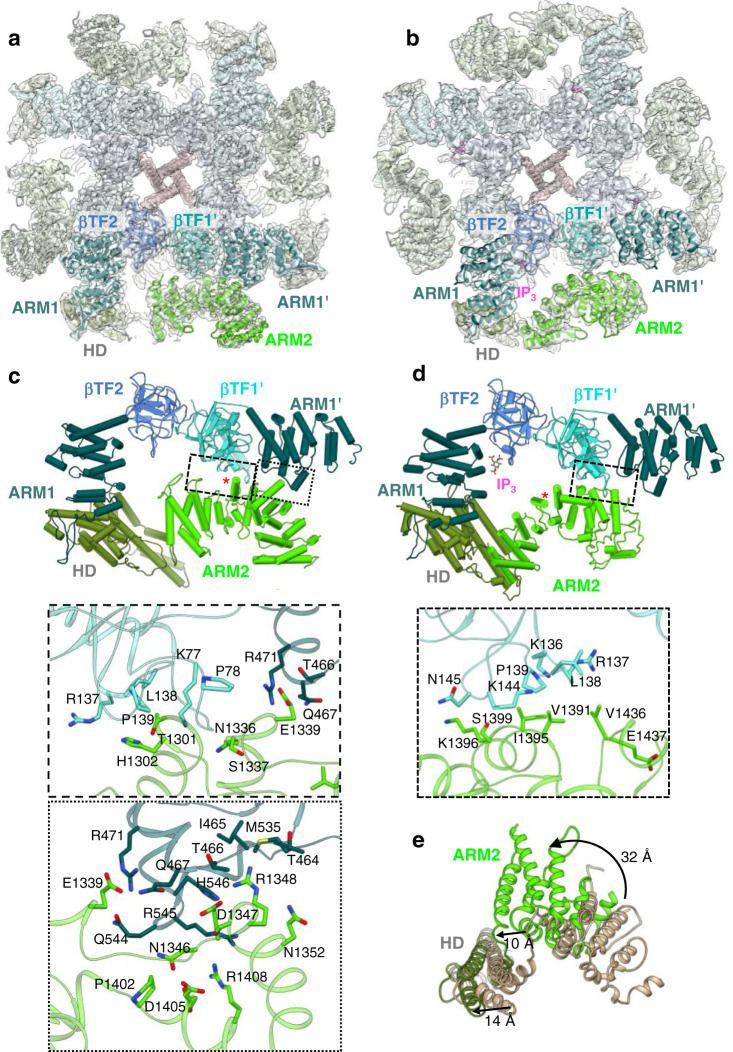
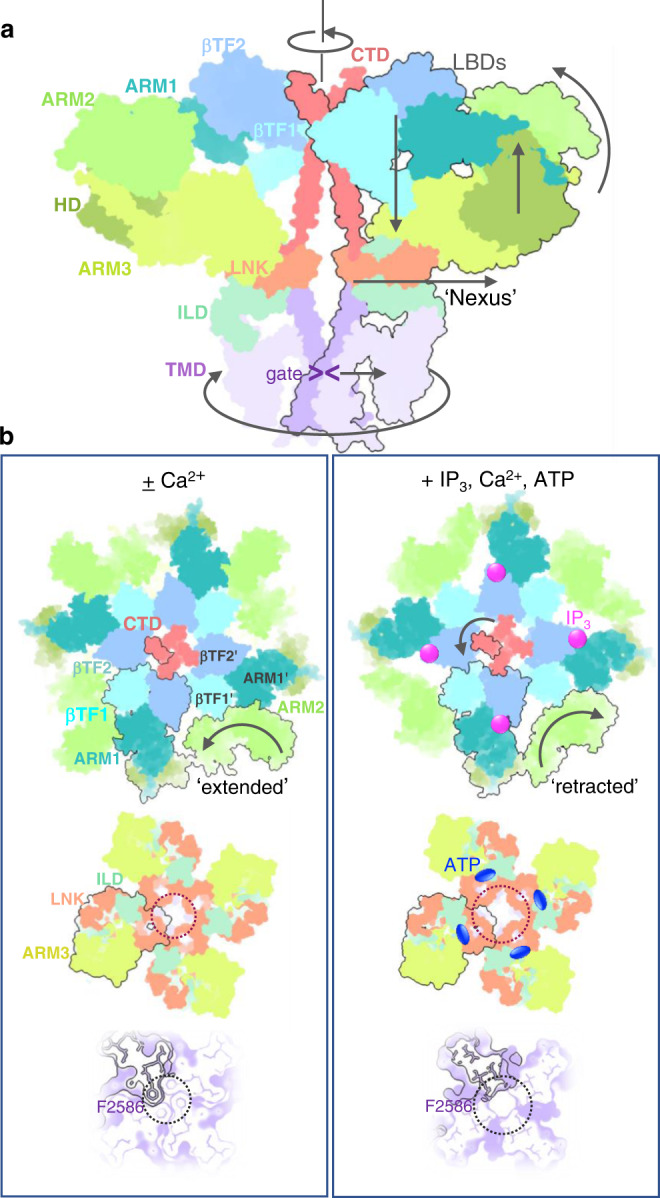
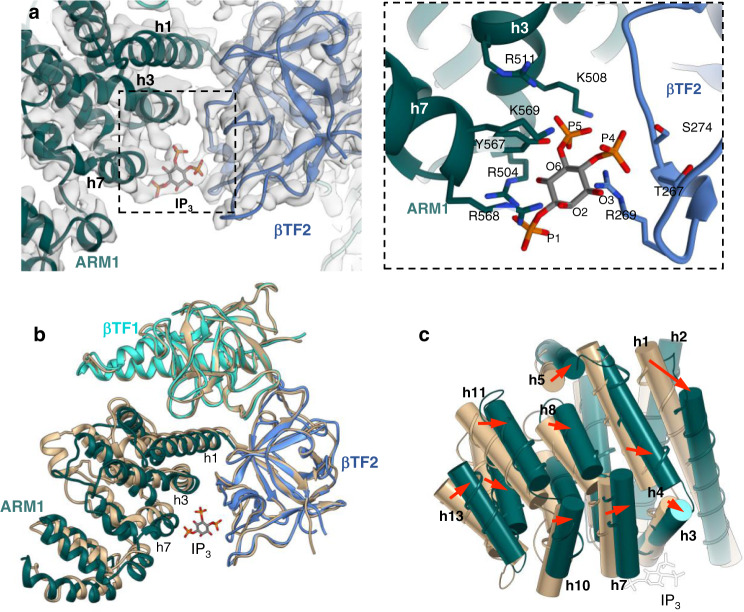
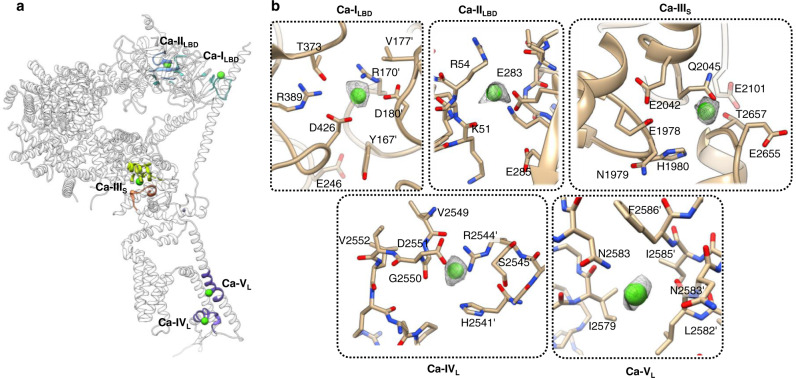
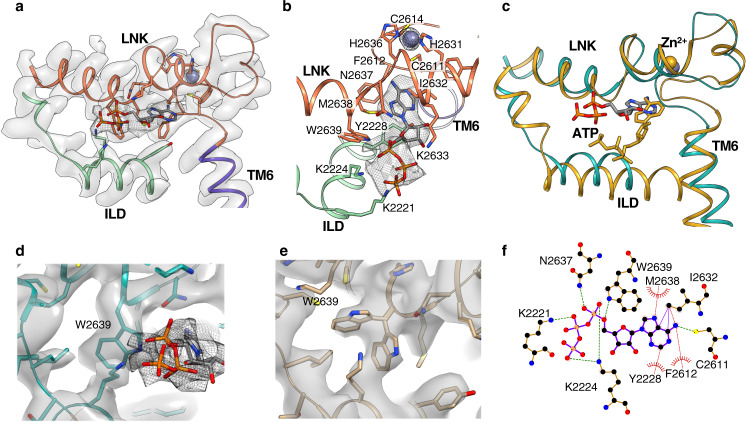
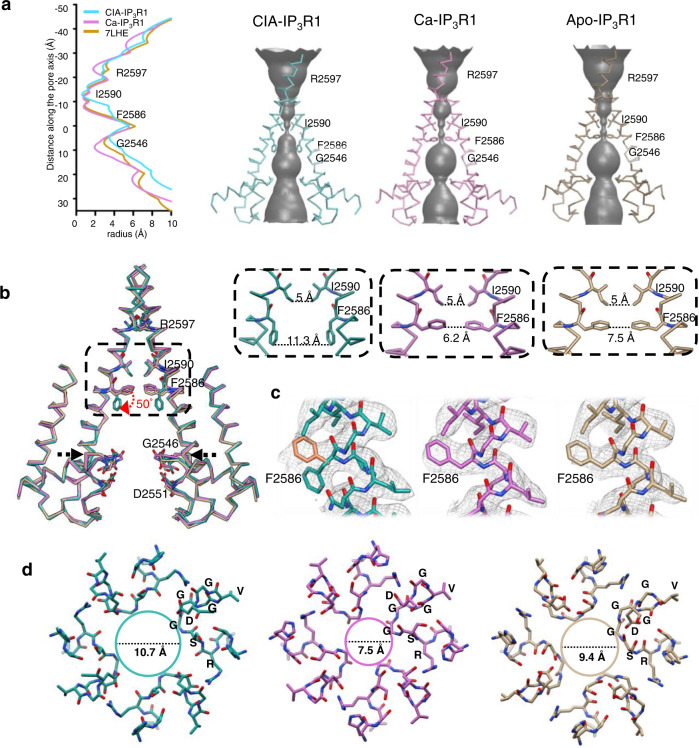
Inositol-1,4,5-trisphosphate receptors (IPRs) are activated by IP and Ca and their gating is regulated by various intracellular messengers that finely tune the channel activity. Here, using single particle cryo-EM analysis we determined 3D structures of the nanodisc-reconstituted IPR1 channel in two ligand-bound states. These structures provide unprecedented details governing binding of IP, Ca and ATP, revealing conformational changes that couple ligand-binding to channel opening. Using a deep-learning approach and 3D variability analysis we extracted molecular motions of the key protein domains from cryo-EM density data. We find that IP binding relies upon intrinsic flexibility of the ARM2 domain in the tetrameric channel. Our results highlight a key role of dynamic side chains in regulating gating behavior of IPR channels. This work represents a stepping-stone to developing mechanistic understanding of conformational pathways underlying ligand-binding, activation and regulation of the channel.
肌醇-1,4,5-三磷酸受体 (IPR) 通过 IP 和 Ca 激活,其门控由各种细胞内信使调节,这些信使精细调节通道活性。在这里,我们使用单颗粒冷冻电镜分析方法,在两种配体结合状态下确定了纳米盘重建的 IPR1 通道的 3D 结构。这些结构提供了前所未有的细节,可控制 IP、Ca 和 ATP 的结合,揭示了将配体结合与通道打开偶联的构象变化。我们使用深度学习方法和 3D 可变性分析,从冷冻电镜密度数据中提取关键蛋白结构域的分子运动。我们发现 IP 结合依赖于四聚体通道中 ARM2 结构域的固有灵活性。我们的结果强调了动态侧链在调节 IPR 通道门控行为中的关键作用。这项工作是朝着理解配体结合、通道激活和调节的构象途径的机制理解迈出的重要一步。