Product, Process and Production Engineering Research Group (GREP), Department of Mechanical Engineering and Industrial Construction, University of Girona, Girona, Spain.
New Therapeutic Targets Laboratory (TargetsLab)-Oncology Unit, Department of Medical Sciences, University of Girona, Girona, Spain.
Sci Rep. 2022 Nov 14;12(1):19440. doi: 10.1038/s41598-022-23655-2.
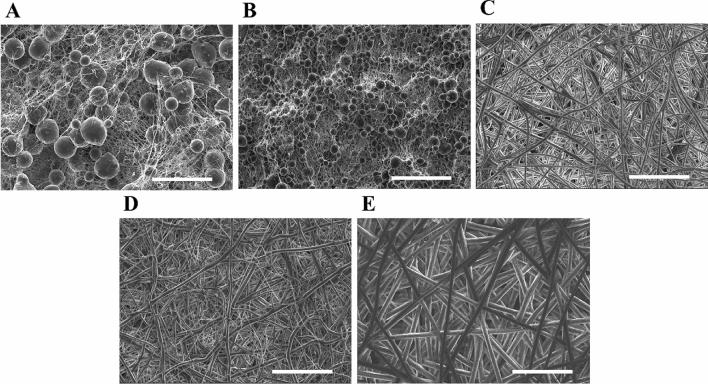
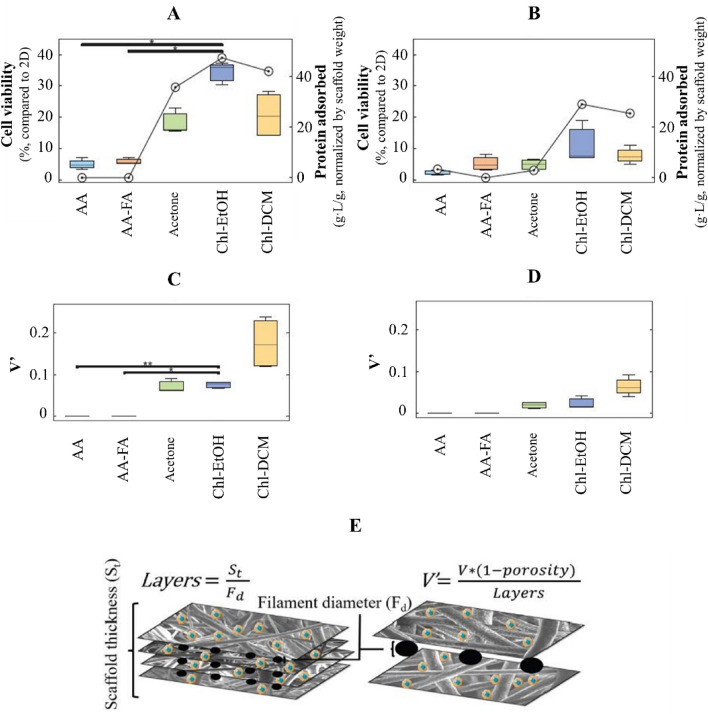
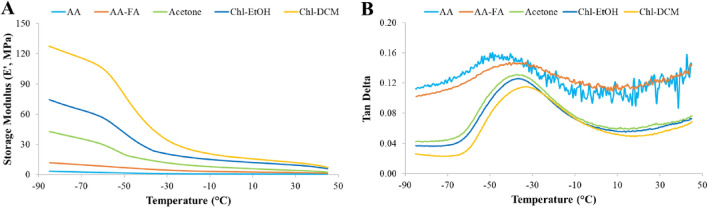
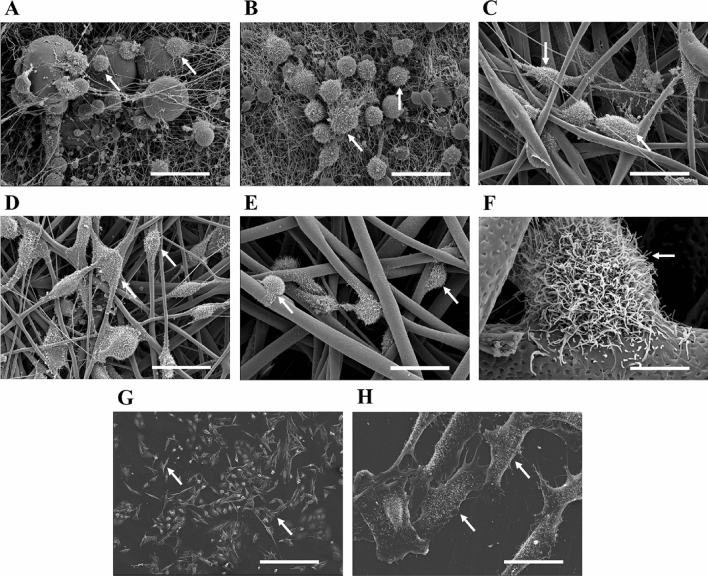
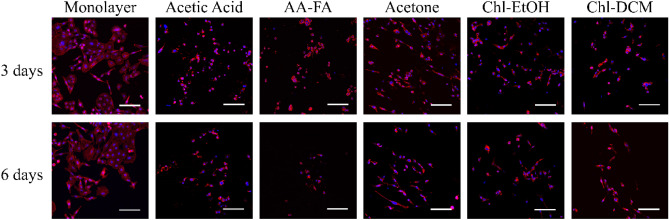
The development of a trustworthy in vitro lung cancer model is essential to better understand the illness, find novel biomarkers, and establish new treatments. Polycaprolactone (PCL) electrospun nanofibers are a cost-effective and ECM-like approach for 3D cell culture. However, the solvent used to prepare the polymer solution has a significant impact on the fiber morphology and, consequently, on the cell behavior. Hence, the present study evaluated the effect of the solvent employed in the manufacturing on the physical properties of 15%-PCL electrospun scaffolds and consequently, on cell behavior of NCI-H1975 lung adenocarcinoma cells. Five solvents mixtures (acetic acid, acetic acid-formic acid (3:1, v/v), acetone, chloroform-ethanol (7:3, v/v), and chloroform-dichloromethane (7:3, v/v)) were tested. The highest cell viability ([Formula: see text] = 33.4%) was found for cells cultured on chloroform-ethanol (7:3) PCL scaffolds. Chloroform-dichloromethane (7:3) PCL scaffolds exhibited a roughness that enhanced the quality of electrospun filament, in terms of cell viability. Our findings highlighted the influence of the solvent on fiber morphology and protein adsorption capacity of nanofilaments. Consequently, these features directly affected cell attachment, morphology, and viability.
开发一种值得信赖的体外肺癌模型对于更好地了解疾病、寻找新的生物标志物和建立新的治疗方法至关重要。聚己内酯(PCL)电纺纳米纤维是一种具有成本效益的、类似于细胞外基质的 3D 细胞培养方法。然而,用于制备聚合物溶液的溶剂对纤维形态有显著影响,进而对细胞行为产生影响。因此,本研究评估了制造过程中使用的溶剂对 15%-PCL 电纺支架的物理性能的影响,以及对肺腺癌细胞 NCI-H1975 细胞行为的影响。五种溶剂混合物(乙酸、乙酸-甲酸(3:1,v/v)、丙酮、氯仿-乙醇(7:3,v/v)和氯仿-二氯甲烷(7:3,v/v))进行了测试。结果表明,在氯仿-乙醇(7:3)PCL 支架上培养的细胞具有最高的细胞活力([Formula: see text] = 33.4%)。氯仿-二氯甲烷(7:3)PCL 支架的粗糙度提高了纳米纤维的质量,从而提高了细胞活力。我们的研究结果强调了溶剂对纤维形态和纳米纤维蛋白吸附能力的影响。因此,这些特征直接影响细胞附着、形态和活力。