Tharwat Samar, Nassar Dalia Kamal, Nassar Mohammed Kamal, Saad Ahmed Mohammed, Hamdy Fatma
Rheumatology & Immunology Unit, Department of Internal Medicine, Faculty of Medicine, Mansoura University, El Gomhouria St, Mansoura, Dakahlia Governorate, Egypt.
Medical Microbiology and Immunology Department, Faculty of Medicine, Mansoura University, Mansoura, Egypt.
BMC Health Serv Res. 2022 Nov 16;22(1):1357. doi: 10.1186/s12913-022-08751-3.
Herd immunity is necessary to contain the coronavirus disease 2019 (COVID-19) pandemic. Vaccination is the fastest and safest pandemic control strategy. Healthcare workers (HCWs) are essential in providing vaccination information. The aim of this study was to assess intent to be vaccinated against COVID-19 among HCWs in Egypt and to determine the factors that may influence their decision.
A questionnaire-based cross-sectional study was conducted among HCWs who care for patients in several hospitals in Delta region, Egypt. The questionnaire included sociodemographic, clinical, and occupational data, intention to receive the COVID-19 vaccine, and beliefs and attitudes towards COVID-19 and its vaccination.
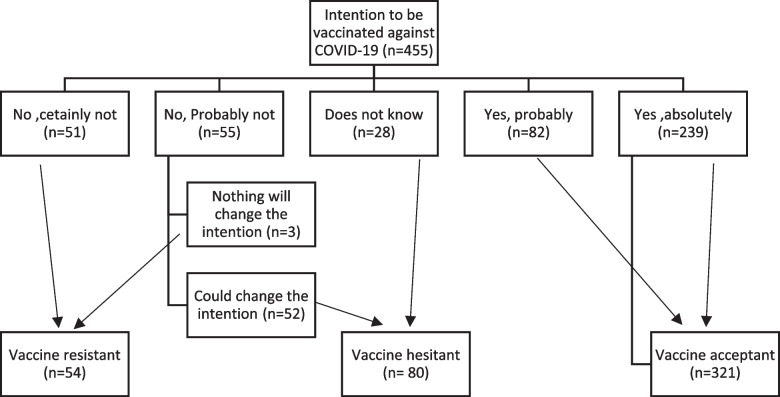
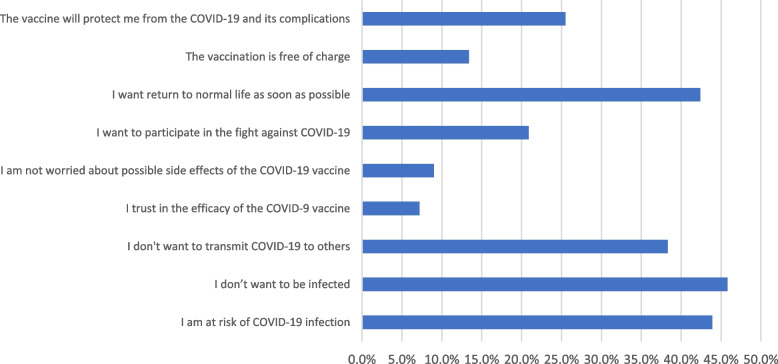
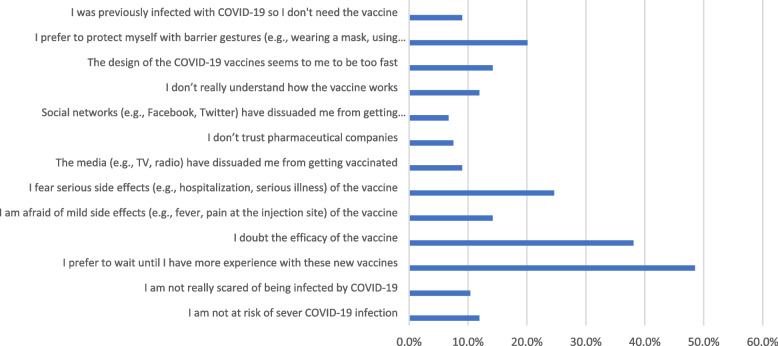
The study included 455 HCWs with a mean age of 36.55 years (SD = 10.31) and 80% were females. The acceptance rate for the COVID-19 vaccine was 70.5%, while hesitancy and resistancy were both 17.6 and 11.9% respectively. About one-third (33.4%) of the subjects had previously contracted COVID-19. Most participants believed that they had a higher risk of contracting COVID-19 (71.6%). More than 64% believed they were at risk for vaccination side effects. Fear of infection and being at high risk of infection were the main drivers for COVID-19 vaccination, while the major barriers were waiting for additional experience with these new vaccines and having doubts about the vaccines' efficacy.
The acceptance of the COVID-19 vaccination among HCWs is very high. This crucial group needs to be the focus of educational initiatives and campaigns designed to increase public awareness of the safety and effectiveness of COVID-19 vaccination.
群体免疫对于控制2019冠状病毒病(COVID-19)大流行至关重要。接种疫苗是最快且最安全的大流行控制策略。医护人员在提供疫苗接种信息方面至关重要。本研究的目的是评估埃及医护人员接种COVID-19疫苗的意愿,并确定可能影响其决策的因素。
在埃及三角洲地区几家医院照顾患者的医护人员中进行了一项基于问卷的横断面研究。问卷包括社会人口统计学、临床和职业数据、接种COVID-19疫苗的意愿以及对COVID-19及其疫苗接种的信念和态度。
该研究纳入了455名医护人员,平均年龄为36.55岁(标准差=10.31),80%为女性。COVID-19疫苗的接受率为70.5%,而犹豫率和抗拒率分别为17.6%和11.9%。约三分之一(33.4%)的受试者此前感染过COVID-19。大多数参与者认为他们感染COVID-19的风险更高(71.6%)。超过64%的人认为他们有接种疫苗副作用的风险。对感染的恐惧和处于高感染风险是接种COVID-19疫苗的主要驱动因素,而主要障碍是等待这些新疫苗的更多经验以及对疫苗疗效存在疑虑。
医护人员对COVID-19疫苗的接受度非常高。这一关键群体需要成为旨在提高公众对COVID-19疫苗安全性和有效性认识的教育举措和宣传活动的重点。