Department of Tropical Health, High Institute of Public Health, Alexandria University, Alexandria, 21526, Egypt.
Department of Family Health, High Institute of Public Health, Alexandria University, Alexandria, 21526, Egypt.
Sci Rep. 2022 Nov 18;12(1):19832. doi: 10.1038/s41598-022-23825-2.
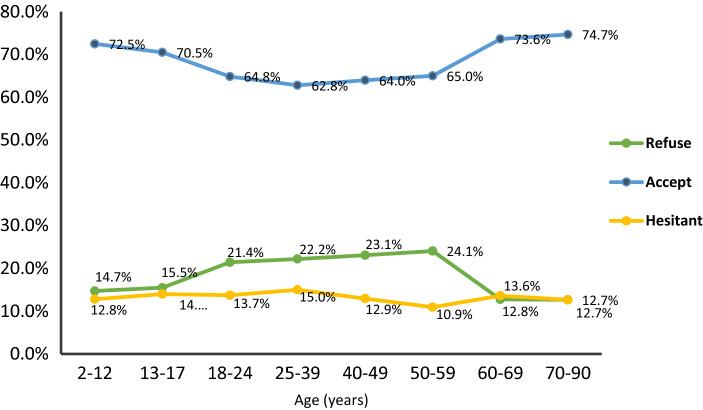
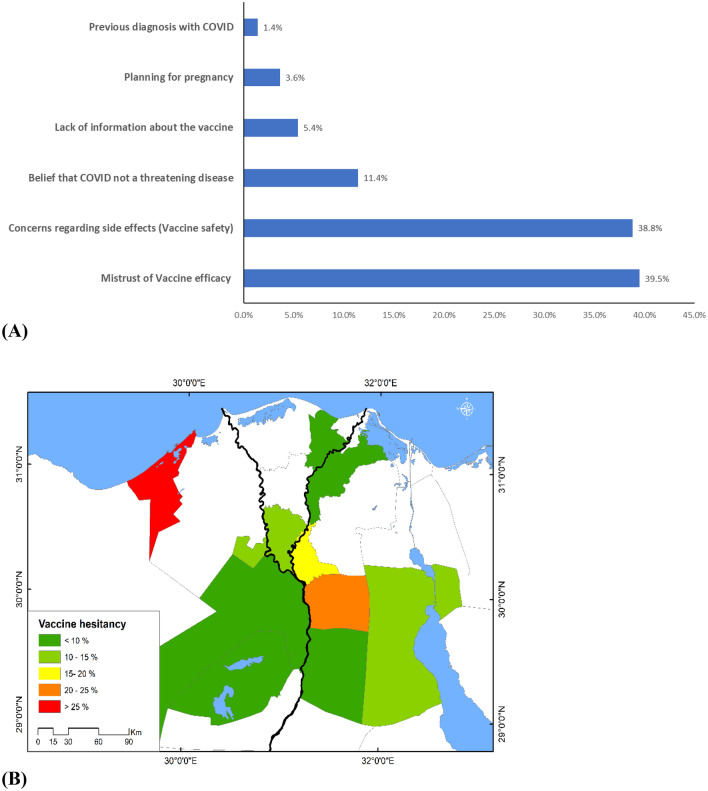
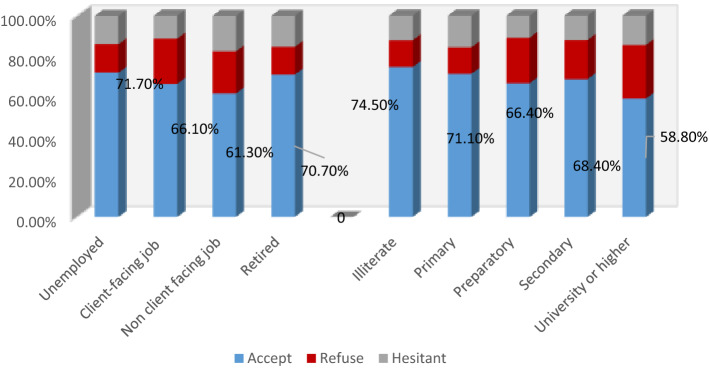
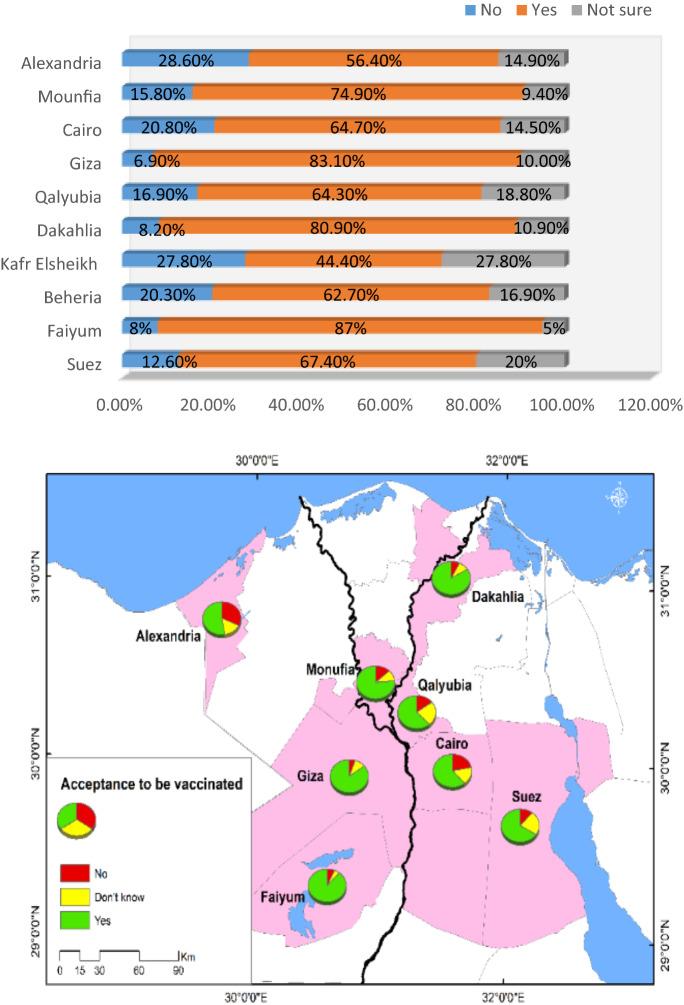
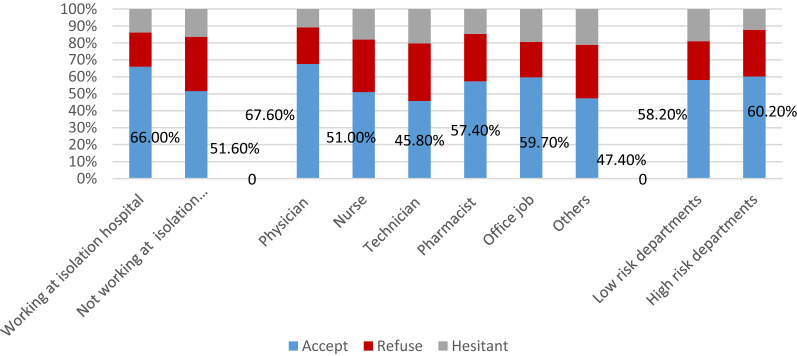
The promise of COVID-19 vaccines in ending the pandemic can only be achieved by overcoming the challenge of vaccine refusal. Healthcare workers (HCWs) are the trusted advisors of vaccination decisions. Recommendations for vaccinating children against COVID-19 are recently gaining more public health attention due to the role of children in disease transmission and associated morbidities. Vaccination is one of the first medical decisions parents or guardians make on behalf of their children. To investigate the determinants associated with vaccine acceptability among the general population through a direct interview questionnaire and assess guardians' views towards childhood COVID-19 vaccinations. This cross-sectional study included 2919 participants A pre-designed structured questionnaire about COVID-19 vaccination acceptability was completed by trained interviewers and interviewing the participants or their guardians (for those below 18 years old). Nearly two-thirds of participants (66.5%) accepted vaccination, 20.2% were refusing and 13.3% were hesitant. Most participants who were guardians of children below 12 years and from 13 to 17 years reported that they would accept vaccination of their children (72.5% and 70.5%, respectively). The acceptance rate among HCWs was 58.2%. The main reasons beyond vaccine refusal were mistrust of vaccine efficacy (39.5%) and having concerns regarding vaccine safety (38.8%). In a multivariable regression model, being male (OR 1.362, 95% CI 1.082-1.714, p = 0.008) resident in rural area (OR 1.796, 95% CI 1.435-2.247, p = 0.000), and lower education (OR 1.245, 95% CI 1.018-1.523, p = 0.033) were associated with an increased acceptance to be vaccinated. The acceptance rate for vaccinating children reported among their guardians was higher than adults for themselves. Extremes of age showed higher vaccine acceptance compared to young adults. Upper Egypt governorates (Faiyum and Giza) were outpacing Lower Egypt governorates in vaccination acceptance rates.
COVID-19 疫苗有望终结这场大流行,但前提是要克服疫苗抵制这一挑战。医护人员是接种决策的可信赖顾问。由于儿童在疾病传播和相关发病方面的作用,近期对为儿童接种 COVID-19 疫苗的建议得到了更多公共卫生关注。接种疫苗是父母或监护人代表其子女做出的首批医疗决定之一。通过直接访谈问卷调查普通人群中与疫苗可接受性相关的决定因素,并评估监护人对儿童 COVID-19 疫苗接种的看法。本横断面研究纳入了 2919 名参与者。由经过培训的访谈者完成了一份关于 COVID-19 疫苗可接受性的预先设计的结构化问卷,并对参与者或其监护人进行访谈(对于 18 岁以下的参与者)。近三分之二的参与者(66.5%)接受了疫苗接种,20.2%的人拒绝接种,13.3%的人犹豫不决。大多数 12 岁以下和 13 至 17 岁儿童的监护人表示他们会接受孩子的疫苗接种(分别为 72.5%和 70.5%)。医护人员的接种率为 58.2%。拒绝接种疫苗的主要原因是对疫苗有效性的不信任(39.5%)和对疫苗安全性的担忧(38.8%)。在多变量回归模型中,男性(OR 1.362,95%CI 1.082-1.714,p=0.008)、农村地区居民(OR 1.796,95%CI 1.435-2.247,p=0.000)和较低的教育程度(OR 1.245,95%CI 1.018-1.523,p=0.033)与增加接种意愿有关。监护人报告的为儿童接种疫苗的接受率高于为自己接种疫苗的成年人。与年轻成年人相比,年龄较大或较小的群体对疫苗的接受度更高。上埃及(法尤姆和吉萨)的疫苗接种接受率高于下埃及。