Xu Shangbo, Chen Yangbo, Lin Rui, Huang Weipeng, Zhou Haoyue, Lin Yongjian, Xu Mingwei
Department of Cardiology, Jieyang People's Hospital, Jieyang, China.
Front Cardiovasc Med. 2022 Oct 26;9:997698. doi: 10.3389/fcvm.2022.997698. eCollection 2022.
Understanding the pattern and trend of the atrial fibrillation (AF) burden are essential for developing effective preventive strategies. The purpose of this study was to estimate AF burdens and risk factors in 204 countries and territories between 1990 and 2019.
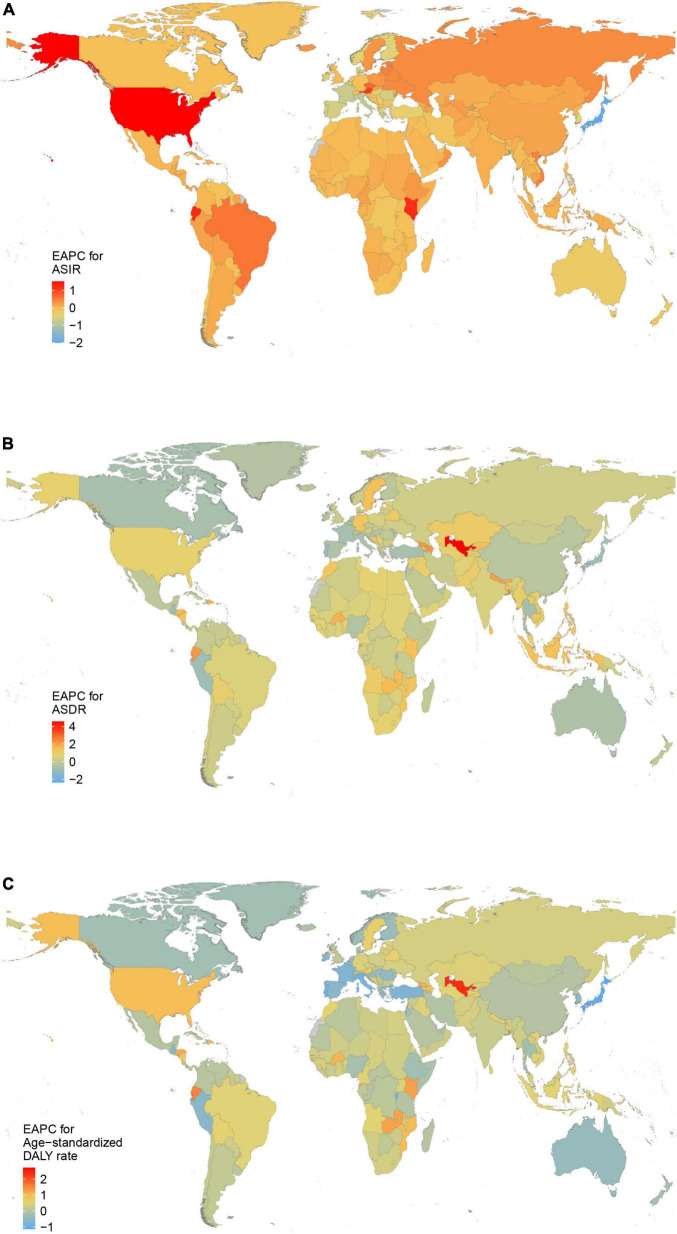
Data were extracted from the Global Burden of Disease 2019, including incidence, death, disability-adjusted life-years (DALYs), and the attributable risk factors. In order to quantify changes in the age-standardized incidence rate (ASIR), age-standardized death rate (ASDR), and age-standardized DALY rate between 1990 and 2019, the estimated annual percentage change (EAPC) was used. Also, AF burden was assessed in relation to the Socio-demographic Index (SDI).
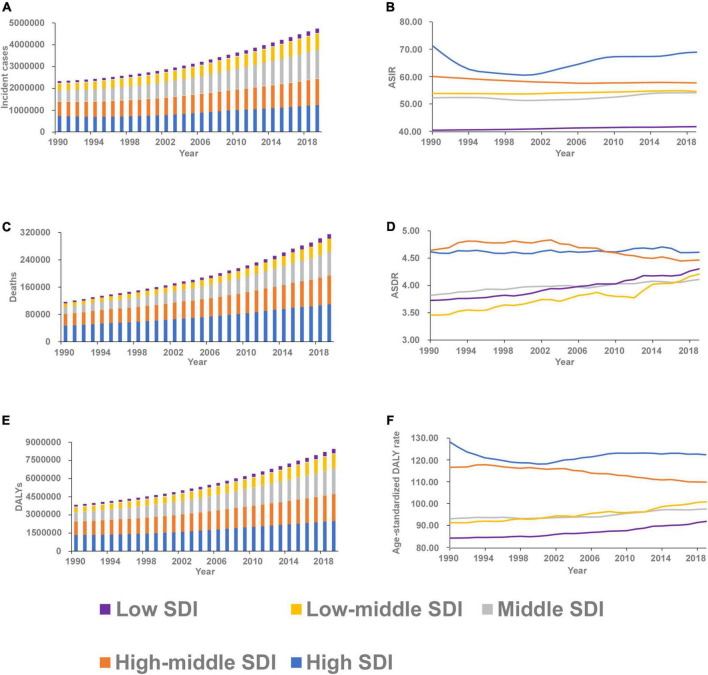
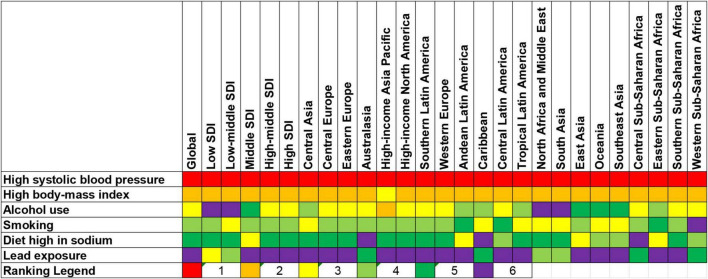
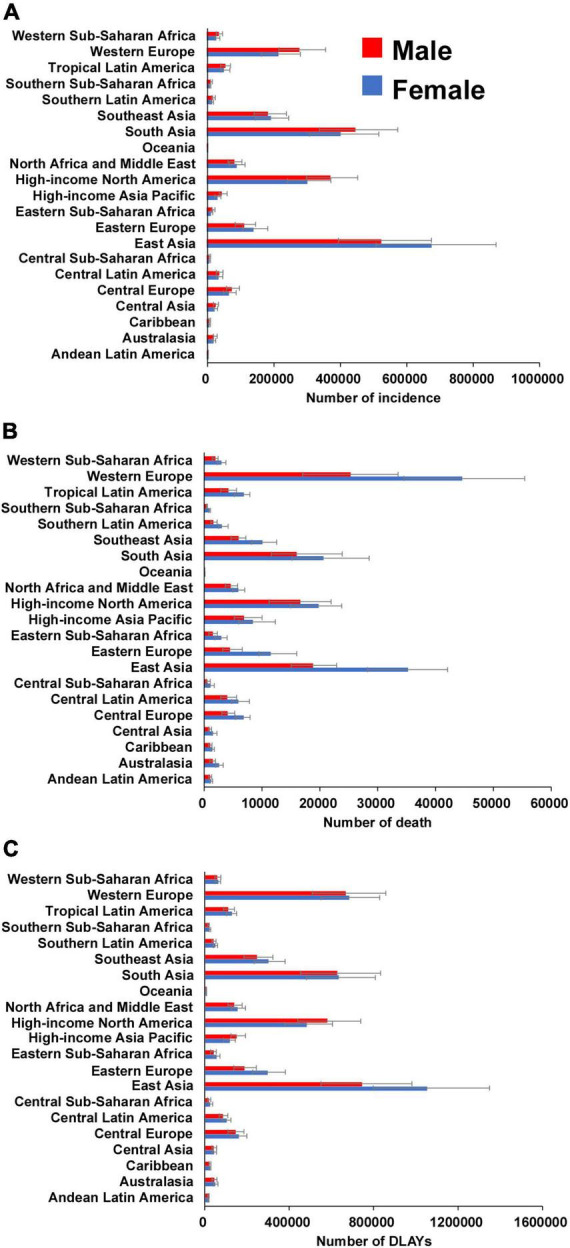
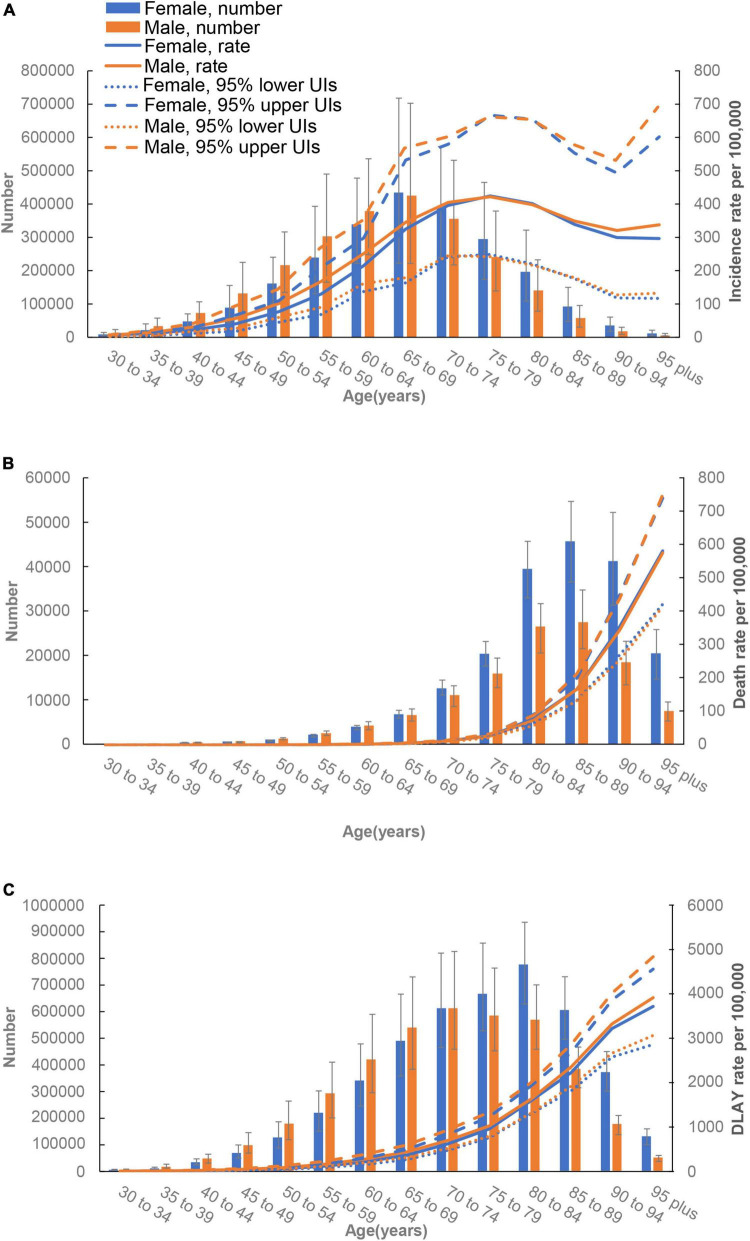
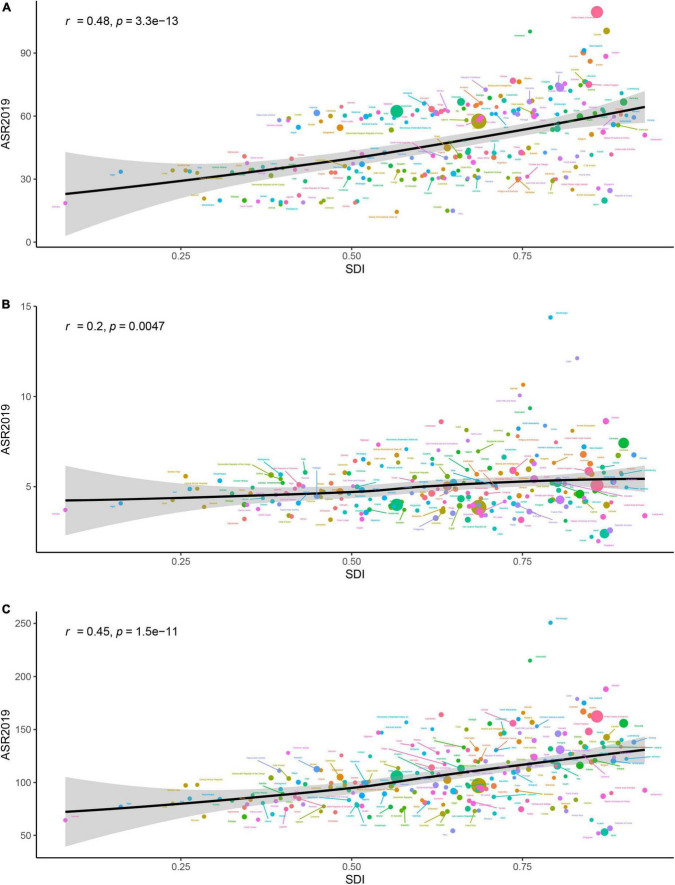
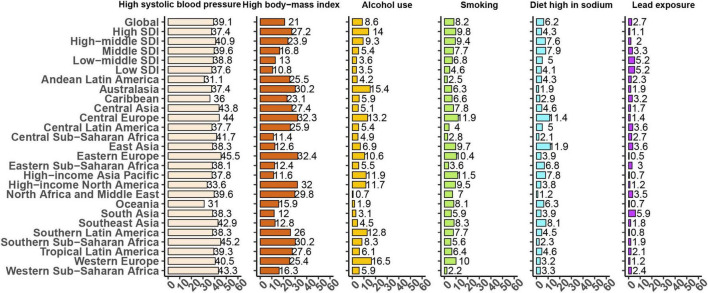
Globally, there were 4,720,324 incident cases, 117,038 deaths and 8,393,635 DALYs in 2019. There were no significant changes in ASIR, ASDR, or age-standardized DALY rates from 1990 to 2019. Although the burden and trend of AF varied in different regions and countries, the ASIR, ASDR and age-standardized DALY rate were positively correlated with SDI. Furthermore, the burden of AF was higher in males and elderly. The age-standardized DALY rate worldwide was primarily attributable to high systolic blood pressure, followed by high body-mass index, alcohol use, smoking, diet high in sodium and lead exposure.
AF remained a major public health challenge worldwide, with substantial variation at regional and national levels. There is an urgent need to increase public awareness about AF risk factors and to bring about cost-effective interventions for AF in order to reduce its future burden.
了解房颤负担的模式和趋势对于制定有效的预防策略至关重要。本研究的目的是估计1990年至2019年间204个国家和地区的房颤负担及危险因素。
数据取自《2019年全球疾病负担》,包括发病率、死亡率、伤残调整生命年(DALYs)以及可归因的危险因素。为了量化1990年至2019年间年龄标准化发病率(ASIR)、年龄标准化死亡率(ASDR)和年龄标准化DALY率的变化,使用了估计年度百分比变化(EAPC)。此外,还根据社会人口指数(SDI)评估了房颤负担。
2019年全球范围内,有4,720,324例新发病例、117,038例死亡和8,393,635个伤残调整生命年。1990年至2019年间,ASIR、ASDR或年龄标准化DALY率没有显著变化。尽管不同地区和国家的房颤负担和趋势有所不同,但ASIR、ASDR和年龄标准化DALY率与SDI呈正相关。此外,男性和老年人的房颤负担更高。全球年龄标准化DALY率主要归因于高收缩压,其次是高体重指数、饮酒、吸烟、高钠饮食和铅暴露。
房颤仍然是全球主要的公共卫生挑战,在区域和国家层面存在很大差异。迫切需要提高公众对房颤危险因素的认识,并实施具有成本效益的房颤干预措施,以减轻其未来负担。